


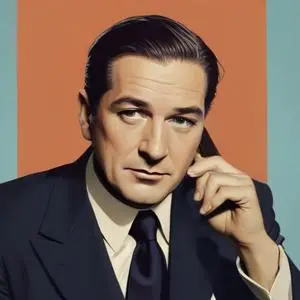
A renowned playwright and screenwriter of the 20th century, known for crafting intricate, emotionally charged dramas that probed the British upper class, often exploring themes of love, morality, and social convention.
Terence Rattigan, one of England's most celebrated dramatists, left an indelible mark on the world of theatre with his poignant and insightful plays that probed the intricacies of the human condition. His works, characterized by their nuanced exploration of upper-middle-class life, continue to captivate audiences to this day.
Born on June 10, 1911, in South Kensington, London, Rattigan was the younger of two brothers. His family, with Irish roots, was steeped in a tradition of public service and intellectual pursuits. His grandfather, Sir William Henry Rattigan, was a distinguished jurist and Member of Parliament, while his father, Frank Rattigan, was a diplomat with a penchant for adventure and romance.
Rattigan's early life was marked by a sense of privilege and entitlement, but also by a deep-seated insecurity stemming from his family's complex dynamics. This duality would later manifest in his plays, which often explored the tension between social conformity and individual desire.
Rattigan's breakthrough came in 1946 with The Winslow Boy, a critically acclaimed play that cemented his reputation as a master of characterization and dialogue. This was followed by The Browning Version (1948), The Deep Blue Sea (1952), and Separate Tables (1954), each work showcasing his ability to craft intricate, psychologically complex narratives that resonated with post-war British audiences.
Rattigan's plays typically unfolded in the rarefied world of upper-middle-class England, where the trappings of privilege and social standing often masked deeper insecurities and desires. His characters, both flawed and endearing, navigated the treacherous landscape of relationships, social norms, and personal expectations.
Rattigan's private life was marked by turmoil and self-doubt. As a closeted homosexual in a period of intense social repression, he struggled to reconcile his desires with the expectations of his family and society. This inner conflict found expression in his plays, which often explored themes of sexual frustration, failed relationships, and the stifling effects of social Convention.
Rattigan's influence on British drama is immeasurable. His plays have been translated into multiple languages, adapted for film and television, and continue to be performed to this day. His legacy extends beyond the theatre, too, with his work influencing generations of writers, actors, and directors.
In 2011, to mark the centenary of his birth, Rattigan's plays were celebrated with a major retrospective season at the Theatre Royal Haymarket. This testament to his enduring appeal serves as a reminder of the timeless power of his work to captivate, to move, and to inspire.
Rattigan's remarkable body of work continues to enchant audiences, offering a poignant reflection of the complexities and contradictions of the human experience. As a master of mid-century British drama, he remains an integral part of our cultural heritage, a testament to the enduring power of theatre to illuminate, to provoke, and to inspire.
Born in 1911
A renowned playwright and screenwriter of the 20th century, known for crafting intricate, emotionally charged dramas that probed the British upper class, often exploring themes of love, morality, and social convention.
Born in 1899
A renowned English actor, playwright, and composer, known for his witty humor, sophisticated style, and iconic works like "Private Lives" and "Blithe Spirit".
Born in 1904
A renowned thespian, celebrated for his commanding stage presence and iconic performances in Shakespearean plays and films, earning him a knighthood.
Born in 1907
A renowned thespian who dominated the British stage and screen, bringing Shakespearean characters to life with his commanding presence and rich voice.
Born in 1913
A talented actress who won two Academy Awards for her iconic portrayals of Southern belles in "Gone with the Wind" and "A Streetcar Named Desire".
Born in 1908
Acclaimed filmmaker behind epic, visually stunning movies like "Lawrence of Arabia" and "Doctor Zhivago", known for his meticulous attention to detail and sweeping cinematography.
Born in 1904
A renowned photographer, painter, and costume designer who captured the essence of British high society and Hollywood glamour through his iconic portraits and designs. He's most famous for his work on My Fair Lady and Gigi, earning him multiple Academy Awards.
Born in 1893
A renowned singer-songwriter and actor, famous for his charming stage presence and hit songs like "Keep the Home Fires Burning" and "We'll Gather Lilacs", which became iconic during World War I.
