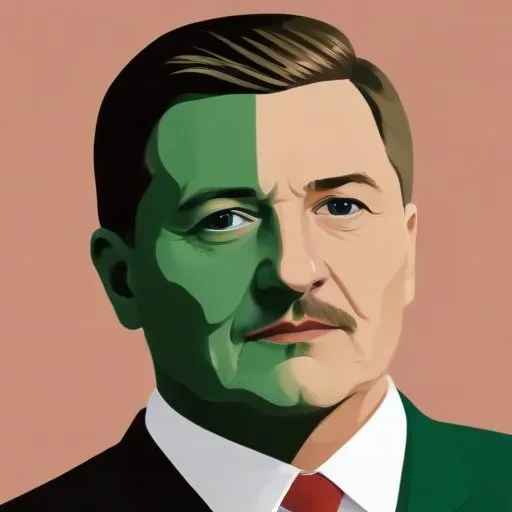
Antanas Smetona: The Architect of Lithuanian Nationalism
A Leader of a Nation's Revival
Antanas Smetona, the first president of Lithuania, is remembered as the driving force behind the country's struggle for independence and national revival in the tumultuous period between World War I and World War II. As a prominent ideologist of Lithuanian nationalism, Smetona played a pivotal role in shaping the country's identity and paving the way for its modern statehood.
Early Life and Education
Born on August 10, 1874, in the village of Uližniai, Kovno Governorate, Russian Empire, Smetona was the eighth of nine children to a family of farmers, Jonas Smetona and Julijona Kartanaitė. His parents, former serfs of the Taujėnai Manor, instilled in him the value of education, and despite financial difficulties, Smetona's father ensured that he learned to read at home. After his father's death in 1885, Smetona was sent to the primary school in Taujėnai, where instruction was in Russian due to the Lithuanian press ban.
Rise to Prominence
Smetona's educational pursuits took him to Ukmergė, where he studied privately to catch up with his peers and eventually gained admission to the fourth class of gymnasium. His academic achievements and dedication earned him a place at the University of Saint Petersburg, where he studied law and philosophy. It was during this period that Smetona developed his nationalist ideologies, which would later shape his political career.
Political Career and Presidency
Smetona's entrance into politics was marked by his involvement in the Lithuanian National Revival movement, which sought to promote Lithuanian culture, language, and identity. In 1919, he was appointed as the first president of Lithuania, a position he held until 1920. During his initial presidency, Smetona worked tirelessly to establish the country's independence, negotiating with world leaders and securing international recognition.
In 1926, Smetona returned to power, this time as a de facto dictator, and ruled until the Soviet occupation of Lithuania in 1940. Throughout his presidency, Smetona implemented policies aimed at promoting Lithuanian nationalism, including the establishment of a national education system, the promotion of Lithuanian language and culture, and the development of national infrastructure.
Legacy and Impact
Antanas Smetona's legacy as a champion of Lithuanian nationalism continues to be felt today. His unwavering commitment to the country's independence and national revival has inspired generations of Lithuanians. As a prominent ideologist, Smetona's philosophical contributions have shaped the country's understanding of its own identity and place in the world.
Personal Milestones and Key Life Events
- 1874: Born on August 10 in Uličniai, Kovno Governorate, Russian Empire
- 1885: Father's death; sent to primary school in Taujėnai
- 1889: Graduated from primary school; began private studies in Ukmergė
- 1891: Attempted to gain admission to the Liepāja Gymnasium
- 1919: Appointed as the first president of Lithuania
- 1920: Relinquished presidency; continued to promote Lithuanian nationalism
- 1926: Returned to power as a de facto dictator
- 1940: Soviet occupation of Lithuania; fled to Germany, where he died on January 9, 1944
Quotes and Memorable Sayings
"The nation is not just a collection of individuals, but a spiritual unity, which is embodied in its language, culture, and history."
"The Lithuanian nation has always been and will always be a nation of farmers, workers, and intellectuals."
Historical Context and Legacy
Antanas Smetona's life and presidency are inextricably linked to the tumultuous period of Lithuanian history between World War I and World War II. As a champion of Lithuanian nationalism, Smetona's legacy extends beyond his presidency, shaping the country's identity and influencing its development in the decades that followed.
FAQ
What was Antanas Smetonas role in Lithuanian independence?
Antanas Smetona was a key figure in Lithuanias struggle for independence, serving as the countrys first president from 1918 to 1920 and again from 1926 to 1940.
What was Antanas Smetonas educational background?
Antanas Smetona studied law at the University of St. Petersburg and later earned a Ph.D. in law from the University of Berlin.
When did Antanas Smetona establish the Lithuanian Nationalist Union?
Antanas Smetona established the Lithuanian Nationalist Union in 1924, which became the dominant political party in Lithuania during the interwar period.
What is Antanas Smetonas legacy in Lithuania?
Antanas Smetonas legacy in Lithuania is as a national hero who played a key role in securing the countrys independence and shaping its national identity.
How did Antanas Smetona respond to the Soviet occupation?
Antanas Smetona fled Lithuania in 1940 following the Soviet occupation, but continued to advocate for Lithuanian independence until his death in 1944.