


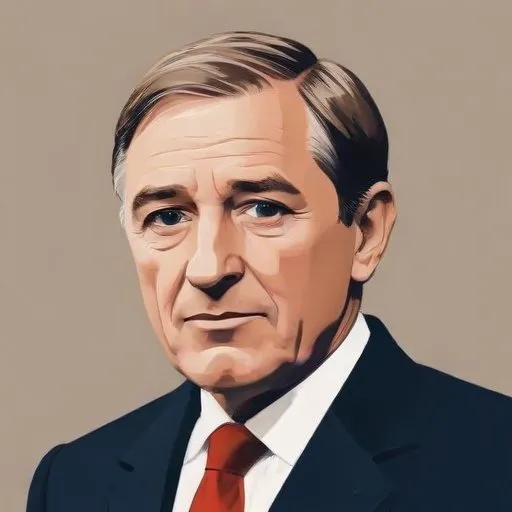
A British Conservative politician who served as a Member of Parliament and was a close ally of Prime Minister Margaret Thatcher, tragically assassinated by the IRA in 1984.
Sir Anthony Berry was a British Conservative politician who served as a Member of Parliament (MP) for Enfield Southgate and held various positions in Margaret Thatcher's government. He is perhaps best known for his tragic death in the Brighton hotel bombing in 1984, which cut short a life dedicated to public service.
Berry was born on February 12, 1925, in Eton, Buckinghamshire, to newspaper magnate Gomer Berry, 1st Viscount Kemsley, and his wife Mary Holmes. He was the sixth and youngest son of the family.
Berry's political career spanned over two decades, during which he served in various capacities. He was elected as Conservative MP for Southgate (later Enfield Southgate) in the 1964 general election. In 1979, he was appointed Vice-Chamberlain of the Household, followed by Comptroller of the Household from 1981 to 1983, and then Treasurer of the Household in 1983.
In 1983, Berry was knighted for his services to politics. At the time of his death, he held the position of Deputy Chief Whip in Thatcher's government.
Berry married twice, first to the Hon. Mary Cynthia Roche in 1954, with whom he had four children. The couple divorced in 1966. He then married Sarah Clifford-Turner in 1966 and had two more children.
Berry's personal life was also marked by controversy, including a prosecution for drink-driving and reckless driving in 1984, just months before his death.
On October 12, 1984, Berry's life was tragically cut short when he was killed in the Brighton hotel bombing, a terrorist attack carried out by the Provisional IRA. The bombing occurred during the Conservative Party conference, and Berry was one of five people killed in the attack.
Berry's death was met with widespread shock and outrage, and he was remembered as a dedicated public servant who had given his life in service to his country.
Sir Anthony Berry's legacy is one of devotion to public service and a commitment to politics. Despite his tragic fate, his contributions to British politics and his role in shaping the country's history remain significant.
Through his life and work, Berry left an indelible mark on British politics, and his memory continues to be honored and respected to this day.
Born in 1925
The first female Prime Minister of the United Kingdom, serving from 1979 to 1990, known for her conservative policies and leadership during the Falklands War.
83 Years Old
A former Prime Minister of the United Kingdom, he led the country from 1990 to 1997, playing a key role in shaping the nation's economy and foreign policy during a tumultuous period.
93 Years Old
A Deputy Prime Minister of the UK, known for his influential role in British politics and his leadership of the Conservative Party during the 1990s. He's also a successful businessman with interests in publishing and property.
95 Years Old
A British politician who served in Margaret Thatcher's government, known for his conservative views and infamous "cricket test" for British identity.
99 Years Old
A Deputy Prime Minister of the United Kingdom who served from 1989 to 1990 and is famous for his resignation speech that contributed to the downfall of Prime Minister Margaret Thatcher. He was a key figure in British politics during the 1980s.
96 Years Old
A British Conservative politician who served as Foreign Secretary and Home Secretary, known for his diplomatic efforts and shaping UK's foreign policy during the 1980s and 1990s.
73 Years Old
A British politician who served as Minister for the Cabinet Office, known for his efforts to reform the UK's civil service and promote transparency in government. He's also a strong advocate for LGBTQ+ rights.
65 Years Old
A British politician who served as First Secretary of State and led the Conservative Party, known for his diplomatic efforts and advocacy for human rights and democracy. He played a significant role in shaping UK foreign policy.
