


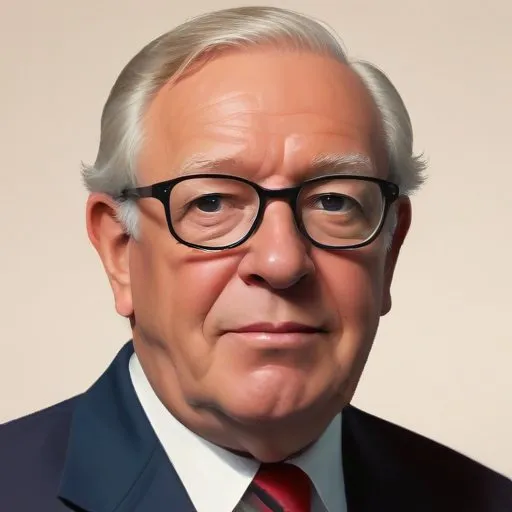
A Deputy Prime Minister of the United Kingdom who served from 1989 to 1990 and is famous for his resignation speech that contributed to the downfall of Prime Minister Margaret Thatcher. He was a key figure in British politics during the 1980s.
Geoffrey Howe, Baron Howe of Aberavon, is renowned for being Margaret Thatcher's longest-serving Cabinet minister, holding various esteemed positions, including Chancellor of the Exchequer, Foreign Secretary, and Deputy Prime Minister of the United Kingdom. His remarkable tenure and significant contributions to British politics have made him an iconic figure in the country's history.
Born on December 20, 1926, in Port Talbot, Wales, Howe was educated at Bridgend Preparatory School, Abberley Hall School, and Winchester College. He later attended Trinity Hall, Cambridge, where he read law and was called to the bar in 1952.
Howe's political journey began in 1964 when he was elected as the Conservative Member of Parliament (MP) for Bebington. Although he lost his seat in 1966, he returned to the bar and eventually became an MP again in 1970, representing various constituencies until 1992.
During Edward Heath's government, Howe served as Solicitor General and a Minister of State. In 1974, after Labour's victory, he became the Shadow Chancellor of the Exchequer in Margaret Thatcher's shadow cabinet.
In 1979, Thatcher appointed Howe as Chancellor of the Exchequer, where he implemented a series of radical policies aimed at restoring public finances, reducing inflation, and liberalizing the economy. During his tenure, he delivered five budgets that significantly shaped the country's economic landscape.
In 1983, Howe was appointed Foreign Secretary, a position he held for six years. During this time, he played a crucial role in shaping British foreign policy, particularly in relation to the European Community and the United States.
In 1989, Thatcher appointed Howe as Deputy Prime Minister, a role he held until his resignation on November 1, 1990. His resignation, which was widely reported, led to a leadership challenge that ultimately resulted in Thatcher's resignation three weeks later.
Geoffrey Howe's remarkable career has left an indelible mark on British politics. His commitment to public service, his vision for economic reform, and his dedication to diplomatic engagement have inspired generations of politicians and policymakers.
Howe was married to Elspeth Howe, and they had three children together. He was knighted in 1970 and created a life peer as Baron Howe of Aberavon in 1992. Throughout his career, he received numerous honors, including the prestigious Order of the Garter.
Geoffrey Howe's extraordinary life and career serve as a testament to his unwavering dedication to public service and his vision for a better Britain. His legacy continues to inspire and influence British politics to this day.
Born in 1925
The first female Prime Minister of the United Kingdom, serving from 1979 to 1990, known for her conservative policies and leadership during the Falklands War.
83 Years Old
A former Prime Minister of the United Kingdom, he led the country from 1990 to 1997, playing a key role in shaping the nation's economy and foreign policy during a tumultuous period.
94 Years Old
A British politician who served as Chancellor of the Exchequer from 1983 to 1989, known for his economic policies and privatization of state-owned industries. He's also a vocal climate change skeptic.
96 Years Old
A British Conservative politician who served as Foreign Secretary and Home Secretary, known for his diplomatic efforts and shaping UK's foreign policy during the 1980s and 1990s.
95 Years Old
A British politician who served in Margaret Thatcher's government, known for his conservative views and infamous "cricket test" for British identity.
93 Years Old
A Deputy Prime Minister of the UK, known for his influential role in British politics and his leadership of the Conservative Party during the 1990s. He's also a successful businessman with interests in publishing and property.
87 Years Old
A British politician who served as Home Secretary and European Commissioner, known for his influential roles in shaping UK politics and economy.
Born in 1912
A British politician who served as Prime Minister from 1976 to 1979, known for his efforts to stabilize the economy and navigate the country through a period of industrial unrest.
