


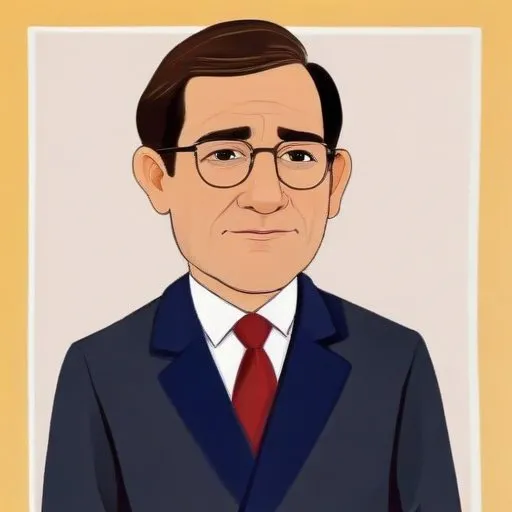
A British politician who served as Home Secretary and European Commissioner, known for his influential roles in shaping UK politics and economy.
Leon Brittan, Baron Brittan of Spennithorne, was a British Conservative politician and barrister, born on September 25, 1939, in London, to Rebecca and Joseph Brittan, a doctor. His parents, Lithuanian Jews who had migrated to Britain before the Second World War, instilled in him the values of hard work and dedication, which would later shape his illustrious political career.
A member of Parliament from 1974 to 1988, Brittan served several ministerial roles in Margaret Thatcher's government, including Home Secretary from 1983 to 1985. During this period, he was a strong critic of the leadership of the National Union of Mineworkers and played a key role in shaping Britain's response to the 1984-1985 miners' strike.
Brittan's extensive experience in British politics paved the way for his appointment as a European Commissioner from 1989 to 1999. During his tenure, he worked tirelessly to promote European integration, playing a crucial role in shaping the European Union's policies on trade, competition, and fisheries.
Brittan's political philosophy was deeply rooted in Conservative values, emphasizing the importance of individual freedom, limited government intervention, and fiscal responsibility. Throughout his career, he remained committed to promoting these ideals, both nationally and internationally.
Leon Brittan's contributions to British politics and European diplomacy have left an indelible mark on history. His commitment to public service, his ability to navigate complex policy issues, and his unwavering dedication to his country have earned him a place among the most respected politicians of his generation.
Brittan's impact on modern society extends beyond the realm of politics. His work on trade and competition policy has shaped the European Union's economic landscape, while his commitment to individual freedom and limited government intervention has inspired a new generation of politicians and policymakers.
Brittan's political career was not without controversy. His role in the 1984-1985 miners' strike and his subsequent actions as Home Secretary remain subjects of debate among historians and political commentators. Nevertheless, his dedication to public service and his commitment to promoting Conservative values have earned him widespread respect.
Brittan's brother, Sir Samuel Brittan, was a renowned economics journalist, while his cousins, Malcolm Rifkind and Mark Ronson, were a Conservative MP and a music producer, respectively. These personal connections underscore the breadth of Brittan's relationships and influence, extending beyond the realm of politics.
Leon Brittan's passing on January 21, 2015, marked the end of an era in British politics. His life and career serve as a testament to the power of dedication, hard work, and commitment to public service. As a statesman, diplomat, and politician, Brittan has left an indelible mark on history, inspiring future generations to strive for excellence in public service.
Born in 1925
The first female Prime Minister of the United Kingdom, serving from 1979 to 1990, known for her conservative policies and leadership during the Falklands War.
83 Years Old
A former Prime Minister of the United Kingdom, he led the country from 1990 to 1997, playing a key role in shaping the nation's economy and foreign policy during a tumultuous period.
73 Years Old
The former Prime Minister of the United Kingdom who led the country through a transformative period, including the Iraq War, and is known for his charismatic leadership and controversial decisions.
75 Years Old
The Prime Minister of the United Kingdom from 2007 to 2010, known for his key role in shaping the country's economy and response to the 2008 global financial crisis.
59 Years Old
The former Prime Minister of the United Kingdom who led the country from 2010 to 2016, known for his role in the Brexit referendum and austerity measures.
55 Years Old
Former Chancellor of the Exchequer who oversaw the UK's economy during a period of austerity, implementing significant spending cuts and tax reforms. Known for his role in shaping the country's economic policy.
65 Years Old
A British politician who served as First Secretary of State and led the Conservative Party, known for his diplomatic efforts and advocacy for human rights and democracy. He played a significant role in shaping UK foreign policy.
95 Years Old
A British politician who served in Margaret Thatcher's government, known for his conservative views and infamous "cricket test" for British identity.
