


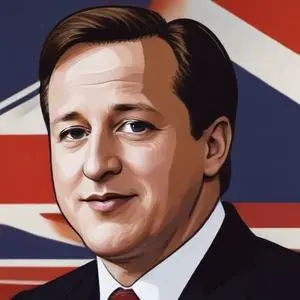
The former Prime Minister of the United Kingdom who led the country from 2010 to 2016, known for his role in the Brexit referendum and austerity measures.
David Cameron is synonymous with British politics, having served as the Prime Minister of the United Kingdom from 2010 to 2016. He is known for his pivotal role in shaping the country's economic and social landscape, leaving an indelible mark on modern British history.
Born on October 9, 1966, in London, Cameron hails from an upper-middle-class family. He was educated at the prestigious Eton College and later attended Brasenose College, Oxford, where he graduated with a first-class honors degree in Philosophy, Politics, and Economics (PPE).
Cameron's foray into politics began in 2001, when he was elected as the Member of Parliament (MP) for Witney. He rapidly rose through the ranks, becoming the Shadow Education Secretary in 2005. Following the resignation of Michael Howard, Cameron succeeded him as the Leader of the Conservative Party and Leader of the Opposition.
In 2010, Cameron formed a coalition government with the Liberal Democrats, marking the first coalition government in the UK since World War II. During his tenure, he implemented numerous reforms, including:
Cameron's administration was marked by several notable international interventions:
Cameron's personal life has been marked by significant milestones, including his marriage to Samantha Sheffield and the birth of their four children. However, his tenure was not without controversy, with criticism surrounding his handling of the Panama Papers scandal, the EU referendum, and his decision to resign as Prime Minister following the Brexit vote.
Love him or loathe him, David Cameron's impact on modern British politics is undeniable. His commitment to fiscal austerity, education reform, and same-sex marriage has left a lasting legacy. As a statesman, he has navigated the complexities of coalition government and responded to global crises, always remaining a steadfast advocate for British interests.
Since resigning as Prime Minister, Cameron has remained active in politics, serving as the Foreign Secretary since 2023. He continues to play a prominent role in international diplomacy, using his experience to shape global policy and promote British interests.
"I'm not a Micromanager, I'm a Macromanager – I'm not getting bogged down in the details, I'm setting the overall direction."
"We are all in this together, and together is exactly how we will face the challenges ahead."
62 Years Old
Former Prime Minister of the United Kingdom and former Mayor of London, known for his charismatic leadership and Brexit advocacy. He led the UK's withdrawal from the European Union.
70 Years Old
The second female Prime Minister of the United Kingdom, leading the country through Brexit negotiations and implementing policies on national security and education. Known for her strong stance on immigration and law and order.
73 Years Old
The former Prime Minister of the United Kingdom who led the country through a transformative period, including the Iraq War, and is known for his charismatic leadership and controversial decisions.
75 Years Old
The Prime Minister of the United Kingdom from 2007 to 2010, known for his key role in shaping the country's economy and response to the 2008 global financial crisis.
59 Years Old
Deputy Prime Minister of the UK from 2010 to 2015, leading the Liberal Democrats in a coalition government with the Conservatives, known for his role in shaping British politics and advocating for EU membership.
55 Years Old
Former Chancellor of the Exchequer who oversaw the UK's economy during a period of austerity, implementing significant spending cuts and tax reforms. Known for his role in shaping the country's economic policy.
72 Years Old
A British politician who served as Secretary of State for Work and Pensions, known for implementing welfare reforms and overseeing the introduction of Universal Credit. He's a prominent figure in UK politics, particularly in the Conservative Party.
59 Years Old
A Scottish journalist and politician who served as Secretary of State for Education, known for his efforts to reform the UK's education system and his role in the Brexit campaign.
