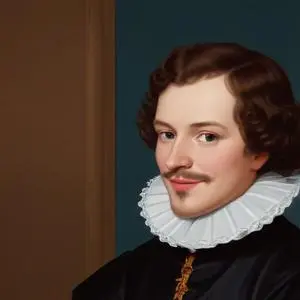
Anthony van Dyck: The Flemish Master of Portraiture
A Life of Artistic Innovation and Royal Patronage
Anthony van Dyck, a Flemish Baroque artist, is renowned for revolutionizing the genre of court portraiture and leaving an indelible mark on English art history. With his exceptional skill and innovative techniques, he became the leading court painter in England, capturing the likenesses of royalty and aristocracy with unparalleled realism and sophistication.
Early Life and Training
Born on March 22, 1599, in Antwerp, Belgium, Anthony van Dyck was the seventh child of Frans van Dyck, a wealthy silk merchant. From a young age, van Dyck demonstrated a prodigious talent for painting, and by his late teens, he was already an accomplished artist. In 1617, he became a master in the Antwerp Guild, further solidifying his reputation as a rising star in the art world.
Influence of Rubens and Italian Sojourn
Van Dyck's early work was heavily influenced by
Peter Paul Rubens, a prominent Flemish painter, under whom he trained in Antwerp. This tutelage had a profound impact on van Dyck's style, which would later evolve to encompass a unique blend of realism and elegance. In 1621, van Dyck traveled to Italy, where he spent six years honing his craft, studying the works of Titian and Caravaggio, and producing some of his most remarkable pieces, including the iconic
Iconography series of portrait etchings.
Court Painter to the English Monarchy
In 1632, van Dyck was summoned to London by King Charles I, who appointed him as his principal court painter. This marks the beginning of van Dyck's most prolific period, during which he produced some of his most celebrated works, including portraits of the royal family and aristocracy. His innovative use of chiaroscuro, composition, and coloration raised the bar for portraiture, earning him widespread acclaim and admiration.
Artistic Legacy and Innovations
Van Dyck's impact on English art is still felt today, with his portraits of Charles I and his family considered some of the greatest works in the genre. He also made significant contributions to watercolor and etching, experimenting with new techniques and mediums. His influence extends beyond portraiture, as he explored mythological, allegorical, and biblical subjects, demonstrating his versatility and mastery of various artistic forms.
Personal Life and Recognition
Van Dyck's personal life was marked by a strong sense of ambition and a desire for recognition. In 1632, he was knighted by King Charles I, a rare honor bestowed upon an artist. He was buried in St. Paul's Cathedral, a testament to his standing in English society. The "Van Dyke" beard, named after his distinctive facial hair, is a lasting tribute to his enduring legacy.
Timeline of Notable Works
- 1617: Became a master in the Antwerp Guild
- 1621: Traveled to Italy, where he spent six years studying and producing notable works
- 1627: Completed the Iconography series of portrait etchings
- 1632: Appointed court painter to King Charles I of England
- 1635: Painted the iconic portrait of Charles I and his family
Contemporary Impact and Legacy
Anthony van Dyck's influence on English art is immeasurable. He revolutionized the genre of portraiture, elevating it to unprecedented heights of realism and sophistication. His innovative techniques, attention to detail, and mastery of light and color continue to inspire artists and art lovers alike. As a testament to his enduring legacy, van Dyck's works remain an integral part of England's cultural heritage.
FAQ
What were Anthony van Dycks contributions to art?
Anthony van Dyck made significant contributions to art, including the development of new techniques in portraiture and the creation of influential works that shaped the course of Western art.
What was Anthony van Dycks role in the English royal court?
Anthony van Dyck played a key role in the English royal court, serving as Principal Painter to King Charles I and creating iconic portraits of the monarch and his family.
How did Anthony van Dycks work influence later artists?
Anthony van Dycks work had a profound influence on later artists, including Peter Paul Rubens and Rembrandt van Rijn, who drew on his innovations in portraiture and technique.
What was Anthony van Dycks approach to portraiture?
Anthony van Dyck approached portraiture through a combination of realism and idealism, capturing the likeness and character of his subjects while also conveying their social status and grandeur.
What is Anthony van Dycks legacy in the history of art?
Anthony van Dycks legacy in the history of art is marked by his innovative approaches to portraiture, his influence on later generations of artists, and his role in shaping the development of Western art.