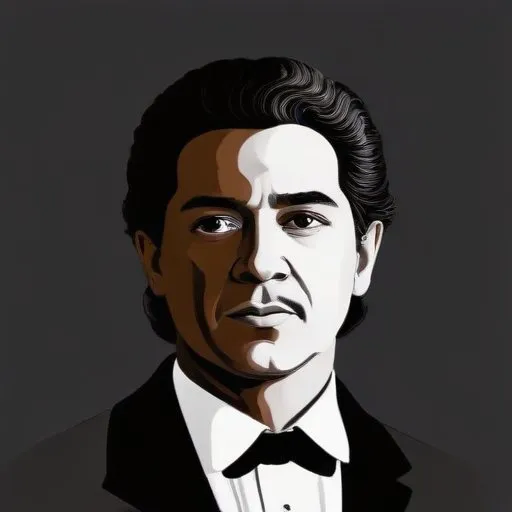
Antônio Carlos Gomes: The Brazilian Maestro Who Conquered European Opera
A Pioneer in Opera Composition
Antônio Carlos Gomes was the first New World composer to gain acceptance in Europe, shattering cultural and geographical barriers in the process. His innovative works earned him recognition alongside giants like Verdi and Puccini, cementing his status as a trailblazer in the world of opera.
Early Life and Inspiration
Born on July 11, 1836, in Campinas, São Paulo, Brazil, Gomes was surrounded by music from an early age. His father, Maestro Manuel José Gomes, and brother, José Pedro de Sant'Ana Gomes, played a significant role in nurturing his talent. The young Gomes was fortunate to have the support of Emperor Dom Pedro II, who sponsored his education at the Musical Conservatory of Rio de Janeiro.
Rise to Fame in Brazil and Beyond
Gomes' first opera,
A Noite do Castelo (September 1861), was a resounding success, followed by
Joana de Flandres (1863), which further solidified his reputation. These early triumphs convinced the Emperor to grant him a Royal scholarship to study in Italy, where he honed his skills under the guidance of Lauro Rossi and Alberto Mazzucato.
Il Guarany and International Acclaim
Gomes' magnum opus,
Il Guarany (1870), premiered at the Teatro alla Scala in Milan, Italy, to critical acclaim. Verdi himself praised the work, calling it an expression of "true musical genius." Liszt, another renowned composer, acknowledged its "dense technical maturity, full of harmonic and orchestral mastery." This opera propelled Gomes to international stardom, making him the first non-European to achieve success in the classical tradition.
Philosophical Contributions and Beliefs
Gomes' music was characterized by its romanticism and nationalism, reflecting his deep connection to Brazilian culture and heritage. His work often explored themes of love, patriotism, and the human condition, resonating with audiences across borders.
Personal Milestones and Key Life Events
- 1864: Gomes traveled to Italy to study at the Milan Conservatory, where he refined his craft and gained international recognition.
- 1870: Il Guarany premiered at the Teatro alla Scala, solidifying Gomes' reputation as a master composer.
- 1883: Gomes returned to Brazil, where he continued to compose and conduct, leaving an indelible mark on the country's musical landscape.
Influence on Modern Society
Antônio Carlos Gomes' remarkable achievements paved the way for future generations of Brazilian and Latin American composers. His legacy continues to inspire musicians and artists, fostering a deeper appreciation for the rich cultural heritage of the Americas.
Quotes and Memorable Sayings
"I came to Italy with a dream, and I returned to Brazil with a mission." – Antônio Carlos Gomes
Historical Context and Legacy
Gomes' groundbreaking career serves as a testament to the power of talent, perseverance, and cultural exchange. As a pioneer in the field of opera, he broke down barriers, demonstrating that artistic excellence knows no geographical bounds. Today, his music remains a beloved part of Brazilian cultural heritage, celebrated and revered by audiences around the world.
FAQ
What are some notable works by Antônio Carlos Gomes?
Antônio Carlos Gomes was a prolific composer, and some of his most notable works include Il Guarany, Lo Schiavo, and Condor.
How did Antônio Carlos Gomes contribute to Brazilian music?
Antônio Carlos Gomes was a pioneer of Brazilian opera, and his works helped to establish a national identity in music. He also founded the Conservatório Imperial de Música do Rio de Janeiro.
What was Antônio Carlos Gomes early life like?
Antônio Carlos Gomes was born in 1836 in Campinas, Brazil. He began studying music at a young age and went on to study at the Conservatório Imperial de Música do Rio de Janeiro.
Did Antônio Carlos Gomes receive any awards or recognition?
Yes, Antônio Carlos Gomes received several awards and recognition for his contributions to music, including the title of Baron of Belem and a state funeral upon his death.
How is Antônio Carlos Gomes remembered today?
Antônio Carlos Gomes is remembered as one of Brazils most important composers, and his music is still performed today. He is also celebrated as a national hero in Brazil.