


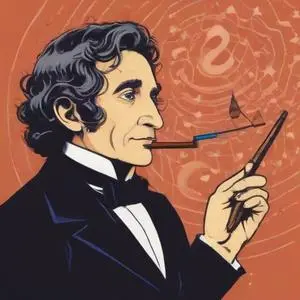
A French Romantic-era mastermind who composed iconic symphonies, operas, and orchestral works, revolutionizing classical music with his bold, expressive style.
Hector Berlioz, a French Romantic composer and conductor, is best known for his innovative and unconventional orchestral works, including the iconic Symphonie fantastique and Harold in Italy. His bold and expressive style, which often blurred the lines between genres, earned him both critical acclaim and controversy during his lifetime.
Berlioz was born on December 11, 1803, in La Côte-Saint-André, France, to a provincial physician. Despite his family's expectations for him to follow in his father's footsteps, Berlioz was drawn to music from an early age. He began composing at 12 and later attended a Parisian medical college, but eventually defied his family by pursuing music as a profession.
Berlioz's independence of mind and refusal to follow traditional rules and formulas put him at odds with the conservative musical establishment of Paris. He briefly moderated his style to win France's premier music prize, the Prix de Rome, in 1830, but he learned little from the academics of the Paris Conservatoire. This rebellious spirit would define his career and influence generations of composers to come.
Berlioz's output includes:
Berlioz was deeply influenced by literature and poetry, particularly the works of Shakespeare, Goethe, and Virgil. His music often reflected his intense emotional experiences, including his all-consuming love for the Irish Shakespearean actress Harriet Smithson, whom he eventually married.
Berlioz's innovative and expressive style has inspired generations of composers, including Franz Liszt, Richard Wagner, and Gustav Mahler. His music continues to be performed and celebrated around the world, and his influence can be seen in numerous artistic fields, from literature to cinema.
"Music is the expression of the deepest and most profound emotions of the human soul."
"The artist is a rebel, and his rebellion is his justification."
Berlioz's life and work serve as a testament to the power of creative rebellion and the importance of staying true to one's artistic vision, even in the face of adversity.
By defying tradition and pushing the boundaries of what was possible, Hector Berlioz left an indelible mark on the world of classical music. His rebellious spirit and innovative style continue to inspire and captivate audiences to this day.
Born in 1811
A virtuosic pianist and composer who revolutionized classical music with his technically demanding and emotionally expressive works, blending Hungarian folk influences with Romantic-era drama.
Born in 1810
A Polish pianist and composer renowned for his delicate, expressive, and technically demanding piano music that evokes deep emotions and continues to inspire generations of musicians and music lovers. His nocturnes, waltzes, and preludes are staples of classical music.
Born in 1813
A revolutionary composer who transformed opera with his epic, mythological works, creating a new era of musical storytelling. His iconic operas, such as "Der Ring des Nibelungen," continue to captivate audiences worldwide.
Born in 1813
A renowned composer of iconic operas like La Traviata and Aida, known for his masterful blending of drama and music. His works continue to captivate audiences worldwide.
Born in 1782
A virtuosic violinist and composer who revolutionized the instrument's technical possibilities, leaving an indelible mark on classical music.
Born in 1801
Operatic mastermind behind bel canto classics like "Norma" and "La Sonnambula", renowned for their beautiful, expressive melodies and dramatic flair.
Born in 1797
A renowned Italian composer of the Romantic era, best known for his operas, particularly "L'elisir d'amore" and "Don Pasquale", which are still widely performed today.
Born in 1810
A renowned Romantic-era composer and influential music critic, known for his expressive and emotionally charged works, including symphonies, piano music, and art songs.
