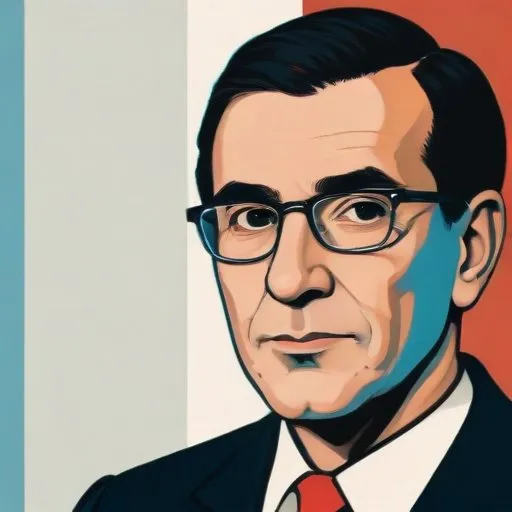
Antonio Cafiero: The Mastermind Behind Argentina's Political Landscape
A Legacy of Public Service and Peronism
Antonio Cafiero is a name synonymous with Argentine politics, particularly in the realm of Peronism. This stalwart politician held a multitude of influential positions, including the governorship of Buenos Aires Province, the Cabinet Chiefs Office, and a seat in the Senate of the Nation.
Early Life and Education
Born on September 12, 1922, in Buenos Aires, Cafiero was drawn to politics from a young age. He joined Catholic Action in 1938 and later enrolled at the University of Buenos Aires, where he became the President of the Students Association. Cafiero graduated as an accountant in 1944 and went on to earn a Doctor in Economic Sciences in 1948. His academic pursuits didn't stop there, as he taught as a professor from 1952 to 1984.
A Peronist Through and Through
Cafiero's involvement with Peronism began in 1945, when he participated in the mass demonstrations in support of populist leader
Juan Perón. This marked the start of his illustrious career in public service. He served as Minister of Foreign Trade under Perón's administration from 1952 to 1954. Throughout his life, Cafiero remained a devoted Peronist, holding various positions within the Justicialist Party.
A Family Man and Public Servant
In his personal life, Cafiero was married to Ana Goita for fifty years, until her passing in 1994. Together, they had ten children, many of whom followed in their father's footsteps in the world of politics. His son, Juan Pablo Cafiero, served as Ambassador to the Holy See, while another son, Mario Cafiero, was a National Deputy from 1997 to 2005. Even his grandson, Santiago Cafiero, became involved in politics, serving as Cabinet Chief and Foreign Minister.
Career Highlights
- Governor of Buenos Aires Province (1987-1991)
- Cabinet Chief under Interim President Eduardo Camaño (2001-2002)
- Senator of the Nation (1993-2005)
- Minister of Foreign Trade under Juan Perón's administration (1952-1954)
- Secretary of Commerce in Perón's last term (1974)
Influence on Modern Argentina
Cafiero's extensive career has left an indelible mark on Argentine politics. His dedication to Peronism and public service has inspired generations of politicians. Throughout his life, he worked tirelessly to promote the ideals of social justice and equality, shaping the country's political landscape in the process.
Legacy
Antonio Cafiero's passing on October 13, 2014, marked the end of an era in Argentine politics. However, his legacy lives on through the numerous institutions and initiatives he helped establish. As a testament to his commitment to public service, Cafiero's family continues to play a significant role in Argentine politics, ensuring his vision for a more just and equitable society endures.
FAQ
What was Antonio Cafieros role in Argentine politics?
Antonio Cafiero was a prominent Argentine politician who served as Governor of Buenos Aires Province from 1987 to 1991. He was a key figure in the Justicialist Party and played a significant role in shaping Argentine politics during the late 20th century.
How did Antonio Cafieros career as an accountant influence his political views?
Antonio Cafieros background as an accountant gave him a strong understanding of economics and finance, which informed his political views and policy decisions. He was known for his fiscal responsibility and commitment to social justice.
What were some of Antonio Cafieros major accomplishments as Governor of Buenos Aires Province?
As Governor, Antonio Cafiero implemented a range of reforms aimed at modernizing the provinces infrastructure, improving education and healthcare, and promoting economic development. He also played a key role in resolving the Argentine debt crisis of the 1980s.
What was Antonio Cafieros relationship like with other prominent Argentine politicians?
Antonio Cafiero worked closely with other prominent Argentine politicians, including President Carlos Menem, and was a key ally in the Justicialist Party. He was known for his ability to build consensus and forge alliances across party lines.
What is Antonio Cafieros legacy in Argentine politics?
Antonio Cafieros legacy in Argentine politics is that of a skilled and pragmatic leader who worked tirelessly to promote economic development, social justice, and democratic stability. His commitment to public service and his country continues to inspire new generations of Argentine politicians.