


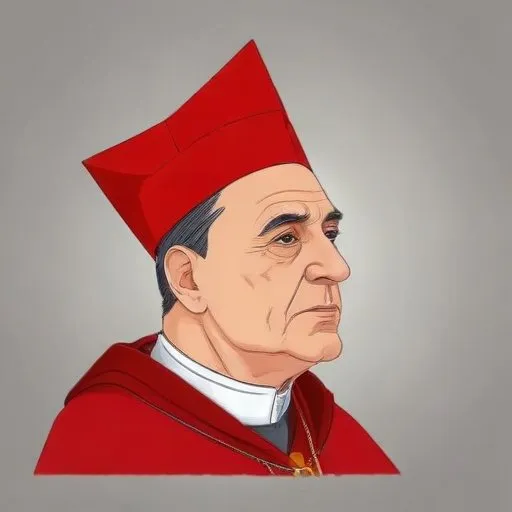
A prominent Catholic Church leader, serving as the Prefect of the Congregation for Divine Worship and the Discipline of the Sacraments, known for his conservative views and influence on Catholic liturgy.
Renowned for his unwavering dedication to the Catholic faith and his versatile roles within the Church, Antonio Caizares Llovera is a Spanish cardinal who has left an indelible mark on the ecclesiastical landscape. As a former Archbishop of Valencia and Prefect of the Congregation for Divine Worship and the Discipline of the Sacraments, Llovera's influence has resonated across the globe.
Born on October 15, 1945, in Utiel, Spain, Llovera embarked on his spiritual journey at a young age. He pursued his studies at the minor and major seminaries in Valencia, culminating in a doctorate in theology from the Pontifical University of Salamanca, where he specialized in catechesis. This academic foundation would later prop him up as a stalwart of Catholic education and doctrine.
Ordained to the priesthood by Archbishop José García Lahiguera on June 21, 1970, Llovera's apostolic endeavors began in the Archdiocese of Valencia. As an assistant pastor and delegate for catechesis, he demonstrated a keen passion for nurturing the faith of his congregation. His subsequent transfer to the Archdiocese of Madrid saw him assume roles as a professor and director, further solidifying his reputation as a catechetical expert.
The episcopal consecration of Llovera on April 25, 1992, marked a significant milestone in his ecclesiastical career. Appointed as Bishop of Ávila by Pope John Paul II, he went on to become a member of the Congregation for the Doctrine of the Faith in the Roman Curia. This juncture in his career underscored his commitment to upholding the integrity of Catholic doctrine.
Llovera's tenure as Archbishop of Toledo and Primate of Spain (2002-2008) and Prefect of the Congregation for Divine Worship and the Discipline of the Sacraments (2008-2014) bore testament to his capacity for leadership and guidance. His elevation to the College of Cardinals in 2006 recognized his outstanding contributions to the Catholic Church.
Through his extensive ministry, Llovera has exemplified a profound dedication to the Catholic faith. His legacy extends beyond his ecclesiastical appointments, encompassing his tireless efforts to promote catechesis, doctrine, and charity. As a beacon of hope and inspiration, Antonio Caizares Llovera continues to illuminate the path for generations of Catholics to come.
As a luminary within the Catholic Church, Antonio Caizares Llovera's storied career serves as a testament to his unwavering commitment to the pursuit of truth, faith, and wisdom. His enduring impact on the ecclesiastical landscape will forever be etched in the annals of Catholic history.
99 Years Old
The first pope to resign in nearly 600 years, he's known for his conservative views and efforts to strengthen the Catholic Church's traditional teachings. He's also a prolific writer and theologian.
Born in 1920
Leader of the Catholic Church from 1978 to 2005, known for helping to end communism in Poland and being a charismatic advocate for human rights and social justice.
89 Years Old
The leader of the Catholic Church, known for his progressive stance on social issues and efforts to reform the Church, inspiring millions worldwide.
81 Years Old
A prominent Catholic leader and theologian, known for his influential writings on Catholic doctrine and his role in shaping the Church's stance on various issues.
84 Years Old
A prominent Catholic leader and philosopher, known for his intellectual approach to theology and his potential to become Pope. He has written extensively on various philosophical and theological topics.
84 Years Old
A renowned biblical scholar and cultural critic, he's known for his expertise in biblical studies and his efforts to promote interfaith dialogue and cultural understanding.
91 Years Old
A high-ranking Catholic Church official who served as the Vatican's Secretary of State and Camerlengo, playing a key role in the papal transition following Pope John Paul II's death. He was also known for his conservative views and controversies surrounding his leadership style.
