


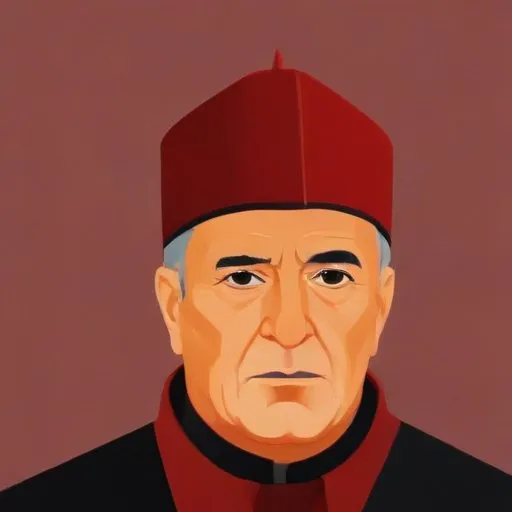
A renowned biblical scholar and cultural critic, he's known for his expertise in biblical studies and his efforts to promote interfaith dialogue and cultural understanding.
Gianfranco Ravasi, a towering figure in the Catholic Church, is esteemed for his profound knowledge of biblical scripture and his commitment to interfaith dialogue. As a cardinal since 2010, he has served as the President of the Pontifical Council for Culture, fostering a deeper understanding between the Church and the world of culture.
Born on October 18, 1942, in Merate, Italy, Ravasi grew up in a family marked by strong moral values. His father, an antifascist treasury agent, deserted the army during World War II, leaving his family for 18 months. This experience deeply impacted Ravasi, shaping his search for permanence and his desire to understand the transcendent.
Ravasi's intellectual curiosity led him to pursue a career teaching Greek and Latin classics. However, he ultimately decided to join the priesthood, driven by a sense of calling. Ordained in 1966, he went on to study at the Pontifical Gregorian University and the Pontifical Biblical Institute in Rome.
His academic pursuits took him to the Middle East, where he worked as an archaeologist alongside renowned scholars like Kathleen Kenyon and Roland de Vaux. He later became a professor of exegesis of the Old Testament at the Theological Faculty of Northern Italy in Milan.
In 1989, Ravasi became the prefect of the Ambrosian Library, a position that catapulted him to fame in literary and academic circles. His engaging lectures on religious subjects made him a beloved figure in Milan. In 2007, he was appointed President of the Pontifical Council for Culture, a role that has allowed him to promote cultural dialogue and understanding between the Church and the world.
As President of the Pontifical Council for Culture, Ravasi has been instrumental in shaping the Church's engagement with the world of culture. He has fostered collaborations with international organizations, academia, and artists, promoting a deeper understanding of the Church's role in contemporary society.
His erudite scholarship and commitment to interfaith dialogue have earned him recognition and respect across the globe. Ravasi's leadership has inspired a new generation of scholars, theologians, and Church leaders, cementing his legacy as a champion of cultural and religious understanding.
Ravasi's philosophical contributions are rooted in his deep understanding of biblical scripture and his commitment to interfaith dialogue. He believes that the Church must engage with the world of culture to promote greater understanding and cooperation.
His writings and lectures often touch on the themes of permanence, transcendence, and the human search for meaning. Ravasi's philosophical approach is characterized by a profound respect for different cultures and religions, and a willingness to listen and learn from others.
Ravasi's leadership and scholarship have had a profound impact on modern society. His commitment to interfaith dialogue has helped to promote greater understanding and cooperation between different religions and cultures.
His engagement with the world of culture has inspired a new generation of artists, scholars, and theologians, encouraging them to explore the intersections between faith and culture.
Ravasi has received numerous awards and honors for his contributions to biblical scholarship and his commitment to interfaith dialogue. These include the prestigious Ratzinger Prize, awarded in 2011.
In conclusion, Gianfranco Ravasi is a towering figure in the Catholic Church, known for his profound knowledge of biblical scripture, his commitment to interfaith dialogue, and his leadership in promoting cultural understanding between the Church and the world.
89 Years Old
The leader of the Catholic Church, known for his progressive stance on social issues and efforts to reform the Church, inspiring millions worldwide.
99 Years Old
The first pope to resign in nearly 600 years, he's known for his conservative views and efforts to strengthen the Catholic Church's traditional teachings. He's also a prolific writer and theologian.
Born in 1920
Leader of the Catholic Church from 1978 to 2005, known for helping to end communism in Poland and being a charismatic advocate for human rights and social justice.
