


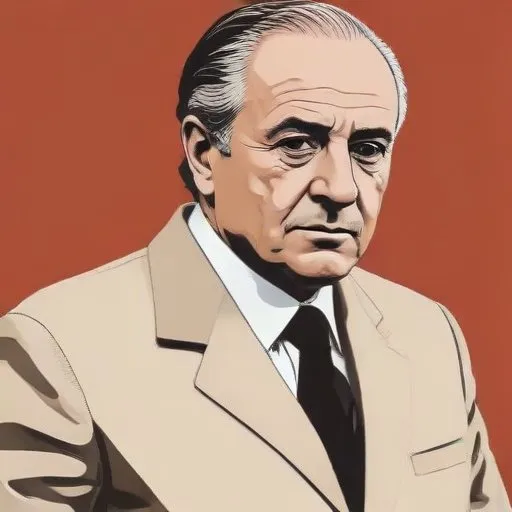
The 12th Prime Minister of Italy, serving from 1891 to 1892 and again from 1896 to 1898, known for his conservative policies and efforts to maintain social order. He played a significant role in shaping Italy's early years as a unified nation.
Antonio Starabba, Marchese di Rudin, was a renowned Italian statesman who served as the Prime Minister of Italy twice, from 1891 to 1892 and from 1896 to 1898, leaving an indelible mark on the country's politics and economy. He is celebrated for his progressive reforms, his unwavering commitment to the unity of Italy, and his role in shaping the nation's destiny during a period of profound transformation.
Born on April 16, 1839, in Palermo, then part of the Kingdom of the Two Sicilies, Starabba hailed from an aristocratic Sicilian family. However, unlike many of his contemporaries, his family was known for their liberal and cultured disposition. This upbringing instilled in him a strong sense of patriotism, which drove him to join the revolutionary committee in 1859, paving the way for Garibaldi's triumphs in the following year.
Starabba's early career was marked by significant milestones. He served as attaché to the Italian foreign office in Turin and later became the mayor of Palermo. In 1866, he demonstrated exceptional courage and energy in quelling an insurrection of separatist and reactionary tendencies, earning him the prefecture of Palermo. His success in suppressing brigandage throughout the province further solidified his reputation as a capable leader.
In 1868, Starabba became the prefect of Naples and later, in October 1869, he was appointed Minister of the Interior in the Menabrea cabinet. Although the cabinet fell shortly after, he continued to play a crucial role in Italian politics, becoming the leader of the Right in 1886 after the death of Marco Minghetti. His first premiership, from 1891 to 1892, was marked by economic reforms that put Italian finances on a sound basis and the renewal of the Triple Alliance.
After a brief hiatus, Starabba returned to power in 1896, forming a coalition government with the Radical leader, Felice Cavallotti. This second premiership was characterized by continued economic growth and a renewed focus on social reform.
Starabba's legacy is multifaceted and far-reaching. He played a key role in shaping Italy's economy, politics, and society during a period of rapid transformation. His commitment to liberal values and his ability to balance the interests of various factions earned him the respect of his contemporaries and the admiration of future generations.
Today, Starabba is remembered as a visionary statesman who worked tirelessly to promote the unity and progress of Italy. His life and career serve as a testament to the power of dedication, perseverance, and effective leadership.
Starabba's life and career are intimately tied to the tumultuous history of Italy during the late 19th century. His premierships coincided with a period of rapid industrialization, urbanization, and social change, and his policies played a significant role in shaping the country's response to these challenges. Today, he is remembered as one of the most important statesmen of the period, a figure who worked to promote unity, stability, and progress in a rapidly changing world.
Starabba was awarded the title of Marchese di Rudin in recognition of his exceptional service to the Italian state. He was also honored with various other titles and decorations, including the Grand Cross of the Order of Saints Maurice and Lazarus.
Born in 1844
King of Italy from 1878 to 1900, known for unifying Italy and establishing the modern Italian state. He played a key role in Italian politics and foreign policy during his reign.
Born in 1842
The 13th Prime Minister of Italy, a master of political maneuvering, dominated Italian politics in the early 20th century with his flexible and pragmatic approach. He's most known for his ability to maintain power and stability during a time of great social and economic change.
