


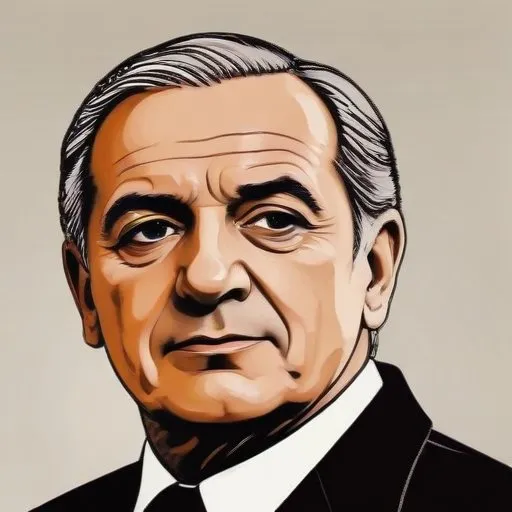
The 13th Prime Minister of Italy, a master of political maneuvering, dominated Italian politics in the early 20th century with his flexible and pragmatic approach. He's most known for his ability to maintain power and stability during a time of great social and economic change.
Giovanni Giolitti, a statesman extraordinaire, is renowned for serving as the Prime Minister of Italy a record five times between 1892 and 1921, earning him the title of the longest-serving democratically elected Prime Minister in Italian history. His mastery of the political art of trasformismo, a centrist coalition-building strategy, enabled him to dominate Italian politics for over three decades.
Giolitti was born on October 27, 1842, in Mondovì, Italy. He studied law in Turin and later became a government official, eventually entering politics in 1876 as a member of the Chamber of Deputies. His dedication to social reform and his skill in compromise-building propelled him to the top echelons of Italian politics.
During his prime ministerships, Giolitti implemented a plethora of progressive social reforms, significantly improving the living standards of ordinary Italians. Some notable achievements include:
These reforms not only enhanced the lives of Italians but also solidified Giolitti's reputation as a champion of social justice and economic development.
Giolitti's dominant position in Italian politics led to accusations of authoritarianism and parliamentary dictatorship. Critics argued that his centrist coalition-building approach isolated the extremes of the Left and Right, stifling opposition and limiting democracy.
A self-proclaimed centrist liberal, Giolitti's political philosophy emphasized strong ethical concerns and the importance of national economic development. He believed that government intervention was necessary to create wealth and improve living standards.
The Giolittian Era, spanning from the start of the 20th century to the outbreak of World War I, was a pivotal period in Italian history. Giolitti's reforms and policies laid the groundwork for Italy's transformation into a modern, industrialized nation. His legacy continues to influence Italian politics and society to this day.
In contrast to his authoritarian contemporaries, such as Benito Mussolini, Giolitti's commitment to democratic principles and social reform distinguished him as a champion of liberal values. His ability to navigate the complexities of Italian politics and implement progressive reforms earned him a unique place in Italian history.
Giolitti's personal life was marked by dedication to his work and a strong sense of duty. He remained unmarried throughout his life, focusing on his political career and leaving behind a legacy of social reform and political innovation.
"The country is not governed by speeches, but by deeds."
Giolitti's words continue to inspire politicians and policymakers, emphasizing the importance of tangible results over rhetorical flourishes.
Giolitti's reforms and policies have had a lasting impact on Italian society, shaping the country's social and economic landscape. His legacy serves as a testament to the power of progressive politics and the importance of government intervention in promoting national development.
Giolitti's political achievements are a testament to his remarkable career, marked by five prime ministerships and numerous reforms. His masterful handling of Italian politics has earned him a place among the most influential politicians in Italian history.
Born in 1883
Italian fascist revolutionary and politician who led the National Fascist Party and ruled Italy from 1922 to 1943, known for his authoritarian regime and aggressive military campaigns.
Born in 1873
A lawyer-turned-politician who served as Italy's Prime Minister during a tumultuous post-WW1 period, known for his efforts to stabilize the country and rebuild its economy.
Born in 1877
First President of the Italian Republic, instrumental in shaping the country's post-WWII government and constitution. Known for his key role in Italy's transition to a republic.
Born in 1918
The 9th President of Italy, a lawyer and politician who played a key role in shaping the country's post-war politics and served as a senator for life. He's remembered for his strong stance against organized crime and corruption.
Born in 1919
A dominant figure in Italian politics, serving as Prime Minister seven times, known for his cunning and controversial leadership style. He was a key player in shaping Italy's post-war politics.
