


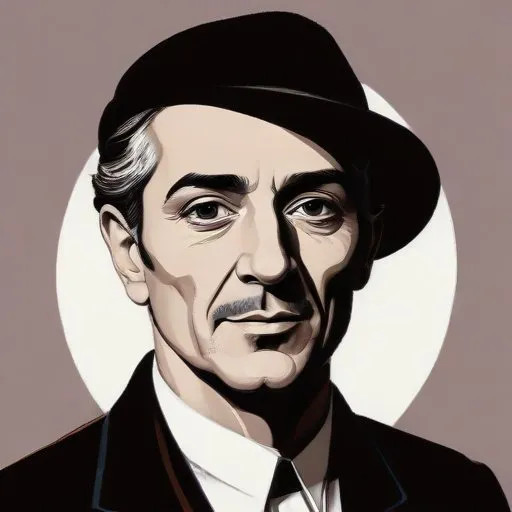
A French painter and illustrator renowned for his vivid, dreamlike scenes and fantastical creatures, blending medieval and Art Nouveau styles. His work adorned books, posters, and magazines, captivating the public's imagination.
Antonio de La Gndara, a painter, pastellist, and draughtsman, is widely regarded as one of the most prominent artists of the Belle Époque era, renowned for his exquisite portraits of European aristocracy and high society. His work, characterized by simplicity, elegance, and attention to detail, has left an indelible mark on the world of art, capturing the essence of a bygone era with unparalleled sophistication.
Born on December 16, 1861, in Paris, France, La Gndara's cultural heritage was shaped by his Spanish father, born in San Luis Potos, Mexico, and his English mother. This unique blend of cultures would later influence his work, imbuing it with a distinctive flair that set him apart from his contemporaries. At the tender age of 15, La Gndara was accepted as a student at the prestigious École des Beaux-Arts, where he honed his skills under the guidance of Jean-Léon Gérôme and Cabanel.
In 1883, La Gndara's talent was recognized by the jury of the Salon des Champs-Élysées, who singled out his portrait of Saint Sebastian, marking the beginning of his rapid ascent to fame. Less than a decade later, he had become the favorite artist of the Parisian elite, with a clientele that boasted some of the most prominent figures of the time, including Countess Greffulhe, the Grand Duchess of Mecklenburg, and Prince Edmond de Polignac.
La Gndara's work extended beyond portraiture, as he collaborated with notable writers and poets, illustrating publications such as Les Danseuses by Camille Mauclair and Les Chauves-Souris (The Bats) by Robert de Montesquiou.
In 1898, La Gndara's work was introduced to the American public through an exhibition at Durand-Ruel in New York, cementing his status as a master painter. The exhibition's success was met with widespread acclaim, with major newspapers and magazines reproducing his portraits on their front pages.
Antonio de La Gndara's work continues to captivate art lovers and historians alike, offering a glimpse into the opulence and refinement of Belle Époque Paris. His contributions to the world of art are a testament to his skill, dedication, and innovative spirit, leaving an indelible mark on the cultural landscape of his time.
Born in 1732
A prolific Rococo painter and etcher, renowned for his delicate, whimsical, and often erotic works that capture the carefree spirit of 18th-century French aristocracy. His art often featured lush landscapes, gentle colors, and playful scenes of love and leisure.
Born in 1703
A prominent artist of the Rococo style, known for his delicate and ornate paintings, often depicting mythological and pastoral scenes, as well as designing sets for the Paris Opera.
Born in 1684
A French painter who created delicate, dreamy, and intimate scenes of everyday life, often blending reality and fantasy, and is considered a pioneer of the Rococo style.
Born in 1748
A French painter and illustrator who revolutionized Neoclassicism with his realistic and emotive works, creating iconic pieces like "Oath of the Horatii" and "Napoleon Crossing the Alps".
Born in 1791
A Romantic-era master of dramatic and emotionally charged art, known for his powerful depictions of horses and the human experience.
Born in 1798
A Romantic-era master of expressive brushstrokes and vivid color, creating iconic works that captured the drama and emotion of historical and literary scenes.
Born in 1780
A renowned French Neoclassicist painter and illustrator, celebrated for his exquisite portraits and historical scenes that epitomize elegance and refinement. His work continues to inspire artists and art enthusiasts alike.
