


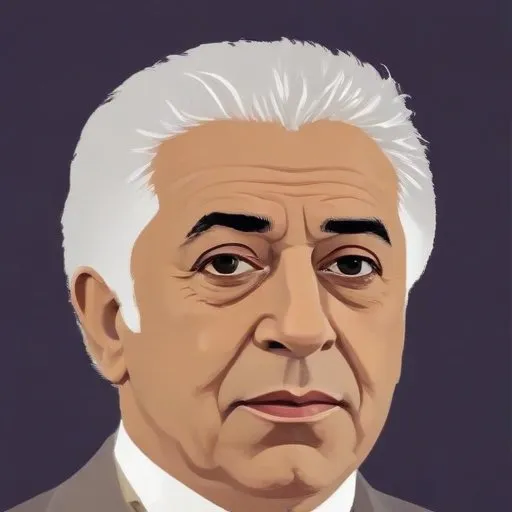
A renowned composer and conductor, famous for blending Armenian folk elements with classical music, creating iconic works like the "Sabre Dance" and "Masquerade Suite".
Aram Khachaturian, a Soviet Armenian composer and conductor, is renowned for his mesmerizing ballet music, orchestral masterpieces, and iconic film scores. His repertoire, characterized by vibrant harmonies, captivating rhythms, and virtuosic melodies, has captivated audiences worldwide, earning him a place among the leading Soviet composers of his time.
Born on June 24, 1903 (O.S. May 6), in Tbilisi, Georgia, Khachaturian was raised in a family of Armenian descent. Following the Sovietization of the Caucasus in 1921, he relocated to Moscow, where he enrolled in the Gnessin Musical Institute without prior music training. His talent and dedication led him to the Moscow Conservatory, where he studied under the guidance of Nikolai Myaskovsky, among other notable composers.
Khachaturian's breakthrough came with his Piano Concerto (1936), which catapulted him to fame within and outside the Soviet Union. This was followed by the Violin Concerto (1940) and the Cello Concerto (1946), solidifying his reputation as a master of orchestral music.
Khachaturian's ballet music, particularly Gayane (1942) and Spartacus (1954), showcased his unique ability to craft captivating and energetic scores. The Sabre Dance from Gayane has become an iconic piece, extensively used in popular culture and performed by numerous musicians worldwide. His film scores, totaling around 25, demonstrated his versatility and adaptability as a composer.
Khachaturian's distinctive style is marked by:
His music reflects the cultural heritage of his Armenian roots, combined with the artistic and intellectual currents of his time.
Khachaturian held prominent positions in the Union of Soviet Composers from the late 1930s, joining the Communist Party in 1943. However, in 1948, he was officially denounced as a formalist, and his music was dubbed "antipeople." This brief period of disfavor was short-lived, and he was eventually restored to his esteemed position.
After 1950, Khachaturian devoted himself to teaching at the Gnessin Institute and the Moscow Conservatory. He also embarked on numerous international tours, conducting his own works in Europe, Latin America, and the United States.
Aram Khachaturian's contributions to Soviet music, Armenian cultural heritage, and the world of classical music are immeasurable. His legacy continues to inspire new generations of composers, conductors, and music enthusiasts alike.
Khachaturian passed away on May 1, 1978, leaving behind a rich tapestry of musical masterpieces that continue to captivate audiences worldwide.
Born in 1906
A renowned Russian pianist and composer, known for blending classical music with dark humor and satire, creating iconic symphonies and film scores that still resonate today.
Born in 1873
A renowned Russian musician who composed iconic symphonies and piano concertos, and was also a skilled pianist and conductor, leaving a lasting legacy in classical music.
Born in 1882
A Russian master of music, renowned for revolutionizing classical music with bold, avant-garde compositions that blended traditional and modern elements. His iconic works, such as "The Rite of Spring," continue to inspire and influence artists across genres.
Born in 1891
A Russian musical genius who composed iconic works like "Peter and the Wolf" and "Romeo and Juliet," blending classical and modern styles.
Born in 1844
A Russian master of orchestration, known for his vibrant and exotic compositions, such as "Scheherazade" and "Flight of the Bumblebee", that evoke fantastical worlds and mythical creatures.
Born in 1839
A Russian master of evocative and dramatic music, famous for his vivid orchestral works, including the iconic "Night on Bald Mountain" and "Pictures at an Exhibition".
Born in 1840
A renowned Russian composer and educator, he is best known for his iconic and beloved ballets, such as Swan Lake and The Nutcracker, which continue to enchant audiences worldwide.
Born in 1813
A renowned composer of iconic operas like La Traviata and Aida, known for his masterful blending of drama and music. His works continue to captivate audiences worldwide.
