


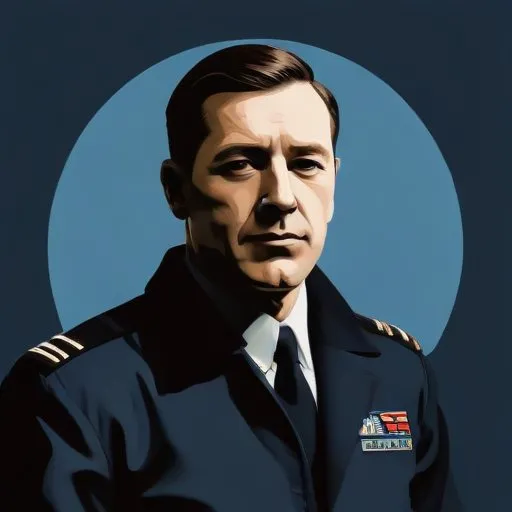
Early American aviator who set multiple altitude records and was a member of the Wright brothers' exhibition team, known for his daring flying stunts.
Archibald Hoxsey, an American aviator, is renowned for being the first pilot to fly at night and setting a flight altitude record of 11,474 feet in 1910. His remarkable achievements in the early days of aviation earned him the nickname "the heavenly twin" alongside Ralph Johnstone, with whom he frequently engaged in dueling altitude record attempts.
Hoxsey was born on October 15, 1884, in Staunton, Illinois, and later moved to Pasadena, California, with his parents. Before his aviation career, he worked as an auto mechanic and chauffeur in his early twenties. His exceptional mechanical skills led to a meeting with the Wright brothers, which marked the beginning of his journey in aviation.
In March 1910, the Wright brothers opened a flight school in Montgomery, Alabama, where Hoxsey was appointed as a teacher. This opportunity enabled him to hone his flying skills and eventually become the first pilot to fly at night. His pioneering achievement in night flight paved the way for future advancements in aviation.
On October 11, 1910, Hoxsey took former President Theodore Roosevelt on a flight at Kinloch Field in St. Louis, Missouri. This notable event marked one of the earliest instances of a prominent figure flying in an airplane. Later, on December 26, 1910, Hoxsey set a flight altitude record of 11,474 feet, a feat that solidified his reputation as a skilled and daring aviator.
Tragically, Hoxsey's life was cut short on December 31, 1910, when he crashed from an altitude of 7,000 feet while attempting to set a new altitude record in Los Angeles, California. The Wright brothers paid for his funeral, and he was buried in Woodlawn Cemetery, Atkinson, Nebraska, alongside his father.
Hoxsey's contributions to aviation had a profound impact on modern society. His pioneering night flights and altitude records paved the way for advancements in commercial aviation, aerial navigation, and aeronautical engineering. His legacy continues to inspire future generations of aviators and engineers.
Hoxsey's life and achievements must be viewed within the context of the early days of aviation. His pioneering spirit and accomplishments played a significant role in shaping the course of aviation history. His legacy continues to inspire and motivate future generations to push the boundaries of human achievement.
Born in 1871
Co-founder of the Wright Company, credited with inventing and building the world's first successful airplane, making powered, controlled, and sustained heavier-than-air human flight a reality.
Born in 1867
Designed and built the world's first successful airplane, making the first controlled, powered, and sustained heavier-than-air human flight. This innovation revolutionized transportation and global connectivity.
Born in 1878
Pioneering cyclist and engineer who designed and built innovative bicycles and aircraft, making significant contributions to the development of modern aviation.
Born in 1875
First American woman to earn a pilot's license, breaking gender barriers in aviation, and also a pioneering screenwriter in the early film industry.
Born in 1887
A pioneering aviator who set numerous records for altitude and distance, and performed death-defying stunts in his biplane, earning him the nickname "The King of the Sky."
Born in 1923
The first test pilot to break the sound barrier, achieving a historic milestone in aviation and paving the way for supersonic flight. This daring feat cemented his status as a legendary figure in the history of flight.
