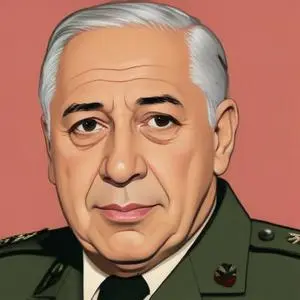
Ariel Sharon: The Controversial Architect of Modern Israel
A Life of Military Brilliance and Political Turmoil
Ariel Sharon, also known as "Arik," was a dominant force in Israeli politics, known for his unwavering commitment to the state of Israel and his unapologetic approach to protecting its interests. As the 11th Prime Minister of Israel from 2001 to 2006, Sharon was instrumental in shaping the country's modern landscape, leaving a lasting impact on the Middle East.
A Military Career Marked by Controversy
Sharon's military career spanned over four decades, during which he participated in several high-profile conflicts, including the 1948 Palestine War, the 1956 Suez Crisis, and the 1967 Six-Day War. He rose through the ranks to become a respected military strategist, earning the nickname "the greatest field commander in our history" from
Yitzhak Rabin. However, his involvement in the 1953 Qibya massacre and the 1982 Lebanon War, which led to the Sabra and Shatila massacre, earned him the moniker "the Butcher of Beirut" among Arabs.
Political Rise and the Pursuit of Israeli Settlements
After leaving the military, Sharon entered politics, joining the Likud party and serving in various ministerial posts. As Minister of Defense, he oversaw the 1982 Lebanon War, which further solidified his reputation as a hardliner. Throughout the 1970s to 1990s, Sharon championed the construction of Israeli settlements in the West Bank and Gaza Strip, a stance that sparked widespread controversy.
Prime Minister and the Unilateral Disengagement
In 2001, Sharon became Prime Minister of Israel, defeating
Ehud Barak in the election. During his tenure, he introduced the controversial Israeli West Bank barrier, aimed at curbing Palestinian attacks. In 2005, he oversaw Israel's unilateral disengagement from the Gaza Strip, a move that sparked both praise and criticism.
Legacy and Impact on Modern Israel
Love him or loathe him, Ariel Sharon's legacy continues to shape the Israeli political landscape. His unwavering commitment to Israeli security and his willingness to take bold, if unpopular, decisions have left an indelible mark on the country. While his actions sparked international condemnation, he remains a celebrated figure in Israel, revered for his leadership and vision.
A Life of Personal Milestones and Key Events
- 1928: Born in Kfar Malal, Mandatory Palestine, to Russian Jewish immigrants
- 1948: Participated in the 1948 Palestine War as platoon commander of the Alexandroni Brigade
- 1953: Involved in the Qibya massacre, which led to widespread international condemnation
- 1967: Participated in the Six-Day War, which resulted in Israel capturing the Gaza Strip and West Bank
- 1970s-1990s: Championed construction of Israeli settlements in the West Bank and Gaza Strip
- 1999: Became leader of the Likud party
- 2000: Made a controversial visit to the Al-Aqsa complex on the Temple Mount, triggering the Second Intifada
- 2001: Became Prime Minister of Israel
- 2005: Oversaw Israel's unilateral disengagement from the Gaza Strip
- 2014: Passed away on January 11, leaving behind a complex and contested legacy
Quotes and Memorable Sayings
- "Israel may have the right to put others on trial, but certainly no one has the right to put the Jewish people on trial."
- "We are not here to defeat the Arabs, we are here to survive."
- "The Palestinians are like crocodiles, the more you give them meat, the more they will want."
A Comparative Analysis with Contemporaries
Ariel Sharon's unyielding commitment to Israeli security and his willingness to take bold, if unpopular, decisions set him apart from his contemporaries. While his legacy is often compared to that of Yitzhak Rabin, his more hawkish stance and controversial actions earned him a distinct place in Israeli politics.
Influence on Modern Society and Pop Culture
Ariel Sharon's impact on modern society extends beyond Israeli politics. His actions have influenced international relations, shaped regional politics, and sparked countless debates on the Israeli-Palestinian conflict. In popular culture, Sharon's image has been immortalized in films, books, and television shows, cementing his status as a larger-than-life figure.
Awards and Honors
- Israel Prize (2004)
- Medal of Valor (1948)
- Yitzhak Rabin Prize (2005)
Charitable Work and Social Contributions
Throughout his life, Ariel Sharon was involved in various charitable initiatives, including the establishment of the Ariel Sharon Park in Tel Aviv. This 1,500-acre park, one of the largest in Israel, serves as a testament to his commitment to preserving the environment and promoting green spaces.
Predictions and Speculations
As the world reflects on Ariel Sharon's legacy, one can't help but wonder what the future holds for Israel and the Middle East. Will his controversial actions be vindicated by history, or will they remain a source of contention? Only time will tell.
Historical Context and Legacy
Love him or loathe him, Ariel Sharon's impact on modern Israel is undeniable. As the country continues to navigate the complexities of the Israeli-Palestinian conflict, his legacy serves as a reminder of the complexities, challenges, and triumphs of the region. As a statesman, military strategist, and leader, Sharon's influence will continue to shape the course of Israeli history for generations to come.