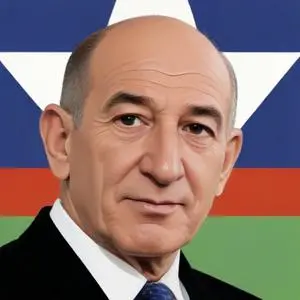
Ehud Olmert: A Turbulent Legacy in Israeli Politics
A Politician of Contrasts
Ehud Olmert, the 12th Prime Minister of Israel, is a figure of immense controversy, known for his meteoric rise to power and his subsequent fall from grace. From 2006 to 2009, he led the Israeli government, but his tenure was marred by allegations of corruption, which ultimately led to his imprisonment.
Early Life and Education
Born on September 30, 1945, in the British Mandate of Palestine, Olmert's parents, Bella Wagman and Mordechai Olmert, had escaped persecution in Ukraine and Russia, finding sanctuary in Harbin, China. His father later became a member of the Knesset for Herut, and Olmert's childhood was shaped by his family's affiliation with the Jewish militia group, Irgun, and their opposition to the long-ruling Mapai party. Olmert graduated from the Hebrew University of Jerusalem with degrees in psychology, philosophy, and law, before opening a successful law partnership in Jerusalem.
Rise to Prominence
Olmert served with the Israel Defense Forces in the Golani Brigade and was injured during his service. He later completed his military duties as a journalist for the IDF magazine BaMahane. During the Yom Kippur War, he joined the headquarters of
Ariel Sharon as a military correspondent. Already a member of the Knesset, Olmert's political career began to take shape.
Mayor of Jerusalem and Cabinet Minister
From 1993 to 2003, Olmert served as the Mayor of Jerusalem, where he oversaw significant urban development projects. Prior to this, he held various cabinet positions from 1988 to 1992 and again from 2003 to 2006, including Minister of Industry, Trade, and Labor, and Minister of Finance.
Prime Minister of Israel
As Prime Minister, Olmert's tenure was marked by significant events, including the 2006 Lebanon War and the Gaza War. He also initiated a series of unilateral withdrawals from occupied territories, including the disengagement from Gaza. Despite these achievements, his premiership was tarnished by allegations of corruption, which eventually led to his resignation in 2009.
Corruption and Conviction
Olmert was sentenced to serve a prison term over convictions for accepting bribes and obstruction of justice during his terms as Mayor of Jerusalem and as Trade Minister. His fall from grace was a significant blow to Israeli politics, and his legacy remains a topic of contention.
Legacy and Impact
Despite his controversial legacy, Olmert's impact on Israeli politics cannot be overstated. His policies, both as Mayor of Jerusalem and Prime Minister, have shaped the country's urban landscape and approach to conflict resolution. Love him or loathe him, Ehud Olmert remains an important figure in Israeli history.
Personal Life and Quotes
Olmert has been married to Aliza Olmert since 1966, and they have four children together. He is known for his wit and has been quoted as saying, "I'm not a man of grand plans and big designs. I'm a man of action, and I will take action."
Awards and Honors
Throughout his career, Olmert has received several awards and honors, including the 2007 Presidential Medal of Freedom, awarded by President
George W. Bush.
Timeline of Major Events
- 1945: Born in the British Mandate of Palestine
- 1970s: Member of the Knesset for Likud
- 1988-1992: Cabinet Minister
- 1993-2003: Mayor of Jerusalem
- 2003-2006: Cabinet Minister
- 2006-2009: Prime Minister of Israel
- 2009: Resignation as Prime Minister
- 2014: Convicted of corruption and sentenced to prison
Philosophical Contributions and Beliefs
Olmert's political philosophy has been shaped by his experiences as a member of the Irgun and his affiliation with the Likud party. He has consistently advocated for a strong, secure Israel, and his policies have reflected this belief. Despite his controversial legacy, Olmert remains an important figure in Israeli politics, and his contributions to the country's development cannot be ignored.