


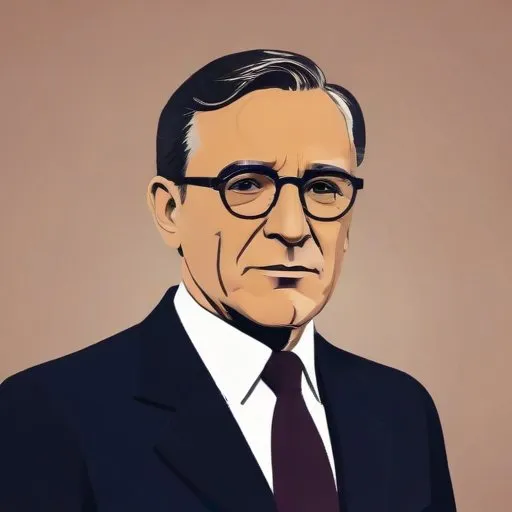
A journalist and politician who served as the 20th Governor of Kansas, known for his progressive reforms and advocacy for farmers' rights. He was a prominent figure in Kansas politics during the early 20th century.
Arthur Capper, a name synonymous with Kansas politics and media, left an indelible mark on the state's history. As the 20th governor of Kansas, United States senator, and publisher of the Topeka Daily Capital, Capper's influence spanned multiple realms.
Born on July 14, 1865, in Garnett, Kansas, Capper's fascination with printing began at a young age. He attended public schools and honed his skills in the art of printing, eventually becoming a newspaper publisher. His entrepreneurial spirit led him to own several newspapers and two radio stations, including WIBW in Topeka.
Capper's foray into politics began in 1912 when he ran as the Republican candidate for governor of Kansas. Although he lost to Democrat George H. Hodges, he didn't let defeat deter him. In 1914, he ran again and won, becoming the first native Kansan to serve as the state's governor. He went on to serve two terms from 1915 to 1919, winning reelection in 1916.
After completing his term as governor, Capper set his sights on the United States Senate. In 1918, he won the election and began representing Kansas for five six-year terms. As a senator, Capper was a vocal supporter of Franklin Delano Roosevelt's administration, particularly in regards to relief efforts and agricultural policies. He was a strong advocate for farmers and rural communities, earning him widespread respect among Kansans.
Arthur Capper's legacy extends beyond his prolific political career. His publication, Capper's Weekly, became a staple in rural Kansas households, with its readership spanning across the state. Today, the publication continues as a bimonthly glossy magazine, focusing on rural living. Capper's commitment to agriculture and rural communities has left a lasting impact on Kansas, earning him a place in the state's history books.
Arthur Capper's contributions to Kansas politics, media, and agriculture have shaped the state's identity. His legacy continues to inspire future generations of leaders, farmers, and rural communities. As a testament to his enduring influence, Capper's name remains synonymous with Kansas politics and rural development.
In conclusion, Arthur Capper's remarkable life and career serve as a testament to his dedication to public service, journalism, and agriculture. His lasting impact on Kansas and American politics continues to inspire future generations.
Born in 1858
A pioneering leader who championed progressive reforms, trust-busting, and conservation, earning a Nobel Peace Prize for mediating the Russo-Japanese War. He's also famous for his rugged outdoorsmanship and "big stick" diplomacy.
Born in 1882
Led the United States through the Great Depression and World War II, implementing a series of reforms known as the New Deal and helping to establish the country as a global superpower.
Born in 1884
The 33rd President of the United States, a strong leader who made tough decisions, including dropping atomic bombs on Japan and establishing the Marshall Plan to rebuild Europe after WWII.
Born in 1890
Led the Allied forces to victory in World War II and later served as President, maintaining peace and prosperity during the Cold War era. He's known for his strategic leadership and diplomatic skills.
Born in 1917
The 35th President of the United States was a charismatic leader who navigated the country through the Cuban Missile Crisis and advocated for civil rights, leaving a lasting legacy in American politics.
Born in 1908
The 36th President of the United States, a skilled politician and leader, played a crucial role in passing landmark civil rights legislation, including the Civil Rights Act and Voting Rights Act.
Born in 1913
The 37th President of the United States, a polarizing figure who led the country through significant domestic and foreign policy changes, infamous for his involvement in the Watergate scandal.
Born in 1913
The 38th President of the United States, a former football star and lawyer, is known for being the first vice president to assume the presidency under the 25th Amendment and for his controversial pardon of Richard Nixon. He's also remembered for his humble and accidental rise to the presidency.
