


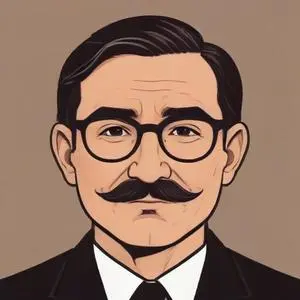
Developed innovative cartographic methods, including the Robinson projection, which presents the world in a more accurate and visually appealing way.
Arthur H. Robinson is renowned for his groundbreaking contributions to the field of cartography, particularly for his innovative map projections, including the Robinson projection of 1961. This pioneering work revolutionized the way we visualize and understand the world, earning him a place among the most influential cartographers of the 20th century.
Born on January 5, 1915, in Montreal, Quebec, Canada, to American parents, Robinson's early life was marked by transatlantic moves. He spent his formative years in Great Britain and later pursued higher education in the United States. Robinson earned his Bachelor of Arts degree from Miami University in Oxford, Ohio, in 1936, followed by a Master's in geography from the University of Wisconsin-Madison in 1938. He completed his Ph.D. in geography from Ohio State University in 1947.
During World War II, Robinson served as director of the map division of the Office of Strategic Services (OSS), where he played a pivotal role in developing cartographic techniques. In 1941, he joined the OSS, which had no formal cartographers at the time. Under his leadership, a team of geographers with an interest in mapping developed their skills on the job. One of their most notable projects was the creation of a massive 50-inch globe for President Franklin D. Roosevelt, known as The President's Globe. Copies of the globe were also presented to Winston Churchill and George Marshall.
Robinson's work at the OSS laid the foundation for his future cartographic innovations. He is credited with solving problems in the Map Communication Model and developing new techniques for mapmaking. His most famous contribution, the Robinson projection, was introduced in 1961. This elliptical projection attempted to find a balance between shape, size, and distance, making it a more accurate and visually appealing representation of the world.
In addition to his cartographic innovations, Robinson was a prolific writer and influential philosopher on cartography. He published numerous papers, articles, and books on the subject, including the influential textbook "Elements of Cartography" (1953). As a professor in the Geography Department at the University of Wisconsin-Madison, Robinson shared his knowledge and expertise with generations of students, shaping the field of cartography for years to come.
Robinson retired from the University of Wisconsin-Madison in 1980, after a distinguished career spanning over three decades. He passed away on October 10, 2004, leaving behind a legacy that continues to inspire cartographers, geographers, and anyone who has ever gazed upon a map.
Through his pioneering work, Arthur H. Robinson has left an indelible mark on the world of cartography, ensuring that future generations will continue to explore, understand, and navigate the complexities of our planet with greater accuracy and elegance.
