


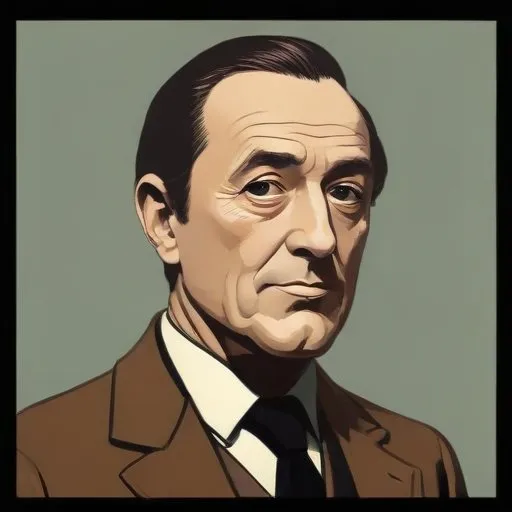
A charming English-American actor and TV personality, best known for his distinctive voice and butler roles in film and television, particularly as the iconic Jeeves in the 1930s.
Arthur Treacher, a stalwart of English stage and screen, is best known for his portrayal of the quintessential English gentleman, often playing the role of butlers, valets, and manservants in numerous films and television shows. His most iconic role, arguably, was as Jeeves, the charismatic valet from P.G. Wodehouse's famous series, which cemented his status as a household name.
Born on July 23, 1894, in Brighton, England, Treacher was the son of a Sussex solicitor, Arthur Veary Treacher, and Alice Mary Longhurst. He was educated at Uppingham School in Rutland, where he developed a passion for acting.
After serving as an officer in the Royal Garrison Artillery during World War I, Treacher began his acting career in England, eventually making his way to New York in 1926 as part of a musical comedy revue called Great Temptations. His early career saw him featured in various stage productions, including the 1930 Billy Rose musical revue Sweet and Low.
Treacher's film career took off in the 1930s, with notable roles in four Shirley Temple movies: Curly Top (1935), Stowaway (1936), Heidi (1937), and The Little Princess (1939). His tall, slender frame and dignified demeanor made him a natural fit for playing butlers and valets, often opposite the diminutive child star.
His portrayal of Jeeves in Thank You, Jeeves (1936) and Step Lively, Jeeves (1937) remains one of his most beloved roles, although P.G. Wodehouse himself was reportedly unhappy with the on-screen adaptation of his work.
In the 1960s, Treacher found new success on American television, serving as an announcer and sidekick to talk show host Merv Griffin. He also played the endearing Constable Jones in Disney's beloved film Mary Poppins (1964).
Another notable venture was the lending of his name to the Arthur Treacher's Fish and Chips chain of restaurants, which became a popular fast-food franchise in the United States.
Treacher married Virginia Taylor in 1940, and the couple remained together until his passing on December 14, 1975. Throughout his long and distinguished career, Treacher embodied the archetype of the refined English gentleman, leaving behind a legacy of memorable performances and a lasting impact on popular culture.
In conclusion, Arthur Treacher's remarkable career serves as a testament to his dedication to his craft, his versatility as an actor, and his ability to leave an indelible mark on the hearts of audiences worldwide.
Born in 1889
A pioneer of silent film, he is renowned for his iconic "Little Tramp" character and groundbreaking work in writing, directing, and starring in his own movies.
Born in 1890
A comedic genius and half of the iconic duo Laurel and Hardy, known for his brilliant physical comedy and hilarious on-screen antics.
Born in 1892
Half of the iconic comedy duo Laurel and Hardy, he's famous for his rotund figure, bushy mustache, and hilarious misadventures in silent films and talkies.
Born in 1895
A pioneering silent film comedian, known for his deadpan expression and ingenious physical comedy, who wrote, directed, and starred in his own films.
Born in 1893
Pioneering silent film star and stunt master, known for performing daring physical comedy and iconic scenes, such as hanging from a clock tower.
Born in 1890
A witty and charismatic comedian and actor, famous for his quick wit, iconic mustache, and hilarious one-liners in classic films and TV shows.
Born in 1887
A member of the Marx Brothers comedy team, he's known for his witty one-liners, charming accent, and hilarious antics in classic films like "Duck Soup" and "A Night at the Opera".
Born in 1888
A silent comedian and virtuosic harpist, known for his pantomime antics and mischievous on-screen presence in the Marx Brothers' films.
