


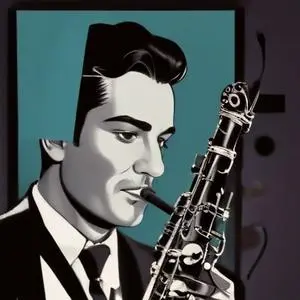
A virtuosic clarinetist and innovative bandleader, he revolutionized the swing era with his unique sound and iconic hits like "Begin the Beguine" and "Stardust".
Artie Shaw, widely regarded as one of jazz's finest clarinetists, led one of the United States' most popular big bands in the late 1930s through the early 1940s. His iconic 1938 recording of Cole Porter's "Begin the Beguine" catapulted him to stardom, making him a household name and cementing his legacy in the world of jazz.
Born Arthur Jacob Arshawsky on May 23, 1910, in New York City, Shaw grew up in New Haven, Connecticut, where he developed an early passion for music. Despite facing local antisemitism, Shaw's introverted nature fueled his dedication to perfecting his craft.
Shaw began his musical journey with the saxophone, but eventually switched to the clarinet, which would become his signature instrument. This change marked a turning point in his career, as he went on to develop a unique sound that blended jazz and classical influences.
In the late 1930s, Shaw's big band, which included musicians such as Billie Holiday and Buddy Rich, began to gain momentum. The release of "Begin the Beguine" in 1938 marked the pinnacle of his success, selling over a million copies and staying on the charts for 24 weeks.
Shaw was an early proponent of Third Stream music, a genre that blended elements of classical and jazz forms and traditions. His innovative approach influenced other musicians, such as Monty Norman, whose James Bond Theme features a vamp possibly influenced by Shaw's 1938 recording of "Nightmare."
During World War II, Shaw served in the U.S. Navy from 1942 to 1944, leading a morale-boosting band that toured the South Pacific. After his discharge, he returned to leading a band, but eventually withdrew from the music world, focusing on writing and other pursuits.
Artie Shaw's contributions to jazz and music as a whole are immeasurable. He recorded with small jazz groups, blending elements of classical and jazz, and paving the way for future generations of musicians. His influence can be seen in the work of musicians such as Benny Goodman and Woody Herman.
Artie Shaw's numerous awards and honors include three Grammy nominations, a Grammy Lifetime Achievement Award, and induction into the DownBeat Jazz Hall of Fame.
Artie Shaw's life and career can be visualized through a timeline of milestones, from his early days as a saxophonist to his later life as a writer and recluse.
Born in 1909
A virtuosic clarinetist and bandleader, known as the "King of Swing," who revolutionized jazz music with his energetic and sophisticated style, leading a racially integrated orchestra in the 1930s.
Born in 1891
A legendary composer and songwriter behind timeless Broadway shows and Hollywood musicals, crafting witty, sophisticated, and romantic songs that have become jazz standards.
Born in 1915
Legendary jazz vocalist and actress known for her expressive, emotive singing style and iconic songs like "God Bless the Child" and "Strange Fruit".
Born in 1899
A legendary jazz pianist, composer, and bandleader who revolutionized the genre with his unique style and iconic compositions, such as "Take the A Train" and "Mood Indigo".
Born in 1904
A legendary jazz pianist and bandleader who led a iconic orchestra, blending swing and blues to create a unique sound that influenced generations of musicians. Known for his distinctive "less-is-more" style and hits like "April in Paris" and "One O'Clock Jump".
Born in 1904
A legendary trombonist, composer, and bandleader who led one of the most popular big bands of the 1930s and 1940s, creating iconic hits like "In the Mood" and "Moonlight Serenade".
Born in 1915
A legendary entertainer who charmed audiences with smooth vocals and iconic film roles, leaving an indelible mark on American popular culture.
Born in 1917
A virtuosic jazz vocalist known for her pure, expressive tone, impeccable phrasing, and incredible scat singing abilities. She won 13 Grammy Awards and recorded over 200 albums.
