


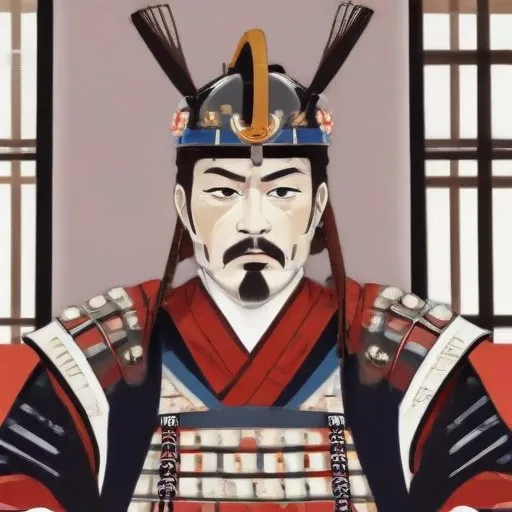
The 15th-century shogun who briefly reunified Japan's warring states, only to die young, leaving a legacy of unfulfilled potential. He's remembered for his military campaigns and attempts to restore imperial authority.
Ashikaga Yoshihisa was the 9th shogun of the Ashikaga shogunate, reigning from 1473 to 1489, a tumultuous period in Japanese history marked by the Onin War and the beginning of the Sengoku period. He is known for his role in this conflict, which would ultimately shape the course of Japan's future.
Born on December 11, 1465, Yoshihisa was the son of the 8th shogun, Ashikaga Yoshimasa, and his wife, Hino Tomiko. However, Yoshimasa had initially adopted his younger brother, Ashikaga Yoshimi, as his successor due to a lack of an heir. Yoshihisa's birth sparked a succession crisis, which would eventually escalate into the Onin War.
In 1473, Yoshimasa retired, and Yoshihisa succeeded him as shogun. However, the Onin War continued to rage on, and Yoshihisa's administration was marked by attempts to quell the conflict and consolidate power. In 1479, he launched a campaign against the Kaga Rebellion in Kaga Province, but it was ultimately unsuccessful.
In 1488, Yoshihisa led a campaign against Sasaki Takayori, a powerful daimyo, but he died unexpectedly in camp on April 26, 1489, without an heir. This led to a power vacuum, and his cousin, Ashikaga Yoshitane, succeeded him as the 10th shogun.
Yoshihisa's family life was marked by intrigue and politics. His mother, Hino Tomiko, played a significant role in his early life, while his wife, Shunin, was the daughter of Hino Katsumitsu. He also had a concubine, a daughter of a Tokudaiji priest, and a daughter of his own, although her fate is unknown.
Ashikaga Yoshihisa's reign marked a pivotal moment in Japanese history, as the Onin War and the Sengoku period would go on to shape the country's future. Although his own life was cut short, his legacy continues to influence Japanese politics, society, and culture to this day.
Born in 1436
The Japanese shogun who ruled from 1449 to 1473, known for his cultural achievements, particularly in the development of the Higashiyama culture, which emphasized simplicity and rustic elegance. He also commissioned the construction of the Silver Pavilion, a famous temple in Kyoto.
Born in 1466
A Japanese shogun who ruled during the Muromachi period, known for his brief reign and struggles to maintain power amidst warring states.
Born in 1537
The last shogun of the Ashikaga shogunate, who ruled Japan from 1568 to 1573, is known for his brief and tumultuous reign, marked by power struggles and eventual overthrow.
Born in 1521
A powerful daimy? who unified Japan's Takeda clan and expanded its territories through military campaigns, known for his exceptional leadership and innovative tactics.
Born in 1530
A powerful feudal lord who unified Japan's Echigo Province and fought several battles, earning a legendary reputation for bravery and martial prowess.
