


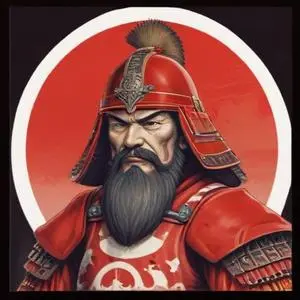
A powerful daimy? who unified Japan's Takeda clan and expanded its territories through military campaigns, known for his exceptional leadership and innovative tactics.
Takeda Shingen, also known as the Tiger of Kai, was a powerful daimyo of Kai Province during Japan's Sengoku period. He is celebrated for his exceptional military prowess, which enabled him to rise to prominence despite being based in a poor region with little arable land and no access to the sea.
Born on December 1, 1521, Shingen was originally named Tarō, a common pet name for the eldest son of a Japanese family. After his genpuku coming-of-age ceremony, he was given the formal name Harunobu, which included a character from the name of Ashikaga Yoshiharu, the 12th shogun of the Ashikaga shogunate.
Shingen's military skills and strategic thinking quickly earned him recognition and respect. He expanded his territory through a series of successful campaigns, conquering neighboring provinces and eventually becoming one of Japan's leading daimyos.
Shingen's military prestige is still highly esteemed today, with many considering him on par with the great Mōri Motonari. He is credited with developing innovative military tactics, including the use of cavalry and infantry units, which gave him a significant advantage on the battlefield.
In 1559, Shingen chose to live a pabbajja life as a Buddhist novitiate and received a dharma name, Shingen, from his Buddhist master. This name change reflected his deepening commitment to Buddhism and his desire to cultivate a sense of inner peace and enlightenment.
Shingen's legacy extends far beyond his military conquests. He is remembered as a just and fair ruler, who encouraged education, commerce, and the arts in his territories. His emphasis on education, in particular, helped to promote literacy and cultural development in Japan.
Some of Shingen's most significant achievements include:
Some of the key events that shaped Shingen's life include:
"The strong manly ones in life are those who understand the meaning of the word patience."
Takeda Shingen's life and legacy are a testament to his unwavering dedication to his people and his country. He remains one of Japan's most celebrated and revered historical figures, inspiring generations with his courage, wisdom, and military prowess.
Today, Shingen's legacy continues to inspire and educate people around the world, serving as a powerful reminder of the importance of perseverance, strategic thinking, and leadership.
Born in 1543
Unified Japan's warring states, establishing a dynasty that ruled for over 250 years, and is revered as a brilliant military strategist and statesman.
Born in 1530
A powerful feudal lord who unified Japan's Echigo Province and fought several battles, earning a legendary reputation for bravery and martial prowess.
Born in 1534
A powerful Japanese daimyo who unified much of Japan's warring states, introducing firearms and modern warfare tactics, and is considered one of Japan's most important historical figures.
Born in 1537
A powerful Japanese warlord who unified Japan's warring states and led two invasions of Korea, leaving a lasting legacy in Japanese history. He's also known for his iconic Osaka Castle.
Born in 1828
Leader of the Satsuma Rebellion, a samurai who fought against the modernization of Japan, seeking to preserve traditional ways. He's known for his bravery and tragic demise.
