


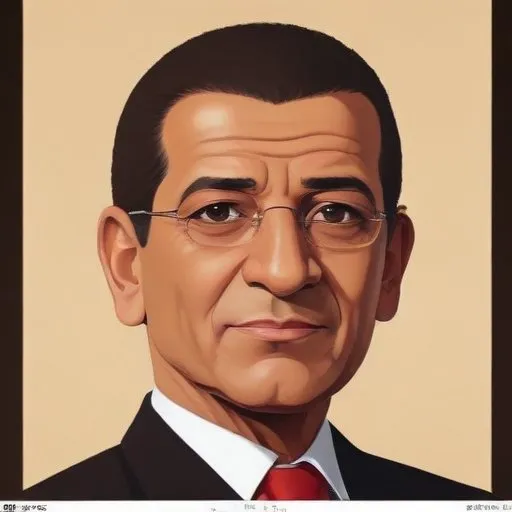
The 47th Prime Minister of Egypt, serving from 1999 to 2004, known for implementing economic reforms and stabilizing the country's economy. He was also a prominent academic and politician.
Atef Ebeid is renowned for his remarkable tenure as the Prime Minister of Egypt from 1999 to 2004, during which he orchestrated significant economic reforms and spearheaded the country's development. His leadership was marked by a unique blend of academic expertise, political acumen, and a deep understanding of Egypt's social fabric.
Born on April 14, 1932, in Tanta, Gharbia Governorate, Ebeid was an erudite individual who pursued higher education with unwavering dedication. He graduated from Cairo University in 1955 and later earned a PhD from the University of Illinois at Urbana-Champaign in 1962.
Ebeid's illustrious career spans multiple facets of Egypt's political and academic landscape. He began as a professor of business at Cairo University, later becoming the Minister of Cabinet Affairs in the 1980s. His subsequent roles included Minister for Domestic Development under the Sedki government and Minister of Planning in the government of Kamal Ganzouri.
In 1999, Ebeid assumed the role of Prime Minister of Egypt, a position he held for five years. During his tenure, he implemented significant economic reforms, focusing on privatization and deregulation. His leadership was characterized by a commitment to fostering economic growth, improving living standards, and strengthening Egypt's international relationships.
Ebeid's impact on Egypt's modern society is multifaceted. He played a pivotal role in shaping the country's economic policies, which paved the way for sustained growth and development. His ability to navigate complex political landscapes and build consensus earned him recognition as a seasoned statesman.
As an economic advisor to President Hosni Mubarak, Ebeid's counsel was instrumental in guiding Egypt's economic trajectory. His stint as acting president of Egypt in 2004 further underscored his ability to lead during times of transition.
Ebeid's career was not without controversy. He faced criticism for his handling of privatization and allegations of corruption, which ultimately led to his resignation in 2004. In 2011, he was removed from his position as head of the Arab International Bank amid corruption allegations.
In 2012, Ebeid was sentenced to ten years in prison for squandering public funds, but his conviction was later overturned by the Court of Appeal in 2013. Despite these challenges, Ebeid's legacy as a visionary leader and economist remains untouched.
Atef Ebeid passed away on September 12, 2014, leaving behind a legacy of public service, academic distinction, and economic stewardship. His contributions to Egypt's development continue to inspire future generations of leaders and policymakers.
Atef Ebeid's remarkable journey serves as a testament to the power of visionary leadership, academic excellence, and a commitment to public service. His legacy continues to inspire and educate, reminding us of the significance of dedicated leadership in shaping the course of nations.
98 Years Old
The authoritarian leader who ruled Egypt for nearly three decades, suppressing opposition and maintaining a tight grip on power, while also maintaining a delicate balance of power in the Middle East. He's infamous for his regime's human rights abuses and corruption.
Born in 1918
Led Egypt through a period of rapid modernization and nationalism, becoming a symbol of Arab unity and resistance to Western influence. He nationalized the Suez Canal and implemented socialist reforms.
71 Years Old
Egypt's sixth president, a military leader who seized power in a coup, known for his authoritarian rule and human rights abuses. He has dominated Egyptian politics since 2013.
75 Years Old
Egypt's first democratically elected president, who served from 2012 to 2013 and was a key figure in the Arab Spring uprising, known for his Islamist ideology and brief, tumultuous tenure.
