


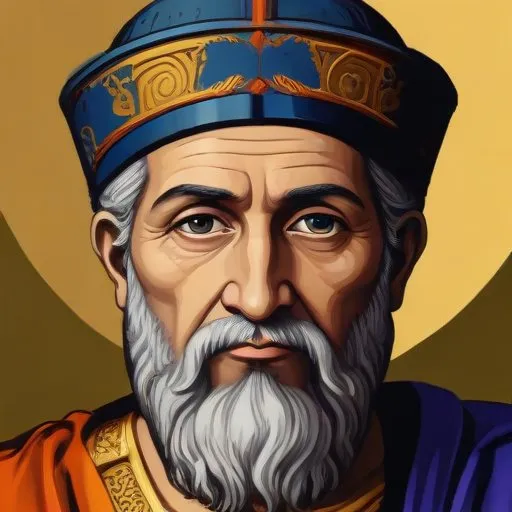
The Ecumenical Patriarch of the Orthodox Church who played a crucial role in promoting Christian unity and interfaith dialogue, particularly between Eastern Orthodox and Roman Catholic churches.
Athenagoras I, the 268th Ecumenical Patriarch of Constantinople, is revered for his pivotal role in bridging the divide between the Greek Orthodox Church and the Roman Catholic Church. As a champion of ecumenism, he dedicated his life to fostering unity and understanding among Christian denominations.
Born Aristocles Matthaiou Spyrou on April 6, 1886, in the village of Vasiliko, near Ioannina, Epirus, Athenagoras was the son of a doctor, Matthew N. Spyrou, and Helen V. Mokoros. His early life was shaped by the encouragement of his mother and a local priest, which led him to devote himself to religion.
After completing his secondary education in 1906, Athenagoras entered the Holy Trinity Theological School at Halki, near Istanbul. He was ordained a deacon in 1910 and later tonsured a monk, taking the name Athenagoras. He served as archdeacon of the Diocese of Pelagonia before becoming the secretary to Archbishop Meletios Metaxakis of Athens in 1919.
In 1922, Athenagoras was elected the Metropolitan of Corfu and raised to the episcopacy. His diplomatic skills and ability to bring harmony to divided communities earned him recognition, and he was eventually appointed Archbishop of North and South America in 1930.
As Archbishop, Athenagoras faced the daunting task of unifying the Greek Orthodox community in America, which was torn apart by Royalist and Republican factions. Through his tireless efforts, he managed to bring unity and stability to the diocese, earning him the respect and admiration of his peers.
In 1948, Athenagoras was elected the Ecumenical Patriarch of Constantinople, a position he held until his passing in 1972. As Patriarch, he continued to pursue his ecumenical vision, engaging in historic dialogues with the Roman Catholic Church and other Christian denominations.
One of his most significant achievements was the lifting of the mutual excommunications between the Orthodox and Catholic Churches, which had been in place since the Great Schism of 1054. This groundbreaking step paved the way for future ecumenical dialogue and cooperation.
Athenagoras I of Constantinople will be remembered as a champion of unity, a visionary leader, and a beacon of hope for a more harmonious Christian world.
Born in 1417
A 15th-century pope who played a significant role in the fall of the Western Schism, ending the division in the Catholic Church. He's also known for his lavish spending and nepotism.
Born in 1881
Reformed the Catholic Church, introducing progressive reforms and ecumenical dialogue, and convened the Second Vatican Council.
