


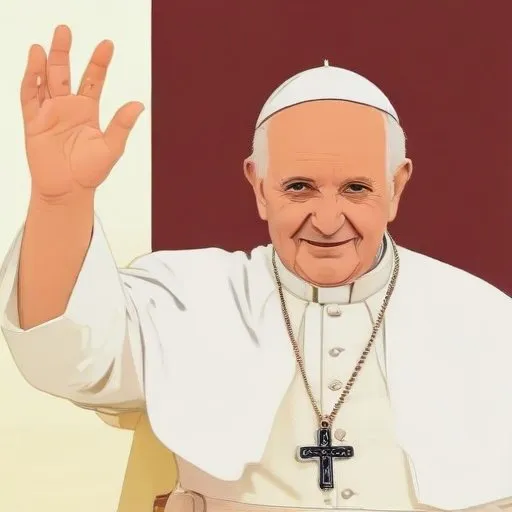
A 15th-century pope who played a significant role in the fall of the Western Schism, ending the division in the Catholic Church. He's also known for his lavish spending and nepotism.
Pope Paul II, born Pietro Barbo, was a man of refinement and culture, known for his patronage of the arts and his extravagant taste in fashion. As the head of the Catholic Church and ruler of the Papal States from 1464 to 1471, he left an indelible mark on the Renaissance era.
Pietro Barbo was born in Venice on February 23, 1417, to a noble family. His maternal uncle, Pope Eugene IV, played a significant role in his early life, inspiring him to pursue a career in the Church. Barbo's rapid rise through the ecclesiastical ranks was facilitated by his uncle's influence, becoming Archdeacon of Bologna, Bishop of Cervia and Vicenza, and eventually a cardinal-deacon in 1440.
Pope Paul II was known for his love of luxury and his generosity. He amassed a vast collection of art and antiquities, earning him the reputation as a patron of the arts. His extravagance extended to his fashion sense, often adorning himself in sumptuous ecclesiastical finery. According to legend, he once boasted that if elected pope, he would buy each cardinal a villa to escape the summer heat.
Paul II was elected pope on August 30, 1464, in a conclave that lasted only a few hours. He succeeded Pope Pius II and was largely elected due to the dissatisfaction with his predecessor's policies. Upon taking office, he pledged to convene an ecumenical council within three years, but later modified the terms to suit his own discretion.
As a Renaissance humanist, Pope Paul II was deeply influenced by classical Greek and Roman philosophy. He believed in the importance of education and the pursuit of knowledge, commissioning numerous translations of ancient texts. His papacy saw a renewed interest in classical culture, which had a lasting impact on the development of Western philosophy.
Paul II's papacy was not without controversy. His extravagance and love of luxury drew criticism, and his modification of the ecumenical council terms lost him the confidence of some cardinals. Despite these criticisms, his patronage of the arts and his commitment to education have left a lasting legacy, earning him a place as one of the most important popes of the Renaissance era.
Pope Paul II's legacy as a patron of the arts and a champion of education has endured for centuries. His commitment to classical culture and his love of luxury have made him one of the most fascinating figures of the Renaissance era.
Born in 1876
The leader of the Catholic Church from 1939 to 1958, known for his controversial role during World War II, particularly in regards to the Holocaust. He is also remembered for his encyclicals on social justice and liturgical reforms.
Born in 1414
Established the Vatican Archives and commissioned the Sistine Chapel's ceiling, which was famously painted by Michelangelo. He also played a significant role in the Renaissance.
Born in 1431
Ruthless and cunning, this Pope was infamous for his corrupt and immoral ways, using his power to further his family's interests.
Born in 1487
A 16th-century Pope who commissioned Michelangelo to paint the Sistine Chapel's frescoes and was a patron of the arts, leaving a lasting impact on Renaissance art and architecture.
Born in 1535
The second shortest-reigning pope in history, serving for just 27 days in 1605, he is most known for his brief but tumultuous papacy marked by power struggles and controversy.
Born in 1536
Led the Catholic Church during a tumultuous period, issuing papal bulls and playing a key role in the Counter-Reformation. He's also famous for his coffee habit, being the first Pope to try and approve of it.
Born in 1417
A 15th-century pope who played a significant role in the fall of the Western Schism, ending the division in the Catholic Church. He's also known for his lavish spending and nepotism.
Born in 1487
A 16th-century Pope who commissioned Michelangelo to paint the Sistine Chapel's frescoes and was a patron of the arts, leaving a lasting impact on Renaissance art and architecture.
