


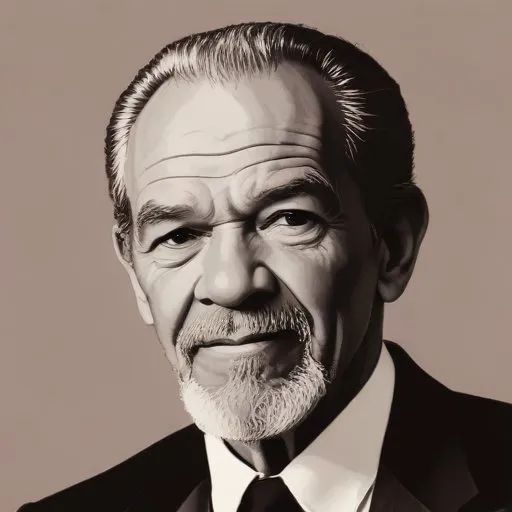
A renowned playwright, director, and actor who explored the complexities of apartheid-era South Africa through his works, often blending drama and social commentary. His plays are celebrated for their poignant portrayal of human struggle and resilience.
Athol Fugard is widely regarded as South Africa's greatest playwright, known for his gripping and thought-provoking plays that opposes the system of apartheid. His works have not only left an indelible mark on the South African theatre scene but have also transcended borders, earning him international recognition and acclaim.
Born Harold Athol Lanigan Fugard on June 11, 1932, in Middelburg, Eastern Cape, South Africa, Fugard's early life was shaped by his family's nomadic existence. His mother, Marrie, operated a general store and later a lodging house, while his father, Harold, a former jazz pianist, was disabled. In 1935, the family moved to Port Elizabeth, where Fugard began attending primary school at Marist Brothers College.
Fugard's educational pursuits took him to the University of Cape Town, where he studied Philosophy and Social Anthropology. However, he dropped out of university in 1953, mere months before his final examinations.
Fugard's decision to abandon academia was largely influenced by his growing sense of social responsibility. He began to explore the world of theatre, drawn to its power to challenge and subvert the status quo. His plays, often characterized by their biting social commentary, would go on to become a powerful medium for confronting the injustices of apartheid.
Fugard's breakthrough play, Blood Knot, was first performed in 1961. This searing drama, which explored the complexities of racial identity and brotherhood, marked the beginning of a prolific career that would see him publish over thirty plays.
Fugard's contribution to South African theatre has been recognized and celebrated globally. He was awarded the Order of Ikhamanga in Silver in 2005, one of South Africa's highest honors, for his "excellent contribution and achievements in the theatre." He is also an Honorary Fellow of the Royal Society of Literature.
In 2010, the Fugard Theatre in District Six, Cape Town, was opened in his honor. A year later, he received a Tony Award for Lifetime Achievement in Theatre.
Fugard's impact on South African theatre extends far beyond his own plays. He has inspired generations of playwrights, actors, and directors, paving the way for a new wave of creative voices to emerge. His commitment to social justice and his unwavering dedication to telling the stories that need to be told have cemented his place as a beacon of hope and defiance in the face of oppression.
Fugard's influence can be seen in the many adaptations of his works, including the Academy Award-winning film Tsotsi, directed by Gavin Hood. His plays continue to be performed and studied around the world, ensuring that his legacy as a champion of social justice and artistic freedom will endure for generations to come.
Fugard's personal life has been marked by significant milestones, including his marriage to Sheila Meiring Fugard, who has been his partner in life and art. Together, they have had two children, Lisa and Hanna.
In addition to his work in theatre, Fugard has also served as an adjunct professor of playwriting, acting, and directing at the University of California, San Diego.
Fugard's plays are not only a reflection of his own experiences and observations but also a testament to his deeply held philosophical beliefs. He has spoken about the importance of empathy, compassion, and understanding in breaking down the barriers that divide us.
Through his work, Fugard has consistently challenged audiences to confront their own biases and prejudices, to question the status quo, and to strive for a more just and equitable society.
Athol Fugard is a towering figure in South African theatre, a beacon of hope and defiance in the face of oppression. His plays, infused with a deep sense of social responsibility and a commitment to justice, have left an indelible mark on the world. As we continue to navigate the complexities of our own world, Fugard's legacy serves as a powerful reminder of the transformative power of art to challenge, to provoke, and to inspire.
94 Years Old
A renowned playwright, director, and actor who explored the complexities of apartheid-era South Africa through his works, often blending drama and social commentary. His plays are celebrated for their poignant portrayal of human struggle and resilience.
84 Years Old
A renowned actor and playwright, known for his powerful performances in films like "The Power of One" and "Black Panther", and his contributions to the development of South African theatre.
91 Years Old
A renowned writer and playwright who explored themes of apartheid and social justice in his works, creating a literary legacy that continues to resonate globally.
Born in 1923
A South African writer and activist, known for her powerful novels and short stories that explored the complexities of apartheid and racial segregation. Her works often blurred the lines between politics and literature.
87 Years Old
A South African-French poet and painter who explored themes of identity, politics, and human rights through his work, blending words and images to convey powerful messages.
