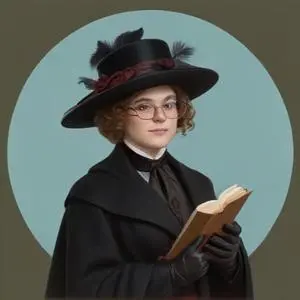
Augusta, Lady Gregory: The Matriarch of Irish Literature
A Pioneering Spirit in the Revival of Irish Literature
Augusta, Lady Gregory, is renowned for her instrumental role in the Irish Literary Revival of the late 19th and early 20th centuries. As a playwright, folklorist, and theatre manager, she co-founded the Abbey Theatre in Dublin, which became the epicenter of Irish cultural and literary expression.
A Life of Passion and Purpose
Born Isabella Augusta Persse on March 15, 1852, in Roxborough, County Galway, Ireland, Lady Gregory came from a wealthy Anglo-Irish family. Her early life was marked by a passion for literature and a desire to learn. She was largely self-educated, devouring books from her family's extensive library and developing a deep love for the Irish language and folklore.
A Meeting of Minds
In 1894, Lady Gregory met W.B. Yeats, a poet and playwright who shared her passion for Irish folklore and literature. This chance encounter sparked a lifelong friendship and creative partnership. Together, they collaborated on several projects, including the collection of Irish folktales and the establishment of the Irish Literary Theatre.
A Theatre of Irish Identity
The Irish Literary Theatre, later renamed the Abbey Theatre, was founded in 1899 with the mission of promoting Irish writers and artists. Lady Gregory played a pivotal role in its development, serving as the theatre's manager, playwright, and director. Her plays, such as
and The Rising of the Moon, often explored themes of Irish identity, folklore, and social commentary.
A Sanctuary for Artists
The Abbey Theatre became a hub for Irish artists, writers, and intellectuals. Lady Gregory's warm hospitality and generosity created a welcoming environment for creatives, including J.M. Synge, Sean O'Casey, and Lennox Robinson, who would later become prominent figures in Irish literature.
A Legacy of Words and Wisdom
Lady Gregory's literary contributions extended beyond the stage. Her books, such as Cuchulain of Muirthemne and Gods and Fighting Men, preserved Irish mythology and folklore for future generations. Her essays and articles on Irish literature and culture were published in various journals and newspapers.
Words of Wisdom
Lady Gregory's wisdom and words continue to inspire: "The drama, inspite of the gloom of the subject, is a hymn to the triumph of the human spirit." Her quotes and saying often reflected her strong conviction in the power of art to transcend adversity.
Awards and Honors
Lady Gregory's tireless efforts were recognized during her lifetime. She was awarded the Freedom of the City of Dublin in 1923, and her plays were performed to critical acclaim in Ireland, the UK, and the US.
A Legacy that Continues
Augusta, Lady Gregory's, pioneering spirit and dedication to Irish literature have left an indelible mark on the world of arts and culture. Her legacy extends beyond the Abbey Theatre, inspiring generations of writers, artists, and thinkers to preserve and celebrate their cultural heritage.
Today, the Abbey Theatre remains a vibrant cultural institution, continuing to produce innovative works that reflect Lady Gregory's vision of promoting Irish writers and artists.
In the words of Lady Gregory, "The world should be full of wonder, and wonder should be the first faculty of the young."
FAQ
What was Augusta Lady Gregorys role in the Irish Literary Revival?
Augusta Lady Gregory was a key figure in the Irish Literary Revival, a movement that sought to promote Irish literature and culture. She was a playwright, translator, and folklorist who collaborated with W.B. Yeats and other leading Irish writers.
What were some of Augusta Lady Gregorys most notable works?
Augusta Lady Gregory wrote several plays, including Spreading the News and The Rising of the Moon, as well as translations of Irish folktales and legends. Her work was characterized by its use of Irish folklore and mythology.
How did Augusta Lady Gregorys work reflect her Irish heritage?
Augusta Lady Gregorys work reflected her deep connection to Irish heritage and culture. She drew heavily on Irish folklore and mythology, and her writing often explored themes related to Irish identity and nationalism.
What was Augusta Lady Gregorys relationship with W.B. Yeats?
Augusta Lady Gregory had a close collaborative relationship with W.B. Yeats, with whom she co-founded the Abbey Theatre in Dublin. Yeats and Lady Gregory worked together on several plays and projects, and their partnership played a significant role in shaping Irish literature.
What is Augusta Lady Gregorys legacy in Irish literature?
Augusta Lady Gregorys legacy in Irish literature is that of a pioneering figure who helped to establish Irish literature as a distinct and vibrant literary tradition. Her work continues to be celebrated and studied in Ireland and around the world.