


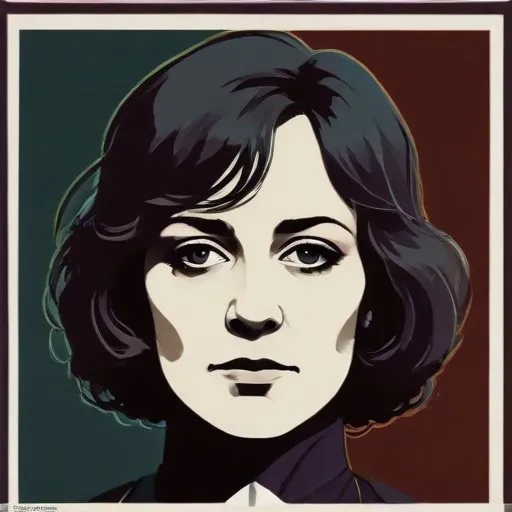
Irish nationalist and political activist who fought for Irish independence and women's rights, inspiring generations of activists and writers.
Maud Gonne, a visionary Irish republican revolutionary, suffragette, and actress, left an indelible mark on the country's struggle for independence and self-determination. As a muse and longtime love interest of the renowned Irish poet W.B. Yeats, Gonne's impact extended beyond the realms of politics to the world of literature and art.
Born on December 21, 1866, in Tongham, near Aldershot, Hampshire, England, Edith Maud Gonne was the eldest daughter of Captain Thomas Gonne and his wife, Edith Frith Gonne. Her Anglo-Irish heritage played a significant role in shaping her identity and later, her political convictions. After her mother's untimely death, Gonne was sent to a boarding school in France, where she developed a strong sense of cultural appreciation and linguistic skills.
The Land Wars, a period of widespread evictions and social unrest in Ireland, awakened Gonne's sense of social justice and propelled her into the world of politics. Witnessing the plight of the evicted tenants and the struggles of the Irish people, she became an ardent advocate for home rule and later, the Irish Republic declared in 1916.
Gonne's passion for Irish nationalism led her to co-found the Daughters of Erin, an organization dedicated to promoting Irish culture and supporting republican causes. Her tireless campaigning for women's suffrage and her involvement in the Irish Women's Franchise League earned her recognition as a pioneering figure in the struggle for women's rights.
Gonne's unwavering commitment to the cause of Irish independence and social justice continues to inspire generations of activists, feminists, and nationalists. Her legacy extends beyond the borders of Ireland, influencing movements for self-determination and human rights around the world.
Gonne's philosophy was rooted in her conviction that the Irish people had a fundamental right to self-determination and independence. She believed in the power of collective action, and her unwavering commitment to the cause of Irish nationalism remains an inspiration to this day.
"I would have been a rebel, a freedom fighter, in any country where people were oppressed."
Maud Gonne's life and work are inextricably linked to the tumultuous history of Ireland's struggle for independence. Her legacy serves as a beacon of hope and inspiration, reminding us of the power of individual commitment to the cause of social justice and human rights.
In recognition of her tireless efforts and unwavering dedication, Gonne was awarded the Freeman of Dublin in 1922.
W.B. Yeats, the renowned Irish poet, was deeply enamored with Gonne, and she remained his muse and love interest throughout his life. Their complex and often tumultuous relationship has been the subject of much literary and artistic fascination.
Gonne's life and legacy have inspired numerous literary and artistic works, including plays, poems, and films. Her influence can be seen in the works of writers such as W.B. Yeats, Lady Gregory, and Sean O'Casey.
Throughout her life, Gonne remained committed to charitable causes, particularly those supporting the Irish people and promoting social justice. Her selfless dedication to the welfare of others continues to inspire generations of activists and philanthropists.
Maud Gonne's life is a testament to the power of courage, conviction, and determination. Her unwavering commitment to the cause of Irish nationalism and social justice serves as a beacon of hope, inspiring generations to strive for a better future.
Maud Gonne MacBride, a true icon of Irish republicanism, left an indelible mark on the country's struggle for independence and self-determination. Her legacy continues to inspire, educate, and motivate people around the world, a testament to the enduring power of her vision and conviction.
Born in 1865
A renowned Irish wordsmith and dramatist, celebrated for his mystical and nationalistic verse that explores the human condition, as well as his contributions to the Irish Literary Revival.
Born in 1879
Irish revolutionary leader who sparked the Easter Rising, a pivotal event in Ireland's struggle for independence. He's remembered for his bravery and poetic writings.
Born in 1868
A Scottish-born Irish rebel leader who played a key role in the Easter Rising of 1916, advocating for Irish independence from British rule through socialist and republican ideologies.
Born in 1882
Leader of Ireland's struggle for independence from Britain, serving as both Prime Minister and President, and key figure in shaping the country's modern identity.
Born in 1890
Leader of the Irish independence movement, instrumental in negotiating the Anglo-Irish Treaty, and a key figure in the Irish War of Independence.
Born in 1902
Irish revolutionary who fought in the Anglo-Irish War and was executed by the British at 18, becoming a martyr for the Irish independence movement.
Born in 1775
Irish lawyer and politician who championed Catholic emancipation and served as Lord Mayor of Dublin, known for his advocacy for Irish rights and liberties.
Born in 1846
Leader of the Irish Parliamentary Party, advocating for Irish Home Rule and land reform, known for his charismatic leadership and strategic political maneuvering.
