


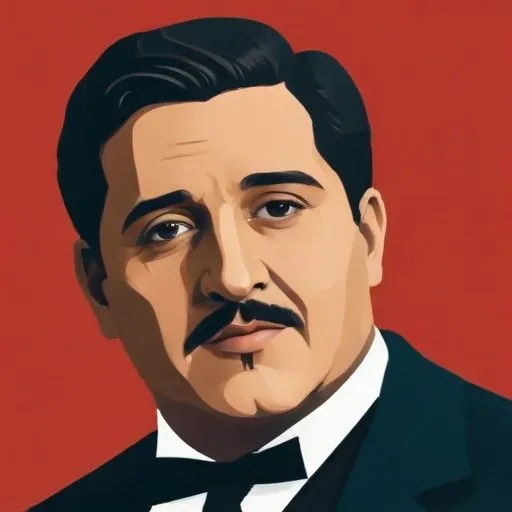
Italian tenor and educator renowned for his powerful, expressive voice and influential teaching methods that shaped generations of opera singers. He was a prominent figure in the development of 20th-century opera.
Aureliano Pertile is widely regarded as one of the most exciting operatic artists of the interwar period and one of the most important tenors of the 20th century. Born on November 9, 1885, in Montagnana, Northern Italy, Pertile would go on to leave an indelible mark on the world of opera, captivating audiences with his powerful, expressive voice and energetic stage presence.
Pertile's love affair with music began at an early age. He studied with Vittorio Orefice in Padua and Gaetano Bavagnoli in Milan, honing his craft and preparing himself for a career in opera. His hard work paid off when he made his operatic debut as Lyonel in Martha in 1911, in Vicenza.
Pertile's breakthrough came when he first sang at the premier Italian opera house, La Scala, Milan, in 1916. He appeared on this occasion as Paolo in Francesca da Rimini, opposite Rosa Rasa. This milestone marked the beginning of a long and fruitful association with La Scala, which would become his artistic home for many years.
His international career took off when he made his New York Metropolitan Opera debut as Cavaradossi in Tosca, with Maria Jeritza in the title role, on December 1, 1921. During his single season at the Met, Pertile also sang des Grieux in Manon Lescaut, Turiddu in Cavalleria rusticana, Grigori in Boris Godunov with Feodor Chaliapin, Radames in Aida, Canio in Pagliacci opposite Florence Easton, and Julien in Louise opposite Geraldine Farrar.
Pertile returned to Italy and established himself as the leading tenor at La Scala from 1927 to 1937. During this period, he became a favorite singer of the principal conductor Arturo Toscanini. His La Scala repertory included the title role in Lohengrin, Stolzing in Die Meistersinger von Nürnberg in Italian, Edgardo in Lucia di Lammermoor, with Toti dal Monte, Alfredo in La traviata, Osaka in Iris, Rodolfo in La bohème, the title part in Andrea Chénier, Manrico in Il trovatore, Riccardo in Un ballo in maschera, Pinkerton in Madama Butterfly, Il Duca in Rigoletto, Alvaro in La forza del destino, Pollione in Norma, Loris in Fedora, Werther, and Maurizio in Adriana Lecouvreur.
Aureliano Pertile's legacy extends far beyond his impressive repertoire and numerous performances. He is remembered for his unique voice, characterized by its bright, forward tone and effortless power. His ability to convey drama and emotion through song has inspired generations of opera singers and continues to influence the art form today.
Pertile was born just 18 days after another celebrated tenor, Giovanni Martinelli, in the same town of Montagnana. He remained humble and down-to-earth throughout his illustrious career, earning the respect and admiration of his peers and audiences alike.
Aureliano Pertile passed away on January 11, 1952, leaving behind a rich legacy that continues to inspire and captivate opera lovers around the world. His remarkable career, spanning over four decades, serves as a testament to his dedication, passion, and artistry.
In conclusion, Aureliano Pertile was a true giant of opera, whose voice and artistry continue to influence the world of opera today. His remarkable career, marked by countless performances and accolades, has secured his place as one of the most important tenors of the 20th century.
Born in 1873
The most popular operatic tenor of the early 20th century and the first great recording star, known for his powerful and emotive voice that captivated audiences worldwide through his recordings and live performances.
Born in 1921
A renowned tenor and actor, known for his powerful voice and iconic film performances, particularly in the 1940s and 1950s.
Born in 1921
A renowned Italian opera singer and actor, celebrated for his powerful, expressive voice and charismatic stage presence, particularly in Verdi and Puccini roles.
Born in 1921
A renowned Italian opera singer and actor, celebrated for his powerful voice, charismatic stage presence, and iconic performances in Verdi and Puccini operas.
