


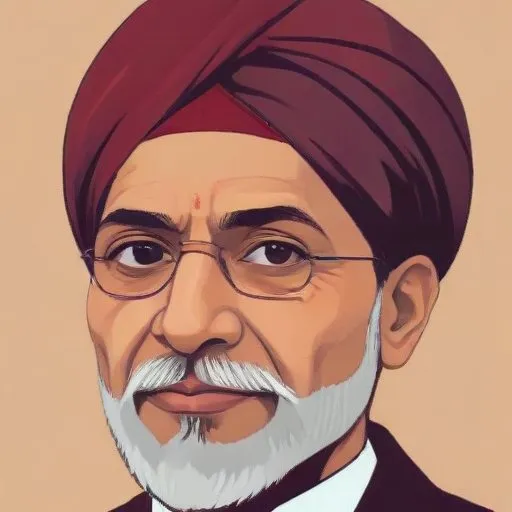
A pioneering physiologist who discovered the J receptors, which sense changes in lung pressure, and made significant contributions to our understanding of respiratory physiology.
Autar Singh Paintal, a trailblazing Indian medical scientist, left an indelible mark on the world of science with his groundbreaking discoveries in neurosciences and respiratory sciences. He is renowned for developing the innovative single-fiber technique for recording afferent impulses from individual sensory receptors, paving the way for a new era in physiological understanding.
Born on September 24, 1925, Paintal was a meritorious student who completed his post-graduation in Physiology from King George Medical College, Lucknow. He furthered his education by pursuing a Ph.D. under the guidance of David Whitteridge at the University of Edinburgh.
Paintal's most significant contribution to science is the development of the single-fiber technique, which enabled the recording of afferent impulses from individual sensory receptors. This breakthrough led to the discovery of several sensory receptors, including atrial B receptors, pulmonary J receptors, ventricular pressure receptors, stomach stretch receptors, and muscle pain receptors. These findings have had a profound impact on our understanding of physiological processes.
Upon returning to India in 1953, Paintal joined the All India Institute of Medical Sciences, New Delhi, and later became the Director of the Vallabhai Patel Chest Institute. He also served as the first Principal of University College of Medical Sciences, Delhi. Paintal's illustrious career was further distinguished by his appointment as the Director General of the Indian Council of Medical Research and the founder president of the Society of Scientific Values.
Paintal's outstanding contributions to science were recognized with his election as the Fellow of the Royal Society, London, a first for an Indian physiologist. This prestigious honor is a testament to his trailblazing work in the field of neurosciences and respiratory sciences.
Paintal's personal life was marked by his marriage to Iris Paintal, with whom he had three children. His second daughter, Priti Paintal, is a music composer in the UK. After Iris's passing, Paintal married Dr. Ashima Anand Paintal, a scientist in her own right. Autar Singh Paintal passed away on December 21, 2004, leaving behind a legacy that continues to inspire future generations of scientists.
Paintal's contributions to the field of neurosciences and respiratory sciences have had a profound impact on our understanding of human physiology. His discoveries have far-reaching implications for the diagnosis and treatment of various diseases, making him a true pioneer in his field. His work continues to inspire scientists, researchers, and medical professionals, shaping the future of healthcare and wellbeing.
Autar Singh Paintal's remarkable journey is a testament to the power of human curiosity, dedication, and innovation. His groundbreaking work has left an indelible mark on the scientific community, paving the way for future breakthroughs and discoveries. As we reflect on his life and legacy, we are reminded of the importance of fostering a culture of innovation, collaboration, and scientific inquiry.
Born in 1922
Pioneering biochemist and academic who deciphered the genetic code, enabling the understanding of how DNA sequences determine amino acid sequences in proteins.
Born in 1922
Pioneering biochemist and academic who deciphered the genetic code, enabling the understanding of how DNA sequences determine amino acid sequences in proteins.
Born in 1910
A renowned scientist who pioneered our understanding of black holes and the behavior of stars, earning a Nobel Prize in Physics in 1983.
Born in 1888
Indian physicist and academic who discovered the Raman effect, a phenomenon where light scattered by molecules changes wavelength, earning him the Nobel Prize in Physics in 1930.
Born in 1893
Developed the theory of thermal ionization, which explains the spectra of stars and led to the discovery of new elements, and was a pioneer in the field of astrophysics.
Born in 1894
This Indian physicist and mathematician is renowned for his groundbreaking work in quantum mechanics, particularly the discovery of the Bose-Einstein statistics and the boson particle.
Born in 1858
Pioneering scientist who made groundbreaking contributions to the fields of physics, biology, and botany, including the discovery of radio waves and the development of the crescograph, a device to measure plant growth.
Born in 1861
Founded the Bengal Chemical & Pharmaceutical Works, India's first pharmaceutical company, and made significant contributions to the field of chemistry, earning him the title "Father of Indian Chemistry".
