


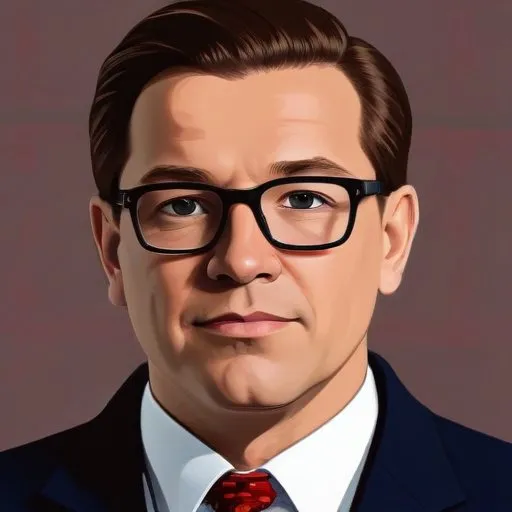
The 5th President of the International Olympic Committee, a businessman who oversaw the Olympics during a time of great change and controversy, and made decisions that still impact the games today.
Avery Brundage is renowned as the fifth president of the International Olympic Committee (IOC), serving from 1952 to 1972, making him the only American and non-European to hold this prestigious position. His unwavering dedication to amateurism and his involvement with the 1936 and 1972 Summer Olympics, both held in Germany, have left an indelible mark on the Olympic movement.
Born on September 28, 1887, in Detroit, Brundage grew up in a working-class family. At the age of five, his father moved the family to Chicago, only to abandon them. Raised primarily by relatives, Brundage went on to attend the University of Illinois, where he studied engineering and excelled in track, becoming a national champion three times between 1914 and 1918.
Brundage's athletic prowess earned him a spot in the 1912 Summer Olympics, where he participated in the pentathlon and decathlon, although he didn't win any medals. Despite this, he founded his own construction business, which became the foundation of his wealth, alongside his investments. Notably, he never accepted payment for his involvement in sports.
After retiring from athletics, Brundage dedicated himself to sports administration, rapidly rising through the ranks in United States sports organizations. His leadership skills and passion for the Olympic movement led to his election as the leader of America's Olympic organizations.
In 1936, Brundage fought against a boycott of the Summer Olympics in Germany, which had been awarded to the country before the rise of the Nazi regime. His efforts were successful, and he was elected to the IOC that year. This marked the beginning of his influential journey in the Olympic movement, culminating in his presidency in 1952.
As IOC President, Brundage fervently advocated for amateurism, strongly opposing the commercialization of the Olympic Games. He believed in the purity of the Olympic spirit, where athletes participated for the love of the sport rather than financial gain.
However, his stance on amateurism faced challenges with the advent of state-sponsored athletes from Eastern Bloc countries. This erosion of the pure amateur ideology led to controversy and criticism, as modern sports began to evolve beyond the boundaries of amateurism.
Brundage's legacy is multifaceted, with both praise and criticism surrounding his tenure as IOC President. While he was a driving force behind the Olympic movement, his unwavering commitment to amateurism sparked debates and concerns about the commercialization of sports.
Despite controversies, Brundage's impact on the Olympic movement is undeniable. He worked tirelessly to promote the Olympic ideals, and his leadership played a significant role in shaping the modern Olympic Games.
Avery Brundage's life was marked by his passion for sports, his commitment to the Olympic movement, and his unwavering dedication to amateurism. While controversies surrounded his tenure, his legacy continues to inspire and shape the world of sports.
Born in 1863
Founded the International Olympic Committee, reviving the ancient Greek Olympic Games and creating a global athletic phenomenon. Known for promoting international unity and athletic excellence through the modern Olympic movement.
Born in 1920
The 7th President of the International Olympic Committee, a Spanish businessman who oversaw significant growth and modernization of the Olympic Games, and was a key figure in bringing the Olympics to new host cities.
76 Years Old
Won seven gold medals in the 1972 Munich Olympics, setting world records in all seven events, cementing his status as one of the greatest swimmers of all time.
95 Years Old
Award-winning actress of film, television, and theater, known for her iconic roles in "Moonstruck" and "Steel Magnolias".
