


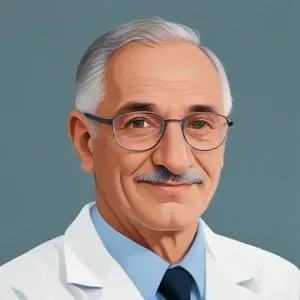
A Hungarian-Israeli biochemist and physician who discovered the ubiquitin system, a crucial cellular process that regulates protein degradation, earning him a Nobel Prize in Chemistry in 2004.
Avram Hershko, a Hungarian-Israeli biochemist, is renowned for his groundbreaking discovery of ubiquitin-mediated protein degradation, earning him the 2004 Nobel Prize in Chemistry, alongside Aaron Ciechanover and Irwin Rose. This pioneering work has far-reaching implications for understanding the complexities of cellular homeostasis and its role in various diseases.
Born Hersk Ferenc on December 31, 1937, in Karcag, Hungary, Avram Hershko's life was marked by turmoil from an early age. His father, Moshe Hershko, was forced into labor service during World War II, leaving Avram, his mother, and brother to fend for themselves in a ghetto in Szolnok. Miraculously, they managed to escape the clutches of the Nazi regime and reunite with their father after the war.
In 1950, the Hershko family emigrated to Israel, where Avram would go on to receive his MD in 1965 and PhD in 1969 from the Hebrew University of Jerusalem's Hadassah Medical Center. Following his postdoctoral research at the University of California, San Francisco, Hershko would become a Distinguished Professor at the Rappaport Faculty of Medicine at the Technion in Haifa and a Distinguished Adjunct Professor at the New York University Grossman School of Medicine.
Hershko's Nobel Prize-winning work laid the foundation for understanding the ubiquitin-proteasome system, a critical mechanism that regulates protein degradation and maintains cellular homeostasis. This system is believed to play a key role in the development and progression of diseases such as cancer, muscular and neurological disorders, and immune and inflammatory responses.
Avram Hershko's work has inspired a generation of scientists, and his contributions to the field of biochemistry have paved the way for further research and discovery. As a testament to his dedication to science and humanity, his story serves as a powerful reminder of the importance of perseverance and curiosity.
Avram Hershko's remarkable journey, marked by resilience, determination, and intellectual curiosity, serves as a beacon of inspiration to scientists and individuals alike, illuminating the power of human ingenuity and the pursuit of knowledge.
78 Years Old
A pioneering biologist and physician who discovered the ubiquitin proteasome system, a crucial cellular process that regulates protein degradation, earning him the Nobel Prize in Chemistry in 2004.
99 Years Old
Discovered the ubiquitin-mediated protein degradation pathway, a crucial process in cellular regulation, earning the Nobel Prize in Chemistry in 2004.
79 Years Old
Discovered the molecular mechanism of transcription, a crucial process by which cells read genetic information, and was awarded the Nobel Prize in Chemistry in 2006 for this groundbreaking work.
89 Years Old
A German biochemist and Nobel laureate who deciphered the structure of proteins and enzymes, revolutionizing our understanding of biological processes.
77 Years Old
A German biochemist and academic who discovered the structure of bacterial photosynthetic reaction centers, earning him the Nobel Prize in Chemistry in 1988.
66 Years Old
Leading researcher in dark energy and its role in the accelerating expansion of the universe, awarded the Nobel Prize in Physics in 2011 for this groundbreaking discovery.
