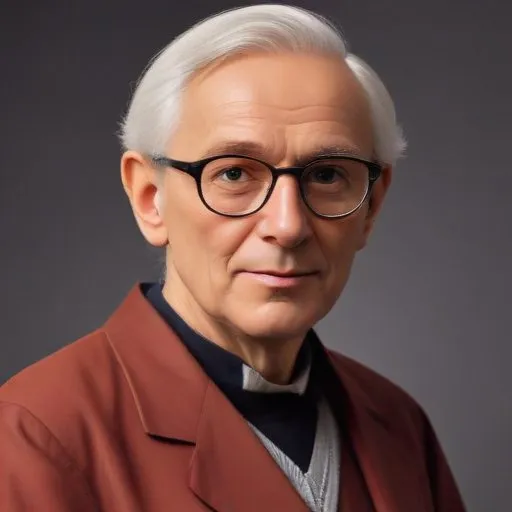
Hartmut Michel: Unraveling the Secrets of Photosynthesis
A Pioneer in Membrane Protein Research
Hartmut Michel is a renowned German biochemist, best known for determining the first crystal structure of an integral membrane protein, a groundbreaking discovery that earned him the 1988 Nobel Prize in Chemistry. This milestone achievement has far-reaching implications for our understanding of photosynthesis, shedding light on the intricate mechanisms that govern this vital process.
Early Life and Education
Born on July 18, 1948, in Ludwigsburg, Germany, Michel's fascination with biochemistry began at a young age. After completing his compulsory military service, he pursued his passion at the University of Tübingen, where he delved into the world of ATPase activity of halobacteria under the guidance of Dieter Oesterhelt.
Career Highlights and Major Works
Michel's most significant contribution to the field of biochemistry lies in his pioneering work on the crystallization of membrane proteins. This endeavor led to the determination of the three-dimensional structure of a protein complex found in certain photosynthetic bacteria, known as a photosynthetic reaction center. This membrane-bound complex is essential for initiating a simple type of photosynthesis.
- Jointly with Johann Deisenhofer and Robert Huber, Michel used X-ray crystallography to determine the exact arrangement of the more than 10,000 atoms that make up the protein complex between 1982 and 1985.
- Their research not only increased our understanding of the mechanisms of photosynthesis but also revealed similarities between the photosynthetic processes of plants and bacteria.
- This work established a methodology for crystallizing membrane proteins, paving the way for further research in the field.
Awards and Honors
Michel's outstanding contributions to biochemistry have been recognized with several prestigious awards, including:
- The Gottfried Wilhelm Leibniz Prize of the Deutsche Forschungsgemeinschaft in 1986, the highest honor awarded in German research.
- The Nobel Prize in Chemistry in 1988, jointly with Johann Deisenhofer and Robert Huber.
Legacy and Impact
Michel's pioneering work has had a profound impact on the field of biochemistry, influencing modern research in membrane protein structure and function. His discovery has far-reaching implications for our understanding of photosynthesis and its applications in various fields, including agriculture, biotechnology, and renewable energy.
As the director of the Molecular Membrane Biology department at the Max Planck Institute for Biophysics in Frankfurt am Main, Germany, and professor of biochemistry at the Goethe University Frankfurt, Michel continues to inspire and mentor future generations of researchers, leaving a lasting legacy in the world of biochemistry.
Inspirational Quotes
"It's not just about understanding the structure, it's about understanding the function. And that's where the real challenge lies." - Hartmut Michel
This quote encapsulates Michel's dedication to unraveling the intricacies of membrane protein function, a testament to his tireless pursuit of knowledge and his passion for advancing the field of biochemistry.
FAQ
What is Hartmut Michels contribution to biochemistry?
Hartmut Michel is a German biochemist and academic who was awarded the Nobel Prize in Chemistry in 1988 for his discovery of the structure of the protein complex that generates energy in cells, known as the respiratory chain.
What is the significance of Hartmut Michels Nobel Prize?
Hartmut Michels Nobel Prize was significant because it recognized his groundbreaking work on the structure and function of the respiratory chain, which has had a major impact on our understanding of cellular metabolism and energy production.
How did Hartmut Michels research contribute to our understanding of cellular energy production?
Hartmut Michels research contributed significantly to our understanding of cellular energy production by providing new insights into the structure and function of the respiratory chain, which is responsible for generating energy in cells.
What is Hartmut Michels role in the scientific community?
Hartmut Michel is a prominent figure in the scientific community, known for his contributions to the field of biochemistry and his leadership roles in various scientific organizations and institutions.
What awards has Hartmut Michel received for his work?
Hartmut Michel has received numerous awards for his work, including the Nobel Prize in Chemistry, the Max Planck Research Award, and the German Federal Cross of Merit.