


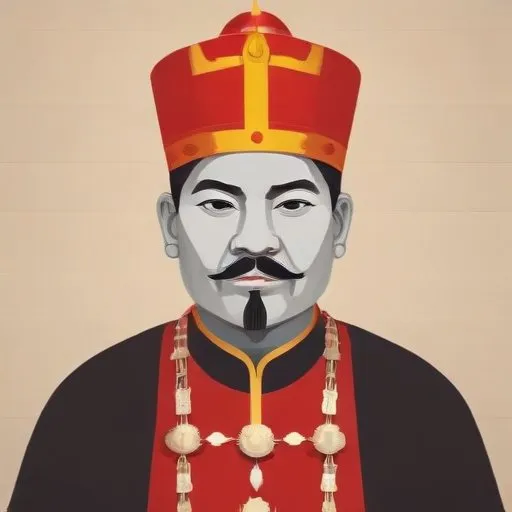
The second emperor of the Yuan dynasty, he oversaw a period of relative peace and stability, and is known for his efforts to rebuild and restore the Chinese economy and infrastructure.
Ayurbarwada Buyantu Khan, also known as Emperor Renzong of Yuan, is renowned for being the third emperor of the Yuan dynasty, ruling from 1311 to 1320. During his reign, he implemented significant administrative and economic reforms, earning him the sobriquet "Golden Emperor" among his contemporaries.
Born in 1285 as the grandson of Kublai Khan, Ayurbarwada Buyantu Khan was a member of the Borjigin tribe. His early life was marred by political turmoil, with his father, Darmabala, assassinated in 1292. This event paved the way for Ayurbarwada's eventual rise to power, as he was taken under the wing of his uncle, Temür Öljetei, who ruled as Emperor Chengzong.
Ayurbarwada Buyantu Khan's reign was marked by a series of reforms aimed at strengthening the Yuan dynasty. He:
Ayurbarwada Buyantu Khan was a patron of Tibetan Buddhism and a devout practitioner of Tantric Buddhism. He was known for his philosophical debates with Tibetan lamas and his support for the translation of Buddhist scriptures into Mongolian.
In 1307, Ayurbarwada Buyantu Khan was appointed as the Prince of Huai, marking the beginning of his rise to power. Four years later, he succeeded his uncle as the Emperor of Yuan, taking the reign name Renzong.
Ayurbarwada Buyantu Khan's reforms and policies had a lasting impact on Chinese history, shaping the development of the Mongol Empire and its relations with neighboring countries. His legacy can be seen in the administrative systems and economic structures of modern China.
Ayurbarwada Buyantu Khan's reign marked a turning point in the Yuan dynasty, as it transitioned from a period of Mongol conquest to one of consolidation and growth. His reforms and achievements earned him a place among the greatest emperors of the Yuan dynasty, alongside his grandfather, Kublai Khan.
Did you know that Ayurbarwada Buyantu Khan was an accomplished calligrapher and painter? His artwork was renowned for its skill and beauty, and some of his pieces have survived to this day.
Ayurbarwada Buyantu Khan's story serves as a testament to the power of vision, reform, and leadership, leaving an indelible mark on the annals of Chinese history.
Born in 1265
The Mongol emperor who ruled China from 1294 to 1307, known for his military campaigns and administrative reforms that strengthened the Yuan dynasty. He also patronized arts and culture, promoting Tibetan Buddhism and supporting famous artists and scholars.
