


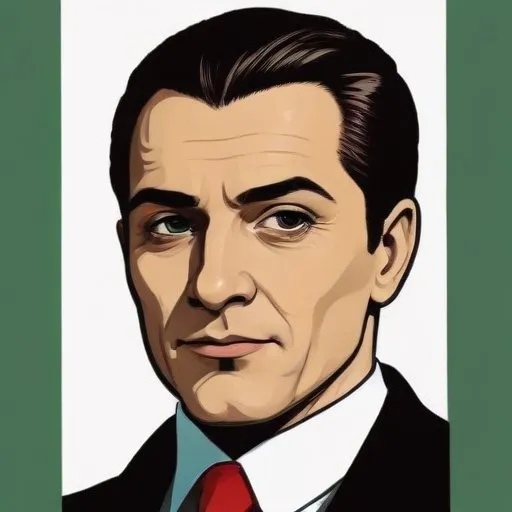
A 14th-century Italian nobleman who ruled Milan and expanded its territories through military campaigns and strategic alliances, known for his cunning and diplomatic skills.
Azzone Visconti, born on December 7, 1302, was a powerful lord of Milan who left an indelible mark on the city's history. He is remembered for his cunning diplomacy, military prowess, and shrewd politicking, which enabled him to reclaim his family's lost territories and solidify their grip on Milan.
Azzone was the sole legitimate son of Galeazzo I Visconti and Beatrice d'Este, and his early life was marked by turmoil and upheaval. In 1322, he was forced to flee Piacenza, along with his father, after being ousted by rival factions. This exile would shape Azzone's character and inform his future actions as a leader.
In 1325, Azzone commanded troops at the battles of Altopascio and Zappolino, securing crucial victories over the Guelphs. These military successes set the stage for his later rise to power. When his father was arrested in 1327, Azzone saw an opportunity to assert himself and reclaim his family's lost territories.
Azzone's uncle, Marco Visconti, posed a significant threat to his ambitions, and their struggle for control of Milan became a defining feature of this period. In 1329, Azzone bought the title of imperial vicar of Milan from the emperor Louis IV, securing a crucial advantage over his rival. Marco's subsequent murder, in which Azzone was implicated, paved the way for his uncontested rule.
Azzone's bold move did not go unnoticed, and he soon found himself at odds with both Pope John XXII and Emperor Louis IV. The Pope excommunicated Azzone, placed Milan under interdict, and threatened invasion by French allies. Under intense pressure, Azzone submitted to the Pope, renouncing his Imperial vicariate, but managed to retain political power.
Azzone's legacy is complex and multifaceted. He is remembered as a shrewd strategist who expertly navigated the treacherous landscape of medieval politics. His reign marked a resurgence of Visconti power, and he laid the groundwork for his family's future dominance in Milan. Despite his controversies, Azzone remains an important figure in Milanese history, a testament to the enduring power of ambition and cunning.
Azzone's life was not without controversy. He was involved in the murder of his uncle, and his disputes with the Pope and Emperor sparked widespread outcry. However, his image has endured, and he is remembered more for his strategic brilliance than his questionable morals.
Azzone's life was marked by significant milestones, including his victories at Altopascio and Zappolino, his struggle for control of Milan, and his confrontation with the Pope and Emperor. These events shaped his character and informed his approach to power.
Azzone's life must be understood within the context of medieval politics and the complex web of alliances and rivalries that defined the period. His legacy is a testament to the enduring power of the Visconti family, who continued to dominate Milanese politics for centuries to come.
Azzone Visconti passed away on August 16, 1339, leaving behind a rich legacy and a city forever changed by his ambition and cunning.
Born in 1906
Acclaimed Italian filmmaker renowned for lavish, visually stunning productions that often explored themes of social class, morality, and the human condition. His cinematic masterpieces continue to influence filmmakers today.
Born in 1351
Ruler of Milan who unified the city-states of northern Italy and established a powerful dynasty, known for his military conquests and cultural achievements.
Born in 1495
Ruler of Milan from 1521 to 1535, known for his military campaigns and cultural patronage, particularly in the arts and architecture.
Born in 1452
Ruler of Milan who commissioned Leonardo da Vinci's famous painting, The Last Supper, and was a patron of the arts and architecture.
Born in 1444
The ruler of Milan from 1466 to 1476, known for his cruel and tyrannical reign, marked by numerous assassinations and brutal suppression of opposition. He was also a patron of the arts, commissioning works from famous artists like Leonardo da Vinci.
