


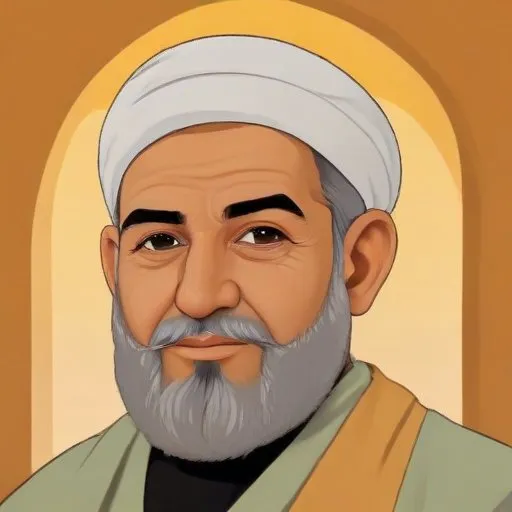
Founder of the Isfahan School of Islamic Philosophy, he integrated Islamic theology with Greek philosophy, influencing Islamic thought and mysticism. His works blended spirituality with rational inquiry.
Bah al-Din al-Milani, a renowned 12th-century Persian Sufi scholar, philosopher, and mystic, is celebrated for his profound contributions to Islamic spirituality and mysticism. His remarkable works and teachings have inspired generations of spiritual seekers, solidifying his position as a luminary of Sufism.
Born in 1156 CE in Milana, a small town in eastern Iran, Bah al-Din al-Milani was raised in a family of scholars and mystics. He received a traditional Islamic education, studying Arabic, theology, and jurisprudence under the guidance of prominent scholars of the time.
As a young man, al-Milani embarked on a spiritual quest, delving deep into the realms of Sufism and mysticism. He spent years in solitude, meditation, and contemplation, seeking to experience the divine presence. His mystical experiences and visions shaped his understanding of spirituality, fostering a profound connection with the divine.
Al-Milani's teachings emphasized the importance of love, compassion, and self-purification as a means to attain spiritual growth and union with the divine. His writings, including his magnum opus, The Stations of the Way, provide insight into the essence of Sufism, guiding seekers on the spiritual path.
Al-Milani's teachings have had a lasting impact on modern Sufism, inspiring numerous Sufi orders and mystics throughout history. His emphasis on love, compassion, and the spiritual dimension of Islamic teachings has made him a revered figure in the Sufi tradition.
Al-Milani's philosophical contributions to Islamic thought are significant, particularly in the areas of metaphysics, cosmology, and epistemology. His teachings on the nature of the soul, the universe, and the role of the intellect in spiritual growth have influenced Muslim philosophers and theologians for centuries.
Al-Milani's legacy extends beyond the realm of Sufism, with his works influencing Islamic literature, art, and architecture. His teachings have been a source of inspiration for poets, artists, and musicians, shaping the cultural and artistic heritage of the Islamic world.
In comparison to his contemporaries, al-Milani's teachings and writings distinguished him as a unique voice in the Sufi tradition. His emphasis on love, compassion, and spiritual purification set him apart from other Sufi mystics of the time, solidifying his position as a pioneer in the development of Islamic spirituality.
A pivotal moment in al-Milani's life was his encounter with the renowned Sufi master, Abu Najib al-Suhrawardi. This meeting had a profound impact on al-Milani's spiritual journey, shaping his understanding of Sufism and guiding him on his path to spiritual enlightenment.
Al-Milani's teachings have permeated Islamic literature, art, and music, influencing the cultural heritage of the Middle East and beyond. His writings have inspired poets, artists, and musicians, shaping the creative expression of the Islamic world.
In recognition of his contributions to Islamic spirituality and mysticism, al-Milani has been revered as a saint and a spiritual guide by Sufi orders and Islamic scholars throughout history.
Al-Milani's teachings have fostered a sense of compassion and social responsibility, inspiring generations of Sufis to engage in charitable work and community service. His emphasis on love and compassion has shaped the social and humanitarian landscape of the Islamic world.
Al-Milani's life and teachings serve as a testament to the power of spiritual devotion and self-purification. His journey from a young scholar to a renowned Sufi master is a beacon of inspiration, guiding seekers on the path to spiritual enlightenment and union with the divine.
Born in 1165
A 13th-century Andalusian Sufi mystic, poet, and philosopher who wrote extensively on spirituality, mysticism, and the nature of reality, influencing Islamic thought and Western philosophy. Their works are still studied and revered today.
Born in 1126
A renowned medieval philosopher and physician who wrote influential commentaries on Aristotle's works, shaping Western philosophy and Islamic thought.
