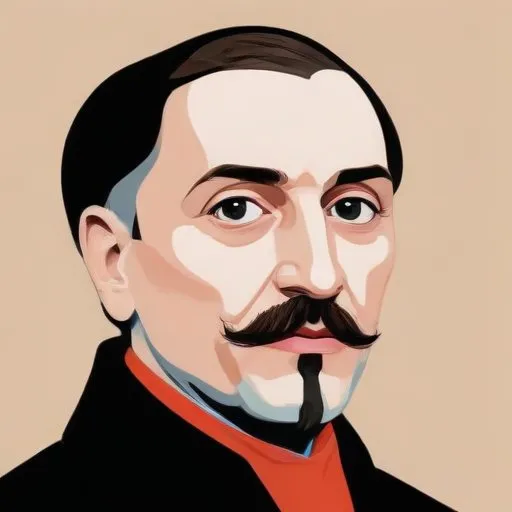
Balthazar Gerbier: The Renaissance Man of Diplomacy and Art
Balthazar Gerbier was a 17th-century Anglo-Dutch courtier, diplomat, art advisor, miniaturist, and architectural designer who left an indelible mark on the world of art, politics, and culture. He is best known for his multifaceted skills, which ranged from creating intricate miniatures to designing siege machinery, and his influential role in the diplomatic circles of Europe.
A Life of Versatility and Adventure
Born on February 23, 1592, in Middelburg, Zeeland, Gerbier was the son of Anthony Gerbier, a cloth merchant from a Huguenot family. Despite his humble origins, Gerbier was fluent in several languages and possessed a unique blend of skills, including mathematics, architecture, drawing, painting, and engineering. His talent and adaptability soon earned him recognition, and he was recommended by Maurice of Nassau, later Prince of Orange, to serve as a designer of siege machinery.
A Patronage of Royalty and Nobility
Gerbier's big break came in 1616 when he arrived in London as part of the Dutch ambassador's entourage. He quickly found a powerful patron in
George Villiers, 1st Duke of Buckingham, for whom he sourced and purchased paintings, acted as a keeper of his collection, and even painted miniatures. Gerbier's artistic talents and diplomatic skills made him an indispensable asset to the Duke, and he was soon involved in architectural alterations at York House in the Strand and New Hall, Essex.
In the Courts of Europe
Gerbier's diplomatic career took off in the 1620s when he traveled to Madrid as part of a diplomatic party, including Buckingham and Prince Charles, the future Charles I, to negotiate the Spanish Match. During this mission, Gerbier painted a portrait of the Infanta, which was sent back to London for King James I's approval. He later accompanied the Duke of Buckingham to Paris on a similar diplomatic mission in 1625.
Rivalries and Legacy
Gerbier's competitive nature often led to friction with others, including the esteemed architect
Inigo Jones. However, his contributions to the world of art and diplomacy cannot be overstated. He was a true Renaissance man, whose legacy continues to inspire and fascinate us to this day.
Fun Facts and Trivia
- Gerbier claimed that his grandfather was a Baron Douvilly, and he occasionally signed himself with this title.
- He was known for his skill in creating intricate wooden models, including a model of New Hall, which he had made for the Duke of Buckingham.
- Gerbier's diplomatic missions took him to some of the most prestigious courts of Europe, where he rubbed shoulders with royalty and nobility.
Influence on Modern Society
Gerbier's remarkable life and career serve as a testament to the power of adaptability, talent, and determination. As we reflect on his achievements, we are reminded of the importance of fostering creativity, embracing diversity, and cultivating a growth mindset. In an era of increasing specialization, Gerbier's Renaissance-like versatility offers a powerful inspiration to explore and develop our own unique skills and passions.
FAQ
What was Balthazar Gerbiers contribution to Dutch painting?
Balthazar Gerbier was a Dutch painter known for his landscapes and still-life paintings, which showcased his skill in capturing light and texture. He was also an influential art teacher and writer on art theory.
How did Balthazar Gerbiers work reflect the Dutch Golden Age?
Gerbiers work reflected the values and sensibilities of the Dutch Golden Age, characterized by a focus on realism, attention to detail, and a celebration of everyday life and commerce.
What was Balthazar Gerbiers role in the development of Dutch art theory?
Gerbier wrote several influential treatises on art theory, including A Brief Discourse on the Excellency of the Art of Painting and The Art of Painting, which helped to shape the development of Dutch art theory and pedagogy.
How did Balthazar Gerbiers work influence later generations of Dutch painters?
Gerbiers work had a lasting impact on later generations of Dutch painters, influencing artists such as Johannes Vermeer and Pieter de Hooch, and helping to shape the course of Dutch art in the 17th century.
What was the significance of Balthazar Gerbiers connections to the Dutch East India Company?
Gerbiers connections to the Dutch East India Company, for which he painted several commissioned works, reflect the close ties between art, commerce, and empire during the Dutch Golden Age.