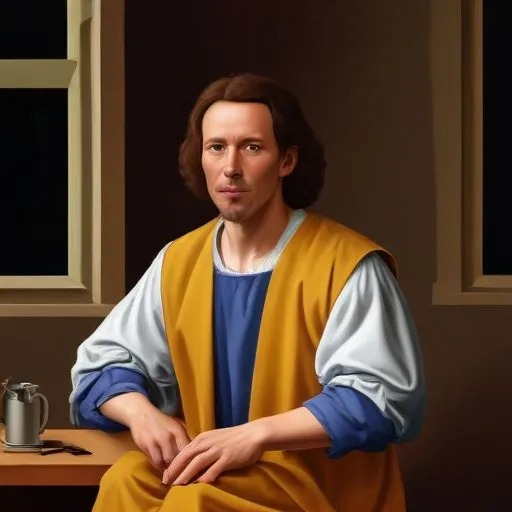
Pieter de Hooch: The Master of Intimate Domestic Scenes
Pieter de Hooch, a Dutch Golden Age painter, is renowned for his exquisite genre works of quiet domestic scenes with an open doorway, which have become a hallmark of his style. His ability to capture the warmth and tranquility of everyday life in 17th-century Netherlands has earned him a place among the most celebrated artists of his time.
Early Life and Career
Born on December 20, 1629, in Rotterdam, Netherlands, De Hooch was the eldest of five children to Hendrick Hendricksz de Hooch, a bricklayer, and Annetge Pieters, a midwife. Raised in a working-class home, he was exposed to the world of art from a young age. According to his first biographer, Arnold Houbraken, De Hooch studied art in Haarlem under the landscape painter Nicolaes Berchem.
The Genre Works
De Hooch's genre works are characterized by their serenity and attention to detail. His paintings often feature quiet domestic scenes, with an open doorway leading to a courtyard or a garden, which became a signature element of his style. These works showcase his ability to capture the play of light and shadow, as well as his skill in rendering textures and fabrics.
Some of his most notable works include:
- The Courtyard of a House in Delft (1658-1660)
- Woman Weighing Gold (1664)
- The Bedroom (1658-1660)
Influence and Legacy
De Hooch's work had a profound influence on his contemporaries, including Jan Vermeer, with whom he shared similar themes and styles. His genre works also paved the way for future generations of artists, including the likes of
Johannes Vermeer and Gerard ter Borch.
Personal Life and Milestones
De Hooch was a member of the Delft Guild of St. Luke and was active in the art world until 1683. He married twice and had several children, including a son, Pieter, who also became a painter. Although his date of death is unknown, it is believed to be after 1683.
Comparative Analysis with Contemporaries
De Hooch's work is often compared to that of Jan Vermeer, with whom he shared similar themes and styles. While both artists were masters of capturing quiet domestic scenes, De Hooch's work tends to be more rustic and intimate, whereas Vermeer's works are often more refined and elegant.
Fun Facts and Trivia
* De Hooch was first recorded in Delft on August 5, 1652, when he and another painter, Hendrick van der Burgh, witnessed the signing of a will.
* He was known for his ability to capture the play of light and shadow in his paintings.
* De Hooch's work has been attributed to his son, Pieter, on several occasions, due to the similarity in their styles.
In conclusion, Pieter de Hooch's exquisite genre works have left an indelible mark on the art world. His ability to capture the warmth and tranquility of everyday life in 17th-century Netherlands has earned him a place among the most celebrated artists of his time.
FAQ
What is Pieter de Hoochs style of painting?
Pieter de Hooch was a Dutch painter known for his mastery of light and shadow, as well as his use of warm colors and everyday subjects.
What are some of Pieter de Hoochs most famous works?
Some of Pieter de Hoochs most famous works include The Courtyard of a House in Delft, The Bedroom, and Mother and Child with a Servant.
How did Pieter de Hoochs work influence other artists?
Pieter de Hoochs work had a significant impact on other artists, including Johannes Vermeer, who was heavily influenced by his use of light and color.
What is Pieter de Hoochs legacy in Dutch art?
Pieter de Hoochs legacy in Dutch art is that of a master painter who captured the quiet intimacy and beauty of everyday life in 17th-century Holland.
How are Pieter de Hoochs paintings preserved and exhibited today?
Pieter de Hoochs paintings are preserved and exhibited in museums and galleries around the world, including the Rijksmuseum in Amsterdam and the National Gallery in London.