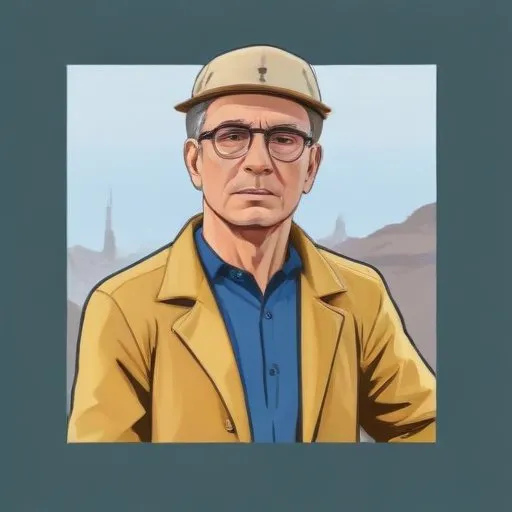
Barry Cunliffe: Unraveling the Mysteries of Iron Age Britain and Beyond
A Pioneering Archaeologist and Academic
Barry Cunliffe is renowned for his groundbreaking contributions to the field of archaeology, particularly in the realm of Iron Age Britain and Europe. As a distinguished professor, excavator, and author, Cunliffe has spent decades uncovering the secrets of ancient civilizations, shedding light on the lives and cultures of our ancestors.
Early Life and Inspiration
Born on December 10, 1939, Cunliffe's fascination with archaeology began at the tender age of nine, sparked by the discovery of Roman remains on his uncle's farm in Somerset. This fortuitous encounter ignited a lifelong passion, leading him to pursue a degree in archaeology and anthropology at St. John's College, Cambridge. During his time at Cambridge, Cunliffe demonstrated his leadership skills by winning an election to become president of the University of Cambridge Archaeological Field Club, defeating his course mate and fellow Johnian Colin Renfrew.
Academic Career and Excavations
Cunliffe's academic journey took him to the University of Bristol, where he became a lecturer in 1963. His fascination with Roman remains in nearby Bath led him to embark on a program of excavation and publication. In 1966, he became an unusually young professor at the newly founded Department of Archaeology at the University of Southampton. This marked the beginning of his long and illustrious career, during which he would excavate and publish numerous sites, including the Fishbourne Roman Palace in West Sussex, the Iron Age hill fort at Danebury, Hampshire, and the enigmatic Hengistbury Head in Dorset.
The Celts and Atlantic Europe
Cunliffe's work has been instrumental in shaping our understanding of the Celts and their cultural legacy in Atlantic Europe. His research has taken him to various sites, including Mount Batten in Devon, Le Ctel in Jersey, and Le Yaudet in Brittany. Through his excavations and publications, Cunliffe has demonstrated that Celtic culture originated along the Atlantic seaboard in the Bronze Age, subsequently spreading inland. This paradigm-shifting theory has redefined our comprehension of these ancient cultures and their interconnectedness.
Awards and Honors
Cunliffe's contributions to the field of archaeology have been recognized with numerous awards and honors. He has been awarded the Grahame Clark Medal by the British Academy, the European Archaeological Heritage Prize, and the Royal Society's Wolfson History Prize. In addition, he has been elected a Fellow of the British Academy and a Member of the Academia Europaea.
Legacy and Impact
Barry Cunliffe's legacy extends far beyond his impressive list of excavations and publications. He has inspired generations of archaeologists, historians, and enthusiasts, leaving an indelible mark on our understanding of ancient Britain and Europe. His groundbreaking research has not only illuminated the past but has also had a profound impact on our appreciation of cultural heritage and the interconnectedness of civilizations.
Selected Works
- "Iron Age Communities in Britain" (1974)
- "Danebury: An Iron Age Hillfort in Hampshire" (1983)
- "The Celts: A Very Short Introduction" (2010)
- "Britain Begins" (2012)
A Life of Discovery and Wonder
As an emeritus professor, Barry Cunliffe continues to be an active and influential voice in the world of archaeology. His remarkable career serves as a testament to the power of curiosity, passion, and dedication. As we reflect on his remarkable journey, we are reminded of the enduring importance of exploring our shared cultural heritage, and the boundless wonders that await us in the ancient world.
FAQ
What is Barry Cunliffes contribution to British archaeology?
Barry Cunliffe is a renowned British archaeologist who has made significant contributions to our understanding of Iron Age Britain. His work on the hill forts of southern England has been particularly influential.
What is Barry Cunliffes most famous discovery?
Barry Cunliffe is perhaps most famous for his discovery of the Portchester Roman fort, a well-preserved Roman fort in Hampshire, England.
What academic positions has Barry Cunliffe held?
Barry Cunliffe has held various academic positions, including Professor of European Archaeology at the University of Oxford and President of the Society of Antiquaries of London.
What has Barry Cunliffe written about?
Barry Cunliffe has written extensively on British archaeology, including books on the Celts, the Romans in Britain, and the hill forts of southern England.
What awards has Barry Cunliffe received?
Barry Cunliffe has received numerous awards for his contributions to archaeology, including the Grahame Clark Medal and the European Archaeological Heritage Prize.