


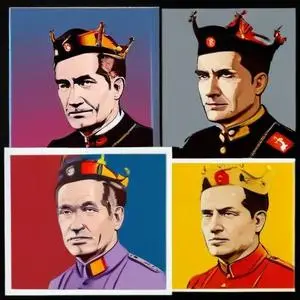
The King of Belgium from 1951 to 1993, known for his efforts to maintain national unity and his humanitarian work, particularly in the Congo. He reigned during a period of significant social and economic change in Belgium.
Baudouin of Belgium was the King of the Belgians from 1951 until his passing in 1993, serving as the last Belgian monarch to reign over the Congo before its independence in 1960. During his reign, he played a crucial role in maintaining national unity and overseeing the country's transition to a more modern, democratic nation.
Born on September 7, 1930, at the Château of Stuyvenberg in Laeken, northern Brussels, Baudouin was the elder son of King Leopold III and his first wife, Princess Astrid of Sweden. Following the death of his grandfather, King Albert I, in 1934, Baudouin became the Duke of Brabant and heir apparent to the throne at just three years old. Tragedy struck again in 1935 when his mother died in an automobile accident, leaving him to be raised by his father and later, his stepmother, Mary Lilian Baels (later Princess of Réthy).
Baudouin's education began at the age of seven, with tutors teaching him in both French and Dutch to prepare him for his future role as king. He frequently accompanied his father to public events, becoming well-known to the Belgian public from a young age. This exposure helped shape his character and prepared him for the responsibilities that lay ahead.
During World War II, Baudouin, along with his siblings, was sent to France and later Spain for safety. This experience had a profound impact on him, instilling a sense of duty and commitment to his country. Upon his father's abdication in 1951, Baudouin ascended to the throne, becoming the King of the Belgians at the age of 20. His reign was marked by a focus on national unity, economic growth, and the country's transition to a more modern, democratic nation.
In 1960, Baudouin married Doña Fabíola de Mora y Aragón, a Spanish noblewoman, in a grand ceremony. The couple had no children, but their marriage was marked by a deep love and respect for one another. Queen Fabiola proved to be a valuable partner and support to the king throughout his reign.
Throughout his reign, Baudouin worked tirelessly to promote national unity and economic growth. He played a key role in the country's transition to a federal system, ensuring greater autonomy for the regions. His dedication to the welfare of the Belgian people earned him great respect and admiration, both at home and abroad. Upon his passing in 1993, the crown passed to his younger brother, King Albert II.
Baudouin is remembered for his wisdom and diplomacy, often expressing himself in words that continue to inspire:
Baudouin's reign coincided with a period of significant global change, from the decolonization of Africa to the rise of the European Union. His commitment to national unity and economic growth helped Belgium navigate these challenges, cementing his place in Belgian history as a unifying force and a sovereign dedicated to the welfare of his people.
Baudouin of Belgium's life and reign serve as a testament to his dedication to his country and people. Through his commitment to national unity, economic growth, and modernization, he left a lasting impact on Belgium, earning him a revered place in the country's history.
Born in 1875
King of Belgium from 1909 to 1934, leading the country through World War I and its aftermath, earning him the nickname "The Hero King" for his bravery and leadership.
