


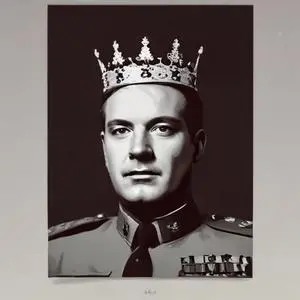
The King of the Belgians from 1993 to 2013, known for his efforts to unify the country and promote economic growth, as well as his role in shaping the European Union.
King Albert II is renowned for his remarkable reign as the King of the Belgians from 1993 to 2013, a period marked by significant transformations and challenges. As the sixth king of Belgium, he played a vital role in shaping the country's modern identity and fostering national unity.
Born on June 6, 1934, at the Château of Stuyvenberg in Laeken, northern Brussels, Prince Albert was the second son and youngest child of King Leopold III and Princess Astrid of Sweden. Following the untimely death of his mother in a car accident in 1935, he was raised by his father and stepmother, Mary Lilian Baels.
Prince Albert's path to the throne was shaped by the untimely passing of his brother, King Baudouin, in 1993. He succeeded his brother, becoming the sixth king of Belgium, and was crowned on August 9, 1993.
During his 20-year reign, King Albert II worked tirelessly to promote national unity, foster economic growth, and strengthen Belgium's position within the European Union. Some of his notable achievements include:
Throughout his reign, King Albert II demonstrated a deep commitment to social justice, equality, and human rights. He often emphasized the importance of solidarity, tolerance, and mutual respect in fostering a harmonious society.
His philosophical approach was shaped by his strong Catholic faith, which guided his decision-making and informed his views on ethics and morality.
In 1959, King Albert II married Donna Paola Ruffo di Calabria, with whom he had three children: King Philippe, Princess Astrid, and Prince Laurent.
On July 3, 2013, he announced his decision to abdicate the throne, citing health reasons, and was succeeded by his son, King Philippe, on July 21, 2013.
King Albert II's reign had a profound impact on modern Belgian society, promoting unity, stability, and economic growth. His commitment to social justice and human rights continues to inspire future generations.
As a statesman, he played a crucial role in shaping Belgium's position within the European Union, fostering stronger relationships with neighboring countries and advancing the country's interests on the global stage.
In conclusion, King Albert II's remarkable reign has left an indelible mark on Belgian history, shaping the country's modern identity and fostering a sense of national unity and pride.
96 Years Old
The King of Belgium from 1951 to 1993, known for his efforts to maintain national unity and his humanitarian work, particularly in the Congo. He reigned during a period of significant social and economic change in Belgium.
88 Years Old
The former King of Spain who reigned from 1975 to 2014, known for transitioning the country from dictatorship to democracy and playing a key role in preventing a military coup in 1981.
88 Years Old
The former Queen of the Netherlands, known for her dedication to humanitarian causes and her role in modernizing the Dutch monarchy. She reigned for 33 years, earning respect for her wisdom and diplomacy.
86 Years Old
The reigning monarch of Denmark since 1972, known for her modernization of the monarchy and artistic talents, including designing sets and costumes for the Royal Danish Ballet.
89 Years Old
The current monarch of Norway, known for his efforts to modernize the monarchy and promote national unity, as well as his support for humanitarian and environmental causes.
80 Years Old
The current monarch of Sweden, reigning since 1973, known for modernizing the monarchy and promoting Swedish culture and trade. He's also the head of the Nobel Prize ceremonies.
Born in 1920
Leader of the Catholic Church from 1978 to 2005, known for helping to end communism in Poland and being a charismatic advocate for human rights and social justice.
