


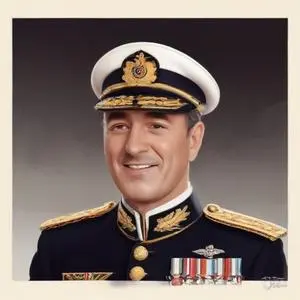
The former King of Spain who reigned from 1975 to 2014, known for transitioning the country from dictatorship to democracy and playing a key role in preventing a military coup in 1981.
Juan Carlos I, the King of Spain from 1975 to 2014, is known for his role in Spain's transition from dictatorship to democracy and his surprising abdication in favor of his son, Felipe VI.
Born on January 5, 1938, in Rome, Italy, Juan Carlos was the grandson of King Alfonso XIII, who had been deposed during the Second Spanish Republic. After a series of family struggles and power plays, Juan Carlos became the designated successor to the Spanish throne.
Following the death of dictator Francisco Franco in 1975, Juan Carlos assumed the throne and surprisingly began to implement democratic reforms. In 1977, he oversaw the first free elections since 1936, and a year later, the new Spanish Constitution was ratified, solidifying Spain's transition to democracy.
Despite his efforts to democratize Spain, Juan Carlos faced criticism for his handling of the 1981 coup attempt and his involvement in corruption scandals, including the infamous Gürtel case. These controversies significantly damaged his reputation and that of the monarchy as a whole.
In 2014, following a series of scandals and health issues, Juan Carlos announced his decision to abdicate in favor of his son, Felipe VI. This move marked the first time a Spanish monarch had voluntarily relinquished the throne.
Throughout his reign, Juan Carlos advocated for democratic values, claiming that the monarchy's role was to serve as a symbol of national unity and stability. However, his actions often contradicted these ideals, leading many to question the true nature of his commitment to democracy.
Estimates suggest that Juan Carlos's net worth is around €1.8 billion, much of which comes from his family's historic assets and business dealings. However, the exact figure remains shrouded in mystery.
Juan Carlos's reign had a profound impact on modern Spain, shaping the country's political landscape and redefining the role of the monarchy. Despite controversies, his legacy continues to influence Spanish politics and society.
The former king's public image has been marred by scandals, corruption allegations, and perceived detachment from the needs of the Spanish people. These controversies have contributed to a decline in the monarchy's popularity and calls for reform.
"I want to be the king of all Spaniards, not just the king of the right or the left." - Juan Carlos I, 1975
Juan Carlos's reign coincided with significant global events, including the collapse of communism and the rise of globalization. His decision to abdicate marked a new era for the Spanish monarchy, raising questions about its continued relevance in modern society.
Juan Carlos's trajectory can be compared to that of other European monarchs, such as King Baudouin of Belgium and King Constantine II of Greece, who also navigated the complexities of modernizing their monarchies while confronting domestic and international challenges.
Known for his charm and charisma, Juan Carlos formed close relationships with various world leaders, including Spanish dictator Francisco Franco and U.S. President Ronald Reagan. These connections played a significant role in shaping his political decisions and policies.
The former king's life has been the subject of numerous books, films, and television dramas, cementing his place in popular culture and reinforcing his status as a polarizing figure.
Juan Carlos has received numerous awards and honors for his contributions to democracy and international relations, including the Presidential Medal of Freedom and the Grand Cross of the Order of the Golden Fleece.
The former king has supported various charitable initiatives, particularly in the fields of education, healthcare, and environmental conservation. His philanthropic efforts have improved the lives of countless individuals and communities worldwide.
Juan Carlos's life serves as a complex and multifaceted tale of power, duty, and redemption. His willingness to adapt to changing circumstances and confront his own controversies offers a nuanced exploration of leadership and accountability.
94 Years Old
The first Prime Minister of Spain after the country's transition to democracy, known for leading the country's shift from dictatorship to constitutional monarchy. He played a key role in establishing a new political system and drafting the Spanish Constitution.
84 Years Old
The Prime Minister of Spain from 1982 to 1996, known for leading the country's transition from dictatorship to democracy and implementing significant economic and social reforms.
73 Years Old
The Prime Minister of Spain from 1996 to 2004, known for leading the country's economic growth and membership in the European Union. He's also remembered for his support of the US-led Iraq War.
84 Years Old
A Spanish physicist-turned-politician who served as Minister of Foreign Affairs, known for his diplomatic efforts in shaping the European Union's foreign policy. He played a key role in international crisis management and conflict resolution.
