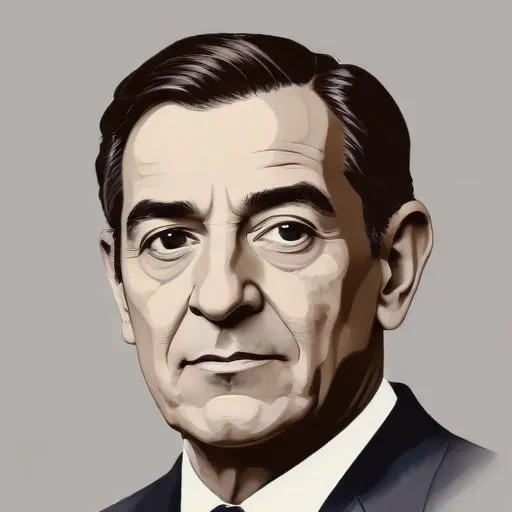
Adolfo Suárez: The Architect of Spain's Democratic Transition
A Leader of Unwavering Conviction
Adolfo Suárez, the 1st Duke of Suárez, is widely regarded as the mastermind behind Spain's successful transition from dictatorship to democracy in the 1970s. As the country's first democratically elected prime minister since the Second Spanish Republic, Suárez played a pivotal role in shaping Spain's modern political landscape.
Early Life and Upbringing
Born on September 25, 1932, in Cebreros, Ávila, Spain, Adolfo Suárez González was the eldest son of Hipólito Suárez Guerra, a lawyer, and Herminia González Prados. Both of his parents were staunch Republicans during the Spanish Civil War, instilling in him a strong sense of civic duty and moral conviction. Suárez's early life was marked by a deep commitment to Catholicism, serving as president of the Ávila chapter of Catholic Action at the age of 18.
Rise to Prominence
After studying law at the University of Salamanca, Suárez joined the municipal government of Ávila in 1955. His exceptional administrative skills and dedication to public service caught the attention of Fernando Herrero Tejedor, the newly appointed civil governor of Ávila, who appointed Suárez as his personal secretary in 1958. This marked the beginning of Suárez's illustrious political career, which would span over three decades.
The Road to Democracy
In 1976, King Juan Carlos appointed Suárez as the prime minister of Spain, tasking him with the monumental responsibility of transforming the country's autocratic regime into a democracy. Despite initial skepticism from various political factions, Suárez demonstrated unwavering determination and political acumen, overseeing the dissolution of the Francoist Cortes and legalizing all political parties, including the Communist Party of Spain.
A Leadership of Vision and Courage
Suárez's leadership was characterized by his ability to forge coalitions and build consensus among disparate groups. He founded the Union of the Democratic Centre (UCD) and led the party to victory in the 1977 general election. This landmark achievement marked a significant milestone in Spain's transition to democracy, cementing Suárez's reputation as a visionary leader.
Later Life and Legacy
In 1981, Suárez resigned as prime minister and went on to found the Democratic and Social Centre (CDS) party, which enjoyed significant electoral success. He retired from politics in 1991 and from public life in 2003, due to his struggles with Alzheimer's disease. Throughout his life, Suárez received numerous honors and accolades, including the title of Duke of Suárez, bestowed upon him by King Juan Carlos in 1981.
Impact on Modern Society
Adolfo Suárez's legacy extends far beyond his remarkable political career. He played a crucial role in shaping Spain's modern identity, fostering a culture of democracy, and promoting national reconciliation. Suárez's unwavering commitment to democratic values and human rights continues to inspire generations of Spanish citizens and politicians alike.
Quotes and Memorable Sayings
- "The only way to build a truly democratic society is to respect the rights of all citizens."
- "Politics is not about personal ambition, but about serving the greater good."
Historical Context and Legacy
Adolfo Suárez's remarkable life and career offer a powerful testament to the transformative power of democratic values. His leadership and vision paved the way for a modern, pluralistic Spain, earning him a revered place in the country's history. As a statesman, Suárez embodied the principles of democracy, human rights, and social justice, leaving behind a lasting legacy that continues to inspire and guide future generations.
FAQ
What was Adolfo Suárezs role in Spanish politics?
Adolfo Suárez was the first democratically elected Prime Minister of Spain, serving from 1976 to 1981 and playing a key role in the countrys transition to democracy.
What were Adolfo Suárezs accomplishments as Prime Minister of Spain?
As Prime Minister, Adolfo Suárez implemented several reforms, including the legalization of political parties, the establishment of a new constitution, and the decentralization of power to the regions.
What was Adolfo Suárezs relationship with King Juan Carlos I like?
Adolfo Suárez had a close relationship with King Juan Carlos I, who played a crucial role in supporting his government during the transition to democracy.
What is Adolfo Suárezs legacy in Spanish politics?
Adolfo Suárez is remembered as a hero of Spanish democracy, who played a crucial role in transitioning the country from dictatorship to democracy.
What are Adolfo Suárezs views on modern Spanish politics?
Adolfo Suárez has expressed concerns about the state of modern Spanish politics, calling for greater unity and cooperation among parties.