


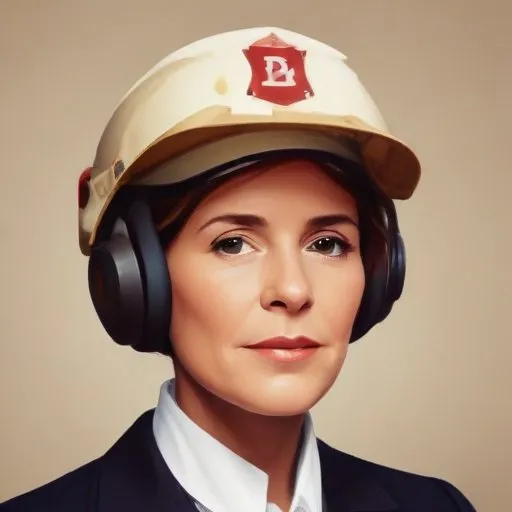
Developed the first gas density sensor, revolutionizing industrial safety and paving the way for modern sensor technology.
Beatrice Hicks was a groundbreaking American engineer who broke down barriers for women in the field of engineering. She was the first woman engineer to be hired by Western Electric, a leading telecommunications equipment and systems manufacturer, and went on to co-found the Society of Women Engineers (SWE) in 1950.
Hicks was born on January 2, 1919, in Orange, New Jersey, to Florence Benedict and William Lux Hicks, a chemical engineer. Despite facing discouragement from some teachers and classmates, Hicks was determined to pursue a career in engineering. She graduated from Orange High School in 1935 and earned a bachelor's degree in chemical engineering from Newark College of Engineering (now New Jersey Institute of Technology) in 1939, one of only two women in her class.
Hicks' achievements are all the more remarkable given the challenges she faced as a woman in a male-dominated field. She persevered despite being discouraged by some and went on to inspire countless others to pursue careers in engineering and other STEM fields. Through her work with the SWE, Hicks helped create opportunities and provide support for women engineers, ensuring that her legacy would continue to empower future generations.
Beatrice Hicks' pioneering spirit, determination, and achievements have left a lasting impact on the engineering community and beyond. She paved the way for women to pursue careers in engineering and other male-dominated fields, demonstrating that with hard work and perseverance, anything is possible. Today, she remains an inspiration to engineers, entrepreneurs, and anyone who has faced obstacles and overcome them to achieve their goals.
Beatrice Hicks' contributions to the field of engineering and her trailblazing work for women in STEM have had a lasting impact on modern society. Her legacy continues to inspire women and girls to pursue careers in engineering and other male-dominated fields, helping to close the gender gap and promote diversity and inclusion in the workplace.
Born in 1920
A British scientist who contributed significantly to the discovery of the structure of DNA, providing high-quality X-ray crystallography images that helped James Watson and Francis Crick develop their famous model.
70 Years Old
First African American woman in space, trailblazing physician and educator who inspired generations of women and minorities in STEM fields.
75 Years Old
American physicist and astronaut who broke barriers as the first woman in space, inspiring generations of women in STEM fields. Founded a company to promote science education and literacy.
Born in 1914
Austrian-born Hollywood star who pioneered frequency-hopping technology, a precursor to modern spread-spectrum communication systems like Wi-Fi and Bluetooth.
Born in 1906
A pioneering computer scientist who developed the first high-level programming language, COBOL, revolutionizing business computing. This innovator's work enabled efficient data processing and paved the way for modern software development.
Born in 1815
Pioneering mathematician and computer scientist who wrote the first algorithm intended to be processed by a machine, and is often considered the first computer programmer. Her work on Charles Babbage's Analytical Engine envisioned its potential to go beyond mere calculation and perform any task that could be expressed in a series of steps.
Born in 1867
A pioneering scientist who pioneered radioactivity research, discovering elements polonium and radium, and paving the way for breakthroughs in medicine and energy.
Born in 1912
A pioneering experimental physicist who disproved a fundamental concept in physics, the law of parity, and made groundbreaking contributions to particle physics.
