


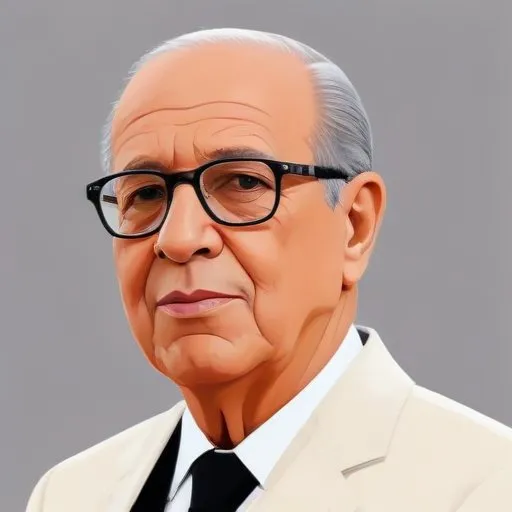
Tunisian lawyer and politician who served as President of Tunisia, known for leading the country's transition to democracy after the Arab Spring. He played a key role in drafting a new constitution and holding free elections.
Beji Caid Essebsi, Tunisia's sixth president, is renowned for his pivotal role in transitioning the country from authoritarian rule to democracy. Essebsi's political career, spanning six decades, culminated in his leadership of Tunisia during a critical period of transformation.
Born on November 29, 1926, in Sidi Bou Said, Tunisia, Essebsi hailed from an elite family with roots in Sardinia, Italy. His great-grandfather, Ismail Cad Essebsi, was kidnapped by Barbary corsairs and later rose to prominence in the Tunisian government.
Essebsi's foray into politics began in 1941, when he joined the Neo-Destour youth organization in Hammam-Lif. He later pursued law studies in Paris, where he became involved in defending Neo-Destour activists. This marked the start of his lifelong dedication to Tunisian politics.
Essebsi's loyalty to Tunisia's leader, Habib Bourguiba, earned him various posts under the president's regime from 1957 to 1971. Notable positions included chief of regional administration, general director of the Sûreté nationale, Interior Minister (1965), and Minister-Delegate to the Prime Minister.
Essebsi's leadership capabilities were further demonstrated during his tenure as Minister of Foreign Affairs (1981-1986) and Prime Minister (February-December 2011). His vast experience and national recognition laid the groundwork for his eventual presidential bid.
In 2012, Essebsi founded the Nidaa Tounes political party, which won a plurality in the 2014 parliamentary election. This milestone marked a significant shift in Tunisian politics, as Nidaa Tounes emerged as a force against the Islamist Ennahda party.
In December 2014, Essebsi won the first regular presidential election following the Tunisian Revolution, becoming the country's first democratically elected president. This triumph cemented his status as a champion of democracy and a unifying figure in Tunisian politics.
Essebsi's presidency was marked by significant reforms, including the establishment of an independent electoral commission, the creation of a constitutional court, and the adoption of a new electoral law. These efforts solidified Tunisia's transition to democracy and earned Essebsi international recognition.
Throughout his life, Essebsi remained committed to promoting democratic values, human rights, and economic development. His leadership has inspired a new generation of Tunisian politicians and reinforced the country's position as a beacon of democracy in the Arab world.
Essebsi was married to Chadlia CJaabour and had three daughters and two sons. He passed away on July 25, 2019, leaving behind a legacy of resilience, dedication, and visionary leadership.
As Tunisia continues its journey towards a brighter future, Beji Caid Essebsi's remarkable life and achievements serve as a testament to the power of democracy, perseverance, and statesmanship.
Born in 1903
Led Tunisia to independence from France, serving as its first president and implementing progressive reforms. Known for his modernizing efforts and secularist policies.
90 Years Old
Tunisia's second president, a soldier-turned-politician who ruled with an iron fist for 23 years, notorious for suppressing dissent and amassing wealth. He was ousted in 2011 during the Arab Spring protests.
77 Years Old
Tunisian politician who served as Prime Minister of Tunisia from 2011 to 2013, leading the country's transition to democracy after the Arab Spring. He's known for his efforts to establish a stable government and promote economic growth.
