


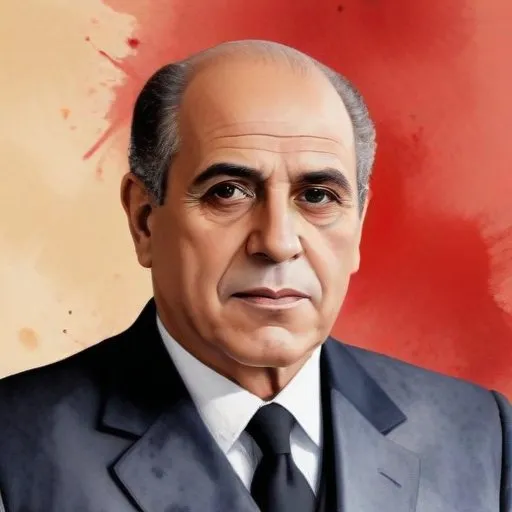
Led Tunisia to independence from France, serving as its first president and implementing progressive reforms. Known for his modernizing efforts and secularist policies.
Habib Bourguiba is renowned for leading Tunisia to independence from French colonial rule, earning him the title of Supreme Combatant. As the country's first president, he served from 1957 to 1987, leaving an indelible mark on Tunisian history.
Bourguiba was born on August 3, 1903, in Monastir, Tunisia, to a poor family. Despite the humble beginnings, he managed to attend Sadiki College and later Lyce Carnot in Tunis, where he obtained his baccalaureate in 1924. He then pursued higher education at the University of Paris and the Paris Institute of Political Studies (Sciences Po), graduating in 1927.
Upon returning to Tunisia, Bourguiba practiced law and soon became involved in anticolonial and Tunisian national politics. He joined the Destour party and co-founded the Neo Destour in 1934, emerging as a key figure in the independence movement. His involvement in the riots of April 9, 1938, led to his exile to Marseille during World War II.
In 1945, Bourguiba was released from exile and moved to Cairo, Egypt, to seek the support of the Arab League. He returned to Tunisia in 1949 and rose to prominence as the leader of the national movement. Initially committed to peaceful negotiations with the French government, he eventually had an effective role in the armed unrest that started in 1952 when talks proved unsuccessful.
Bourguiba was arrested and imprisoned on La Galite Island for two years before being exiled in France. There, he led negotiations with Prime Minister Pierre Mendès-France, securing internal autonomy agreements in exchange for the end of the unrest. His victorious return to Tunis on June 1, 1955, marked a turning point in Tunisian history.
Bourguiba's leadership during the negotiations with France led to Tunisia's independence on March 20, 1956. He served as the prime minister of the Kingdom of Tunisia from 1956 to 1957 and then as the first president of Tunisia from 1957 to 1987. During his presidency, he implemented various reforms, including the adoption of a constitution, the introduction of a multiparty system, and the promotion of women's rights.
Habib Bourguiba's unwavering commitment to Tunisian independence and self-determination has left an indelible mark on the country's history. His leadership and vision paved the way for modern Tunisia, earning him a place among the most revered figures in Tunisian politics.
As the Supreme Combatant, Bourguiba's legacy extends beyond Tunisia's borders, inspiring generations of nationalist leaders and freedom fighters across the Arab world.
Born in 1916
Led Algeria to independence from France, serving as the country's first president and playing a key role in the African independence movement. He's known for his strong anti-colonial stance and socialist policies.
Born in 1918
Led Egypt through a period of rapid modernization and nationalism, becoming a symbol of Arab unity and resistance to Western influence. He nationalized the Suez Canal and implemented socialist reforms.
