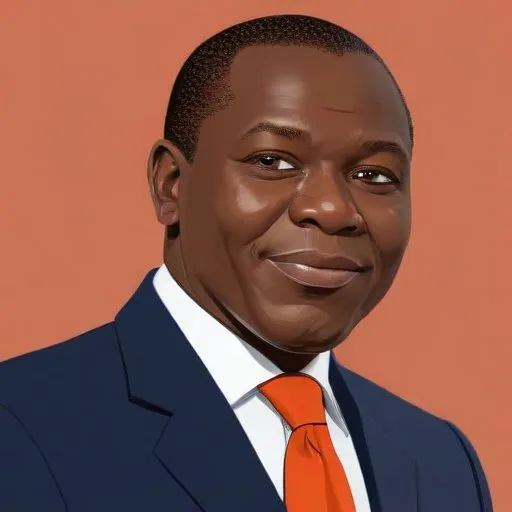
Félix Houphouët-Boigny: The Architect of Ivory Coast's Economic Miracle
The First President of Ivory Coast
Félix Houphouët-Boigny, affectionately known as "Papa Houphouët" or "Le Vieux" (The Old One), was the first president of Ivory Coast, serving from 1960 until his death in 1993. He is renowned for transforming his country into one of the most prosperous nations in West Africa, earning the nickname "the Ivorian miracle."
Early Life and Career
Born on October 18, 1905, in Yamoussoukro, Ivory Coast, Houphouët-Boigny came from a family of tribal chiefs. He studied medicine in Dakar, Senegal, and later worked as a medical aide in the French colonial administration. His interest in politics led him to become a union leader, and he eventually founded the Syndicat Agricole Africain (SAA), which represented African farmers.
Rise to Prominence
Houphouët-Boigny's involvement in the French Parliament began in 1946, where he served as a deputy for Ivory Coast. He held various ministerial positions within the French government, including Minister of Public Health and Population (1956-1958) and Minister of State (1959-1960). His experience and moderate political stance made him an ideal candidate to lead Ivory Coast to independence.
Presidency and Economic Miracle
On August 7, 1960, Houphouët-Boigny became the first president of Ivory Coast, a position he held until his death in 1993. During his presidency, he implemented a series of economic reforms that transformed the country into one of the most prosperous in West Africa. The "Ivorian miracle" was characterized by rapid economic growth, driven by the development of the coffee and cocoa industries, sound planning, and strong ties with France.
Foreign Policy and International Relations
Houphouët-Boigny maintained a close relationship with France, a policy known as "Françafrique." He built a strong friendship with Jacques Foccart, the chief adviser on African policy in the de Gaulle and Pompidou regimes. He also played a significant role in regional politics, supporting anti-communist movements and governments in West Africa.
Controversies and Criticisms
Despite his economic achievements, Houphouët-Boigny's presidency was not without controversy. He faced criticism for his authoritarian style of governance, human rights abuses, and alleged involvement in several coups and conspiracies in neighboring countries. His close ties with France also raised concerns about the country's independence and sovereignty.
Legacy
Félix Houphouët-Boigny's legacy is complex and multifaceted. While he is often praised for his economic achievements and role in Ivory Coast's independence, his authoritarian governance and alleged involvement in regional conflicts have sparked controversy. Nevertheless, his influence on modern African politics and his contributions to Ivory Coast's development are undeniable.
Personal Life and Quotes
Houphouët-Boigny was known for his charismatic personality and strong leadership style. One of his famous quotes is: "L'Afrique est notre patrie, la France est notre mère" ("Africa is our homeland, France is our mother"). He married twice and had five children.
Trivia and Fun Facts
- Houphouët-Boigny was the longest-serving president of Ivory Coast, ruling for 33 years.
- He built the Basilica of Our Lady of Peace in Yamoussoukro, one of the largest churches in the world.
- He was awarded the Grand Cross of the Legion of Honor, the highest French honor, in 1961.
Awards and Honors
Houphouët-Boigny received numerous awards and honors for his contributions to Ivory Coast and Africa, including:
- Grand Cross of the Legion of Honor (1961)
- Order of the Golden Ark (1970)
- Order of the Star of Africa (1974)
FAQ
What was Félix Houphouët-Boignys role in Ivorian independence?
Félix Houphouët-Boigny was a key figure in the fight for Ivorian independence from France, serving as the countrys first President from 1960 to 1993. He played a crucial role in negotiating independence and building the countrys economy.
What were Félix Houphouët-Boignys economic policies?
Félix Houphouët-Boigny implemented several economic policies aimed at modernizing and diversifying the Ivorian economy, including investing in infrastructure, agriculture, and industry. He also encouraged foreign investment and trade.
What was Félix Houphouët-Boignys approach to African unity?
Félix Houphouët-Boigny was a strong advocate for African unity and cooperation, serving as a key figure in the formation of the African Union and other regional organizations. He believed in the importance of African solidarity and cooperation to achieve economic and political development.
What awards and recognition did Félix Houphouët-Boigny receive?
Félix Houphouët-Boigny received several awards and honors for his contributions to African independence and development, including the Grand Cross of the Legion of Honor from France and the African Leadership Prize.
What is Félix Houphouët-Boignys legacy in Côte dIvoire?
Félix Houphouët-Boignys legacy in Côte dIvoire is that of a founding father and a visionary leader, who played a crucial role in shaping the countrys independence and economic development. He is remembered as a symbol of national pride and unity.